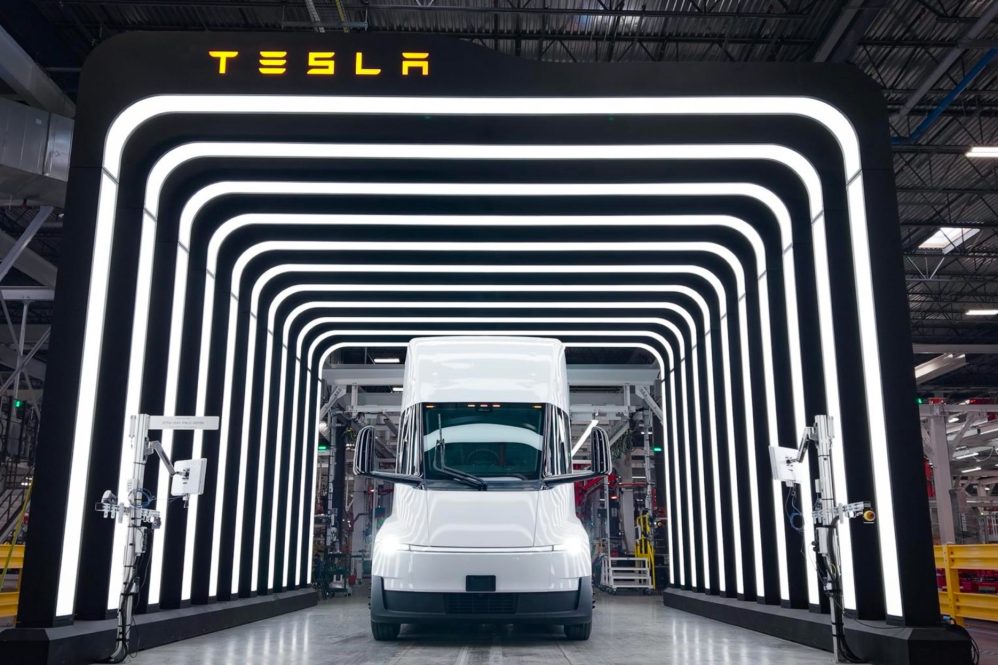
Tesla’s latest shareholder update has provided a surprise in terms of where the Semi program stands, confirming that while it had previously announced production had begun, the company’s target for high-volume production has slipped.
In its Q2 2026 shareholder deck, Tesla said that the “Semi remains on track for production this year at our new factory in Nevada.” That comment was a surprise to us, as we all thought production had already begun.
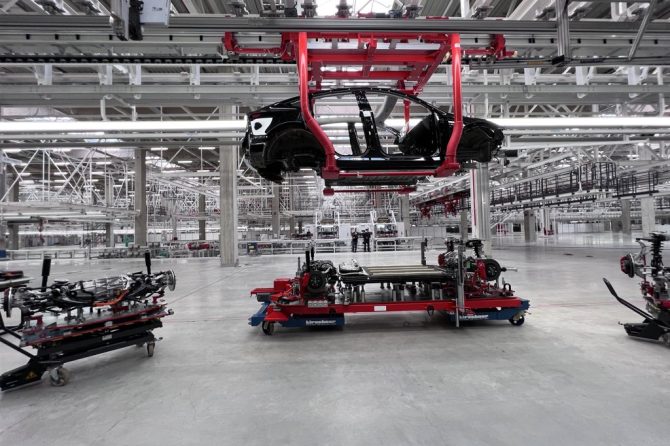
Back in April, Tesla revealed that Semi production had started at the new facility, sharing a photo of the first truck built on the new production line with the caption, “First Semi off high volume line.”
First Semi off high volume line pic.twitter.com/fI1AdQrJFH
— Tesla Semi (@tesla_semi) April 29, 2026
We took that literally – that production had begun and Tesla was working to ramp production through the rest of the year to reach their target of high-volume production in 2026.
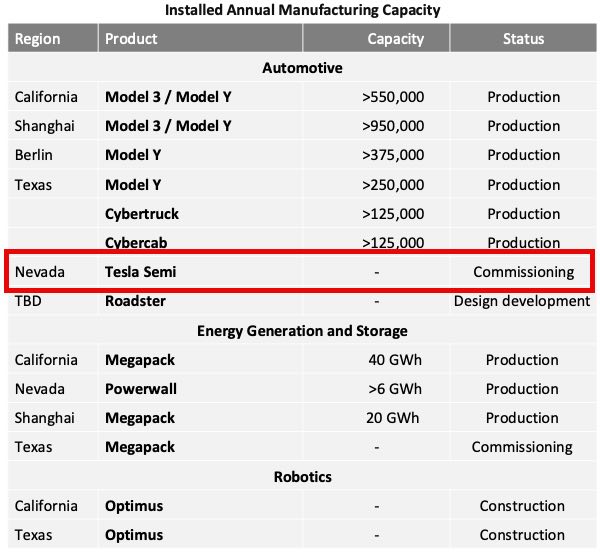
However, in Tesla’s installed annual manufacturing capacity table, the Semi production line is listed as “Commissioning.” That designation indicates the factory has not yet reached any sort of production capacity.
Commissioning is the process of validating manufacturing equipment, refining production processes, and ensuring quality before a line can operate at its intended output.
So when will high-volume production actually be reached? While discussing Full Self-Driving (FSD) for the Semi during the earnings call, CEO Elon Musk said the software “will definitely be working next year and in time for the scale-up to high production of the Tesla Semi.”
The comment appears to confirm that Tesla does not expect the Semi to reach true high-volume production until 2027.
That would represent yet another shift in the company’s timeline for the Semi, because as we mentioned Tesla had previously targeted high-volume production for this year. Combined with the shareholder deck listing the Semi production line as still “Commissioning,” Musk’s remarks indicate that the factory may not achieve its intended manufacturing pace until next year.
And the reason for another delay appears to be one of the main reasons we’re still waiting for the Semi after it was announced in 2017 – battery supply constraints. Tesla said during the earnings call one of its biggest priorities is increasing production of its in-house 4680 battery cells specifically to enable volume manufacturing of both the Tesla Semi and Cybercab.
While Tesla has clearly moved beyond prototype and pilot production, all of this suggests the company is still laying the groundwork for series production, with all signs now pointing to 2027 being the year Tesla expects the Semi program to reach full stride.

Always get the latest - make Drive Tesla your preferred source on Google
Are you buying a Tesla? If you enjoy our content and we helped in your decision, use our referral link to get three months of Full Self-Driving (FSD).Drive Tesla uses affiliate links, which means we may earn a commission if you make a purchase through them, at no additional cost to you. Thank you for your support.