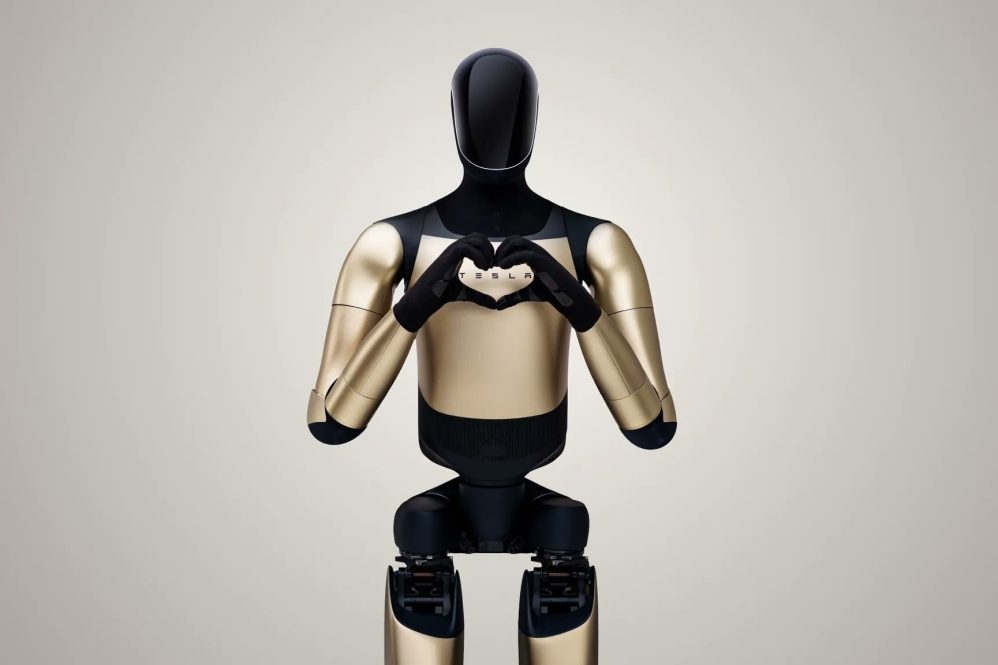
Tesla CEO Elon Musk has revealed new details about the challenges facing the company’s Optimus humanoid robot, including supply chain disruptions that delayed development by several months and ongoing difficulties perfecting the robot’s hands.
Speaking during an interview with Tesla Owners Silicon Valley at the X Takeover event at Giga Texas, Musk confirmed that China’s restrictions on exports of magnets used in electric motors had a direct impact on Optimus development.
The restrictions prevented Tesla from obtaining critical magnets used in the robot’s electric motors, particularly those controlling its arms.
Musk said the restrictions “set back the Optimus program by like two or three months,” adding, “We had robots with no arms.”
Optimus Hands Remain a Major Challenge
Beyond supply chain issues, Musk acknowledged that developing human-like hands remains one of Tesla’s biggest engineering hurdles.
While Optimus can already perform basic movements and tasks, replicating the precision, strength, and sensitivity of human hands has proven considerably more complicated.
“One of the hardest things also generally is to do precision and force at the same time,” Musk explained.
Tesla has been working on a redesigned hand for Optimus Gen 3, with recently published patents revealing a tendon-driven system intended to improve dexterity and control.
Tesla Prepares for a Slow Production Ramp
Musk also cautioned that scaling Optimus production will be more difficult than ramping a new vehicle, largely because the necessary supply chain does not yet exist.
“The initial part of that S curve of production ramp is going to be very slow at the beginning,” Musk said.
Tesla has already converted its former Model S and Model X production space in Fremont to manufacture Optimus, while construction continues on a dedicated factory at Giga Texas.
Despite these challenges, Tesla is reportedly targeting production of more than 1,000 robots per week by the end of 2026.
Musk continues to aim for public availability by late 2027, although Tesla has not formally confirmed that timeline.
With production expanding and technical challenges still unresolved, meeting that target will depend on how quickly Tesla can improve reliability, perfect the robot’s hands, and establish a scalable supply chain.
Related Articles:
- Musk Says Tesla’s Digital Optimus AI Can Now Play Halfway Through Diablo
- Tesla Dismantles Model S/X Line in Just 46 Days to Make Room for Optimus Production
- Tesla makes progress converting former Model S/X line for Optimus production
- Tesla cuts AI5 memory for Optimus, but not as much as originally planned

Always get the latest - make Drive Tesla your preferred source on Google
Are you buying a Tesla? If you enjoy our content and we helped in your decision, use our referral link to get three months of Full Self-Driving (FSD).Drive Tesla uses affiliate links, which means we may earn a commission if you make a purchase through them, at no additional cost to you. Thank you for your support.