Newly released court documents in the fatal Texas Tesla crash show the collision may have been a deliberate act by the driver rather than the result of a case of pedal misapplication, or a malfunctioning driver-assistance system as some have suggested.
The documents were filed as part of the manslaughter charge against driver Michael Butler, who was arrested this week following the June 19 crash.
According to investigators, Butler told officers at the scene that he had been using FSD and later claimed he remembered nothing prior to the crash.
However, court records state Butler was “awake, alert, coherent, and in stable condition with no serious injuries” when interviewed at the hospital shortly after the collision. Despite that, investigators noted Butler said he could not recall anything that occurred before the crash.
Tesla had already started slowing for the stop sign
Perhaps the most significant new detail in the filing is investigators’ description of the vehicle’s behaviour immediately before impact.
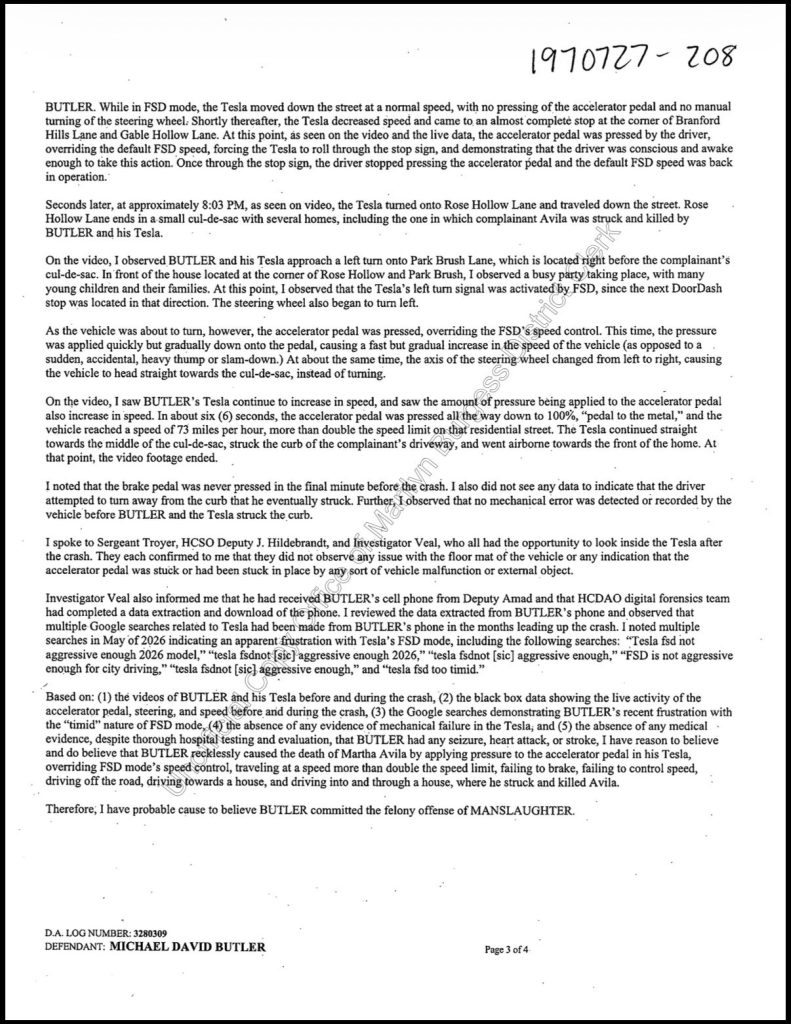
According to the affidavit, the Tesla was operating with FSD engaged and was approaching a stop sign at the intersection of Bradford Hills Lane and Gable Hollow Lane. Investigators say the system had already begun slowing the vehicle and was preparing to come to a complete stop at the intersection.
At that point, Butler allegedly overrode the system. The court documents state that pressing the accelerator pedal transferred control away from FSD and back to the driver.
Investigators say accelerator input was gradual, indicating a deliberate action, first reaching 67% before climbing to 100% shortly before the vehicle left the roadway.
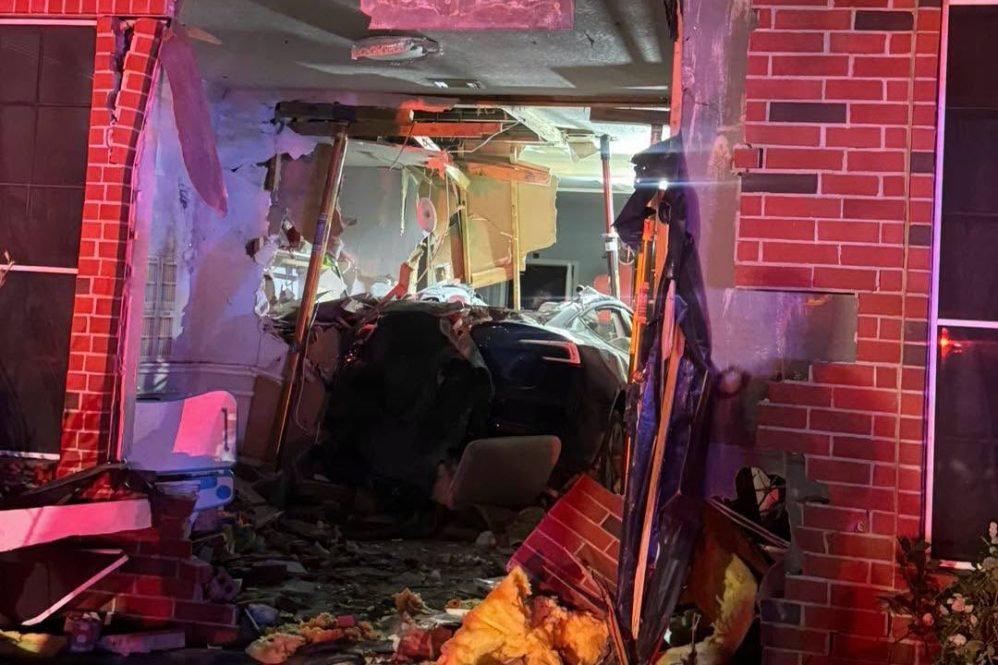
The Tesla subsequently crashed through the front of the home, killing 76-year old Martha Avila inside.
No braking or evasive action recorded
The affidavit also indicates that vehicle data showed no evidence the brake pedal was ever pressed during the sequence leading up to the crash.
Investigators further stated there was no indication Butler attempted to steer away from the house or take evasive action in the final moments before impact. In fact, Butler actively turned the steering wheel from left to right, “causing the vehicle to head straight towards the cul-de-sac, instead of turning.”
The vehicle ultimately struck the home at approximately 73 mph (117 km/h), according to data previously disclosed by Tesla Vice President of AI Software Ashok Elluswamy.
Elluswamy has previously stated the accelerator pedal remained depressed even after the collision.
Search history points to frustration with FSD
The affidavit also reveals investigators reviewed Butler’s cellphone and discovered several internet searches related to Tesla’s driver-assistance software in the weeks leading up to the crash.
Among the searches cited were:
- “tesla fsd not aggressive enough 2026 model”
- “tesla fsd too timid”
- “FSD is not aggressive enough for city driving”
Investigators wrote that the searches suggested Butler had become frustrated with FSD’s cautious driving behaviour.
The affidavit ultimately concludes Butler overrode the system by pressing the accelerator pedal and caused Avila’s death by “failing to brake, failing to control speed, driving off the road, driving toward a house, and driving into and through a house.”
The criminal case against Butler is proceeding alongside federal investigations by both the National Highway Traffic Safety Administration (NHTSA) and National Transportation Safety Board (NTSB), as well as a wrongful death lawsuit filed by Avila’s family against both Butler and Tesla.
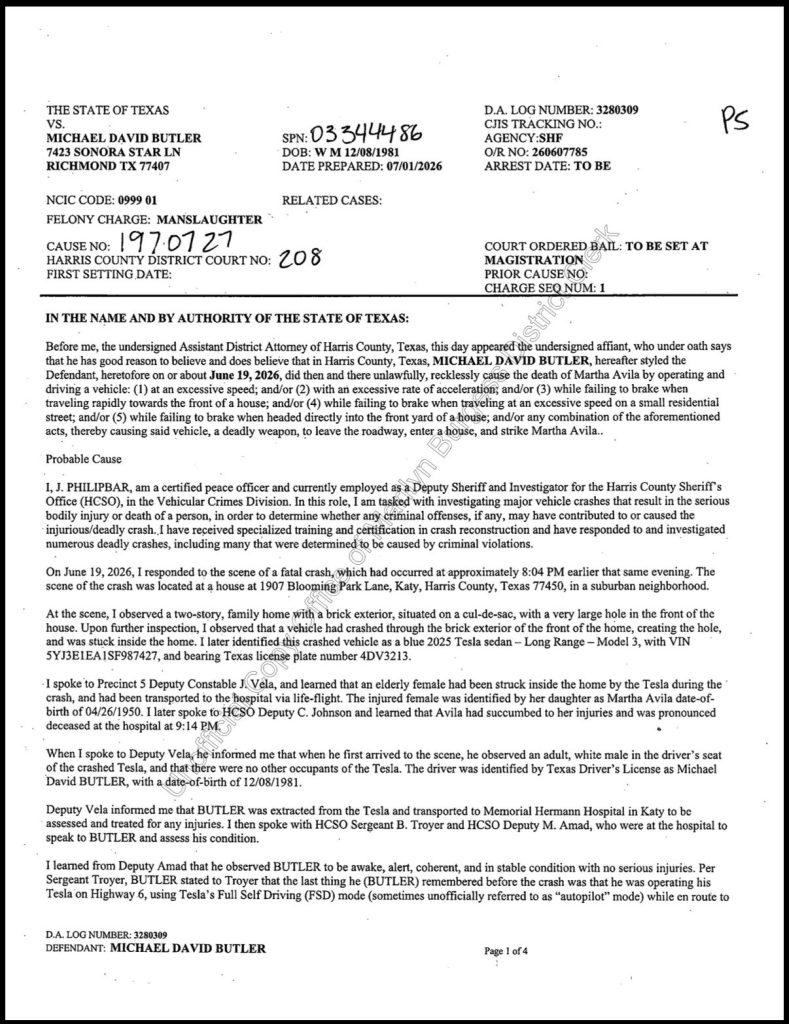
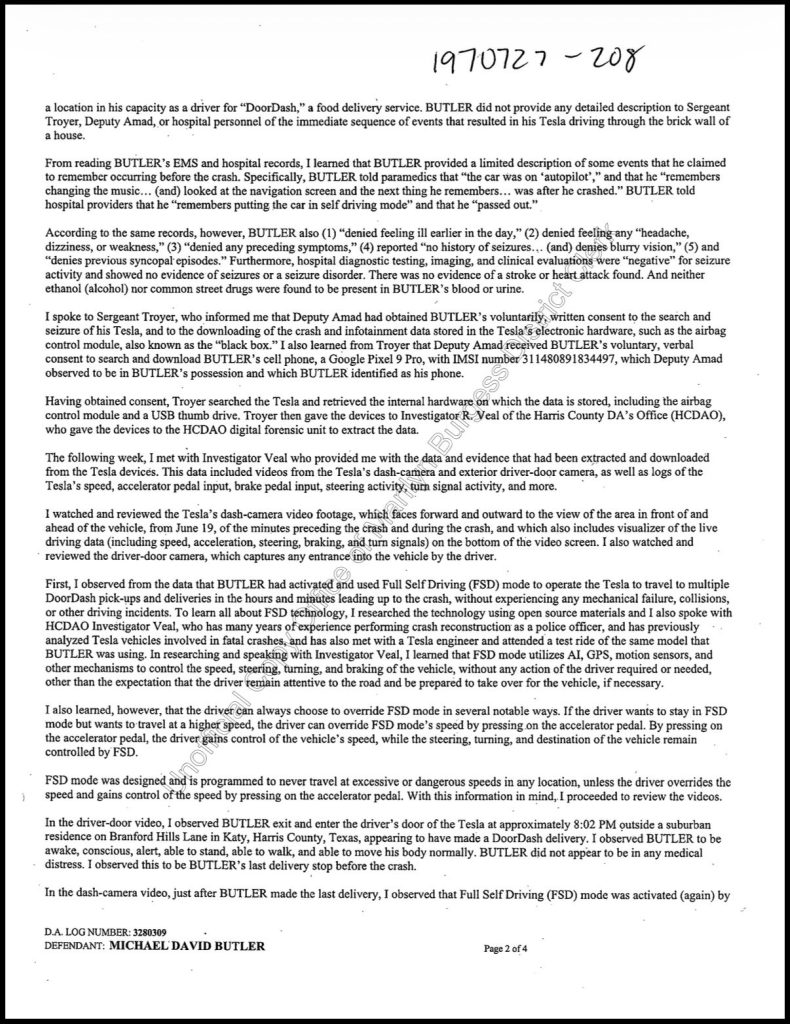
The affidavit is included below.

Always get the latest - make Drive Tesla your preferred source on Google
Are you buying a Tesla? If you enjoy our content and we helped in your decision, use our referral link to get three months of Full Self-Driving (FSD).Drive Tesla uses affiliate links, which means we may earn a commission if you make a purchase through them, at no additional cost to you. Thank you for your support.