
SpaceX has officially taken the next major step toward becoming a publicly traded company, filing its long-awaited S-1 registration statement on Tuesday and confirming plans to trade under the ticker symbol “SPCX.”
The filing marks one of the biggest and most anticipated IPOs in recent history, offering investors their first detailed look inside the finances and future plans of the aerospace and technology giant.
According to the filing, SpaceX plans to list its Class A common stock on both Nasdaq and Nasdaq Texas, although the company has not yet disclosed the number of shares to be offered or the expected price range. The IPO is being led by a massive group of underwriters, including Goldman Sachs, Morgan Stanley, Bank of America, Citigroup, and JPMorgan Chase.
The structure of the offering also confirms that Elon Musk will retain tight control of the company after it goes public. SpaceX will use a dual-class share system, with Class A shares carrying one vote each and Class B shares carrying ten votes each. Musk will continue to control the majority of voting power through his Class B holdings, allowing SpaceX to qualify as a “controlled company” under Nasdaq rules.
Beyond the IPO itself, the filing revealed the scale of SpaceX’s rapidly expanding businesses for the first time. The company reported $18.7 billion in revenue in 2025 and generated $6.8 billion in operating cash flow, but it also spent heavily on future growth, including $20.7 billion in capital expenditures last year alone.
A significant portion of that spending is tied to artificial intelligence. SpaceX disclosed that it invested $12.7 billion into AI infrastructure in 2025, with AI-related capital expenditures reaching $7.7 billion in the first quarter of 2026 alone. The filing also confirmed that the company’s February 2026 acquisition of xAI and X Holdings has been fully integrated into its financial statements.
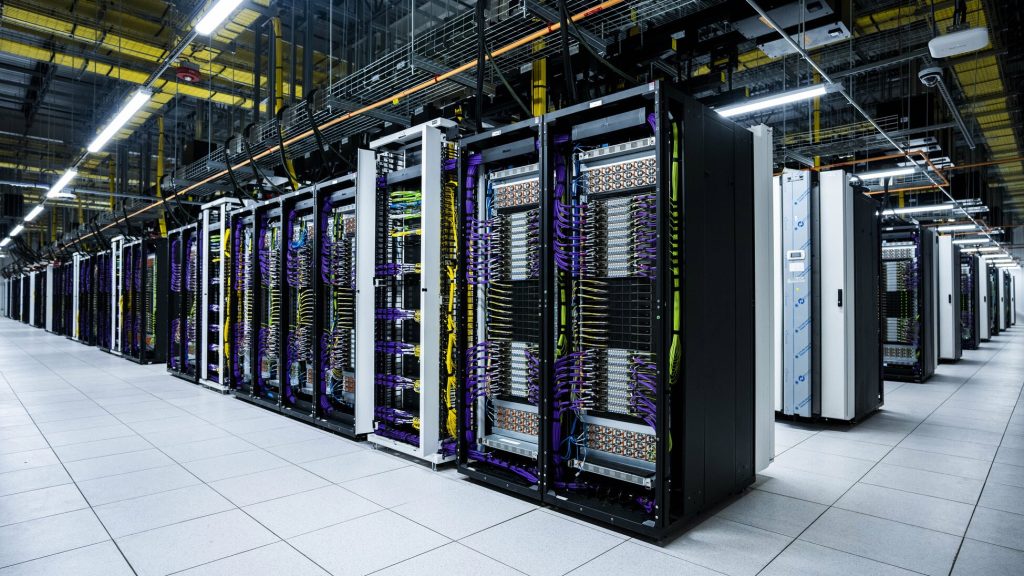
SpaceX’s AI division is already operating a one-gigawatt compute cluster and plans to eventually expand into orbital AI compute satellites beginning in 2028. Despite the aggressive investment, the AI segment posted a $2.5 billion operating loss in Q1 2026.
Meanwhile, Starlink continues to emerge as one of the company’s strongest financial engines. SpaceX says Starlink now serves approximately 10.3 million subscribers across 164 countries and territories using roughly 9,600 satellites in low Earth orbit. The division generated $1.2 billion in operating income and $2.1 billion in adjusted EBITDA during the first quarter of 2026.
The filing also revealed more details on their recent major partnership that will see Anthropic pay SpaceX $1.25 billion per month through May 2029 for AI compute capacity as part of a previously announced partnership.
While many details about the IPO remain unknown, including valuation and pricing, the filing officially signals the start of what could become one of the largest tech market debuts ever.

Always get the latest - make Drive Tesla your preferred source on Google
Are you buying a Tesla? If you enjoy our content and we helped in your decision, use our referral link to get three months of Full Self-Driving (FSD).Drive Tesla uses affiliate links, which means we may earn a commission if you make a purchase through them, at no additional cost to you. Thank you for your support.