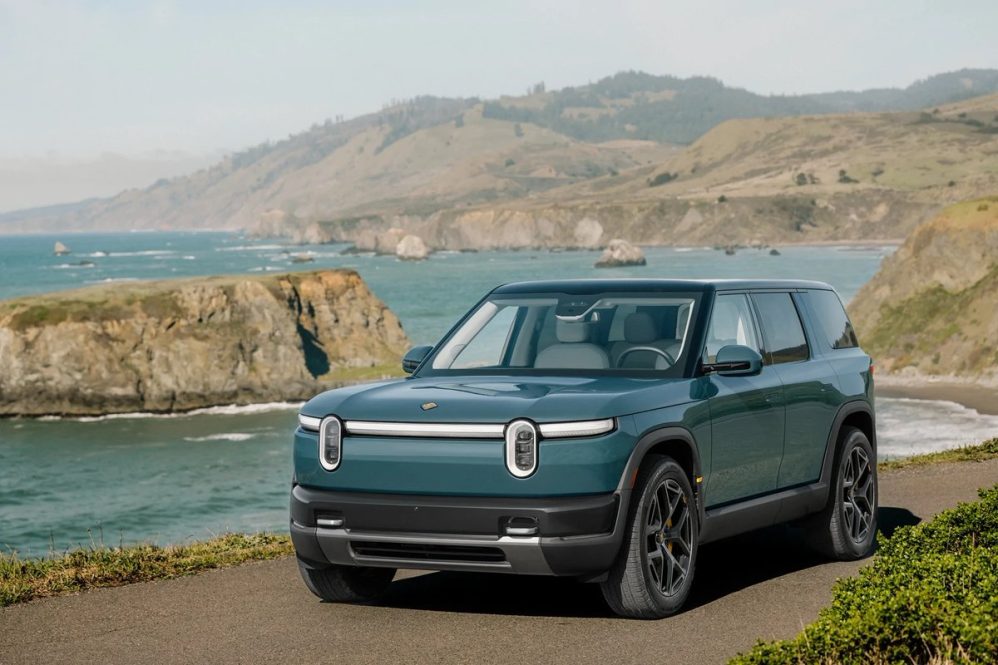
Rivian has officially begun production of its new R2 as the company prepares for its first customer deliveries later this spring. The milestone comes even after the factory was damaged by a tornado last weekend.
According to an update provided by CFO Claire McDonough, production of the midsize R2 is underway at Rivian’s Normal, Illinois facility, ending a multi-year development process that included a significant manufacturing overhaul.
Employee deliveries will begin first—a standard industry practice that allows automakers to validate quality and gather real-world feedback before broader customer handovers.
Customer deliveries are expected to follow by late spring, with reservation holders set to begin configuring their vehicles in June.
“We’ve been encouraged by the reservations that we’ve been receiving for the R2 product overall,” McDonough said in an interview with Reuters this morning, adding, “We’ll start to invite customers to begin to configure their vehicles in the June time frame. So, we’ll have better visibility at that point.”
A video shared online by RivianTrack shows the first R2 rolling off the production line in Normal.
This video is from the Rivian factory today as the first customer R2 rolled off the line. Shared with permission. https://t.co/3K0SITDuIm pic.twitter.com/4No6N0oGkK
— Jose | RivianTrackr (@RivianTrackr) April 22, 2026
The R2 represents Rivian’s most important product to date. While the company built its reputation on the higher-priced R1T and R1S, the new model is designed to reach a much broader audience. Pricing starts at US$57,990 for the launch version, with more affordable trims planned in the coming years, including a sub-US$50,000 variant and an eventual US$45,000 configuration expected by 2027.
Pricing for Canada has not yet been announced with deliveries not expected to begin north of the border until 2027.
Rivian says it is able to achieve those price points due to substantially lower production costs compared to the R1, with the company expecting the vehicle will eventually cost less than half as much to build as its R1 models.
That reduction is being driven by major engineering changes, including simplified components and advanced manufacturing techniques. Large die castings have cut costs by 32%, a redesigned drive unit reduced expenses by 25%, and a simplified suspension system has slashed costs by 72%.
The ramp won’t be without risks. Chief Operating Officer Javier Varela pointed to the supply chain as the biggest external challenge, noting the company has placed “boots on the ground” at key suppliers to monitor potential disruptions early.
Rivian forecasts approximately 22,000 to 23,000 R2 deliveries in 2026, assuming a smooth production ramp, with most of those expected in the second half of the year.

Always get the latest - make Drive Tesla your preferred source on Google
Are you buying a Tesla? If you enjoy our content and we helped in your decision, use our referral link to get three months of Full Self-Driving (FSD).Drive Tesla uses affiliate links, which means we may earn a commission if you make a purchase through them, at no additional cost to you. Thank you for your support.