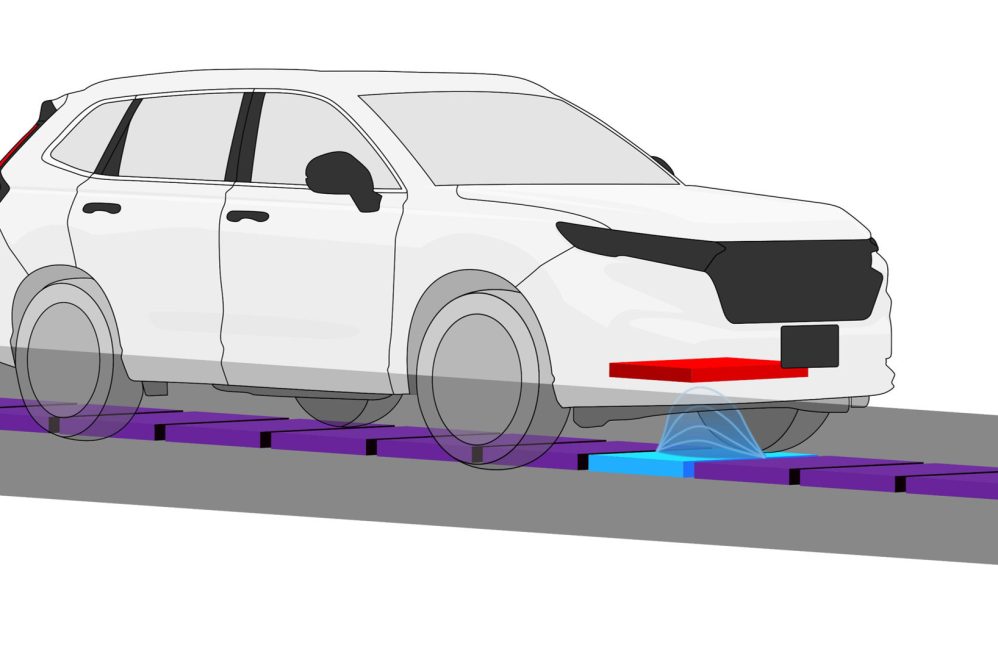
Honda has developed new wireless charging technology that could allow electric vehicles (EVs), including large commercial trucks, to add energy without ever leaving the road.
The technology is being developed by Honda R&D alongside construction company Taisei Corporation and Taisei Rotec. Unlike conventional wireless charging, where a vehicle remains parked over a charging pad, Honda’s system transfers electricity from equipment embedded in the pavement to a vehicle as it drives overhead.
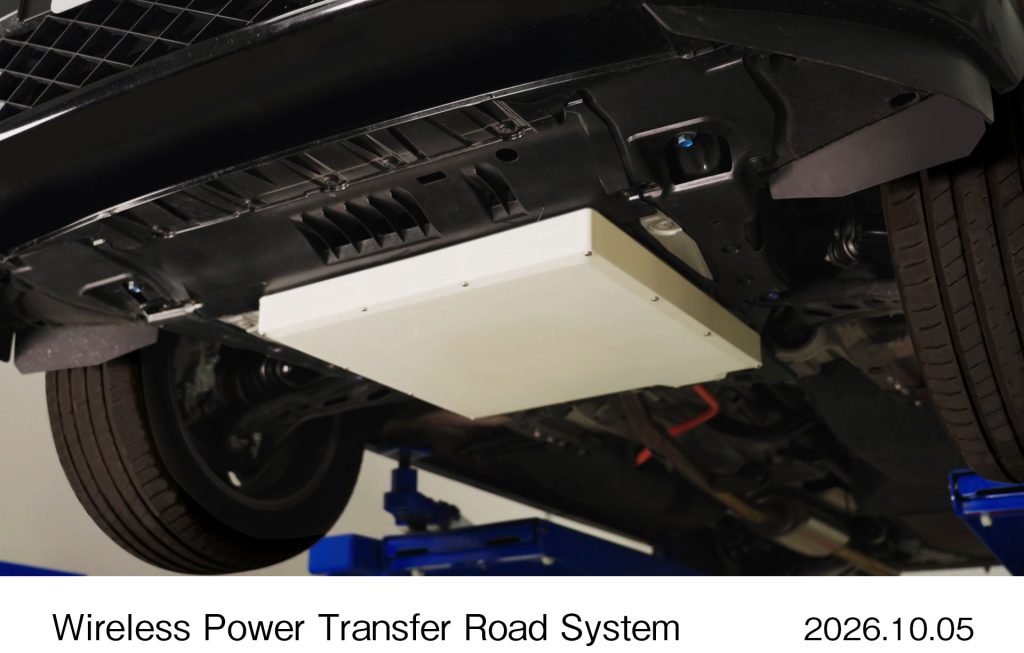
According to Honda, its ground assembly (GA) units contain both an inverter and charging coil. Honda says this is the world’s first publicly disclosed dynamic wireless power transfer unit using this configuration.
The units are connected using DC distribution, which reduces the amount of wiring and number of components that need to be installed beneath the road. They have also been designed to fit into milled sections of existing pavement, potentially allowing the technology to be installed as part of regular road resurfacing work.
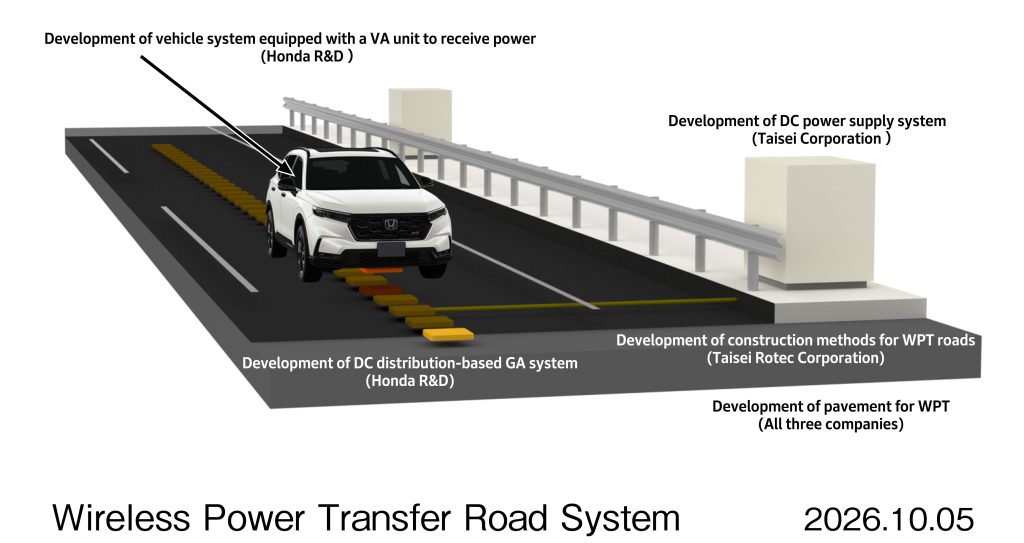
Honda isn’t just targeting passenger vehicles either. The companies have designed the pavement and charging hardware to withstand commercial vehicles weighing around 20 tonnes.
A new test road will be built later this year where the system will undergo durability testing equivalent to one million wheel loads, but the bigger test comes next year when Honda and its partners will participate in the Tateyama Project on the Tateyama Expressway in Chiba. The companies plan to test power transfer at up to 150 kW for large commercial vehicles, including whether the system can reliably deliver electricity at highway speeds.
Honda sees commercial transportation and logistics as the most promising early use case. Charging trucks while they are already moving could reduce charging stops, although there is still a major question surrounding the economics of installing charging equipment beneath highways. Honda says the cost compared with conventional fast-charging infrastructure still needs to be evaluated.
Related Articles:
- Tesla shares first details of its wireless charging system
- China sets the stage for a future with wireless EV charging standards
- Tesla patent reveals air suspension system to boost wireless charging efficiency
- Porsche to debut wireless charging with Cayenne Electric

Always get the latest - make Drive Tesla your preferred source on Google
Are you buying a Tesla? If you enjoy our content and we helped in your decision, use our referral link to get three months of Full Self-Driving (FSD).Drive Tesla uses affiliate links, which means we may earn a commission if you make a purchase through them, at no additional cost to you. Thank you for your support.