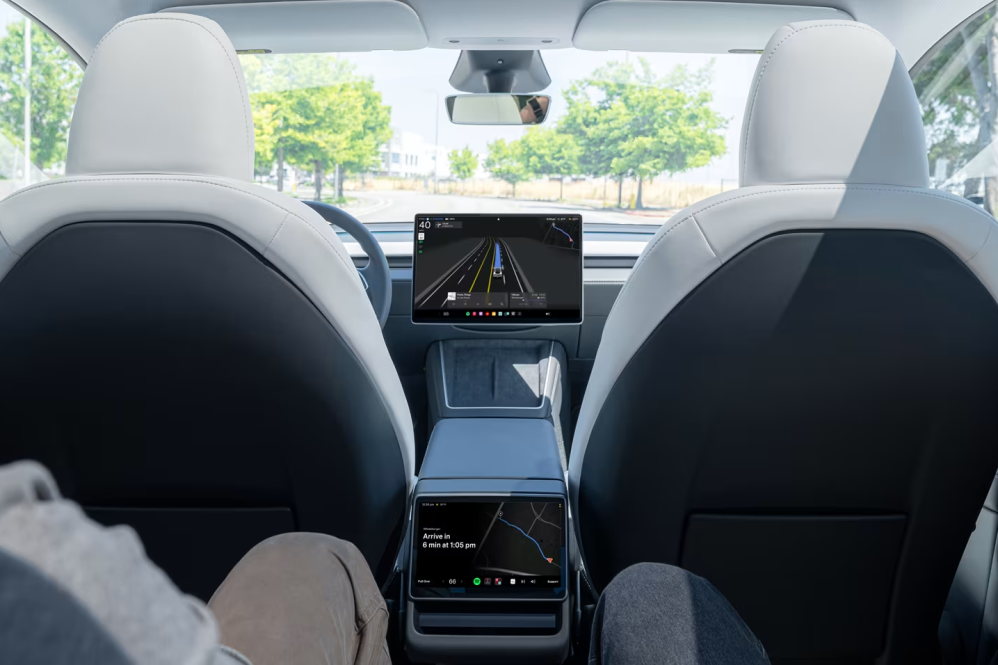
Tesla has expanded its unsupervised ride-hailing service across the entire geofenced area in Austin. The expansion was first reported by X user Jesse Richards, who discovered the expanded availability by testing drop-off locations through the Robotaxi app.
The expansion was then confirmed directly by Tesla’s Vice President of AI, Ashok Elluswamy.
The update represents a significant increase in operational coverage for Tesla’s autonomous ride-hailing fleet, which has been available in limited numbers and in a limited area in Austin over the last several months.
Unsupervised Robotaxi now available in the greater Austin area. https://t.co/kAK1nHxkdP
— Ashok Elluswamy (@aelluswamy) June 3, 2026
Tesla’s unsupervised fleet in Austin
The expansion comes as the size of Tesla’s unsupervised Robotaxi fleet appears to be growing, but not as quickly as many have hoped. Last month, tracking data showed the company operating 33 fully unsupervised vehicles across Austin, Dallas, and Houston, with Austin accounting for 22 of them.
Now, updated figures from Robotaxi Tracker indicate the fleet has expanded to 39 verified unsupervised Robotaxis, including 28 operating in Austin.

Nearly a Year Later, Robotaxi Growth Remains Limited
While the expansion is notable, Tesla’s Robotaxi rollout still remains relatively limited nearly a year after operations first began in Austin in July 2025. The fleet has now grown to 39 verified unsupervised vehicles, with Austin accounting for 28 of them, but the pace of expansion has been gradual compared to the ambitious timelines CEO Elon Musk has previously hoped for, saying it would cover roughly half of the U.S. population by the end of 2025.
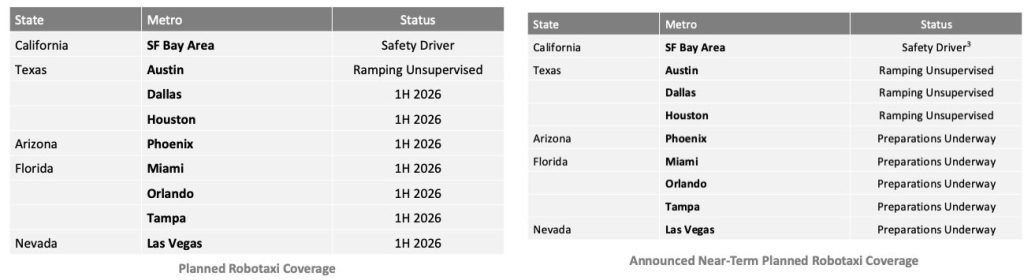
Tesla is still laying the groundwork for a broader rollout. According to the company’s most recent disclosure in its Q1 2026 shareholder deck, preparations are underway for future launches in Phoenix, Miami, Orlando, Tampa, and Las Vegas, with no defined target dates.
This is a change from its previous Q4 2025 update, which listed a 1H 2026 planned launch.
For now, Austin continues to act as Tesla’s primary real-world testing ground. Whether the company can meaningfully accelerate fleet growth and expand into new cities over the next year will likely be one of the biggest factors in determining how quickly Robotaxi can scale from a controlled pilot into a broader commercial service.

Always get the latest - make Drive Tesla your preferred source on Google
Are you buying a Tesla? If you enjoy our content and we helped in your decision, use our referral link to get three months of Full Self-Driving (FSD).Drive Tesla uses affiliate links, which means we may earn a commission if you make a purchase through them, at no additional cost to you. Thank you for your support.