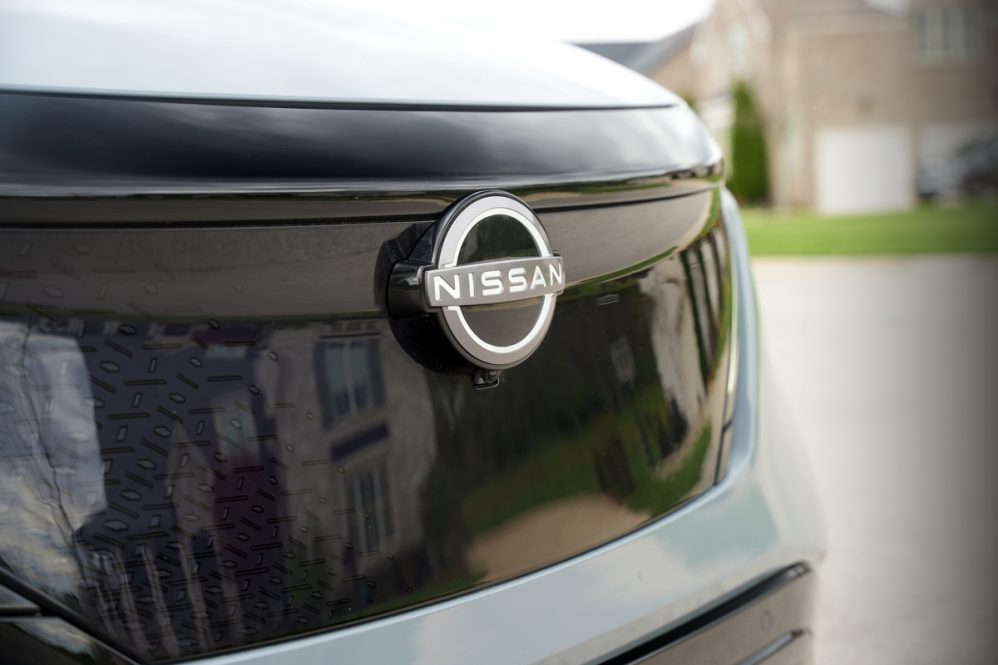
Nissan is the latest automaker to announce it is walking back its electrification plans. The Japanese automaker has decided not to build electric vehicles (EVs) in the United States, scrapping a $500 million investment that would have transformed its Canton, Mississippi plant into a major EV production hub.
Nissan will instead use the facility to produce gasoline and hybrid trucks and SUVs. The automaker says the move reflects changing market conditions, weaker-than-expected EV demand in the U.S., and the loss of key federal incentives that once supported its electrification push.
In a statement, the company confirmed it would “not move forward with previously announced EV programs” at the Canton site, adding that the decision aligns with its updated strategy while maintaining its long-term commitment to the U.S. market. (via Automotive News)
EV ambitions scaled back
The Canton project was originally part of Nissan’s broader Ambition 2030 plan, which aimed to significantly expand its EV lineup globally. However, the Mississippi initiative had already faced delays, and this latest move effectively cancels those efforts altogether.
The shift also comes amid reports that Nissan has pulled back on other U.S. focused EV programs, highlighting the challenges automakers are facing in scaling EV production in North America.
Trucks and hybrids take over
Instead of EVs, the Canton plant will now focus on a new lineup of body-on-frame vehicles—segments that remain highly profitable and in strong demand.
A key part of the plan is the return of the Xterra, expected to relaunch as a rugged SUV with a starting price below US$40,000 and an anticipated arrival around 2028. Nissan will also build a redesigned Frontier pickup, along with a new three-row SUV that could serve as a more off-road-focused alternative to the Pathfinder.
These vehicles are expected to share up to 70% of their components, allowing Nissan to improve manufacturing efficiency and reduce costs. There are also indications that Infiniti could receive its own version of the Xterra platform in the future.
Industry-wide pullback
Nissan is far from alone in rethinking its EV strategy. Automakers including Ford, General Motors, and Volkswagen have all slowed or adjusted their EV rollout plans in the U.S., shifting more focus toward hybrids and high-margin gas-powered vehicles.
At the same time, Toyota has doubled down on hybrids as a transitional solution, arguing they better align with current consumer demand.

Always get the latest - make Drive Tesla your preferred source on Google
Are you buying a Tesla? If you enjoy our content and we helped in your decision, use our referral link to get three months of Full Self-Driving (FSD).Drive Tesla uses affiliate links, which means we may earn a commission if you make a purchase through them, at no additional cost to you. Thank you for your support.