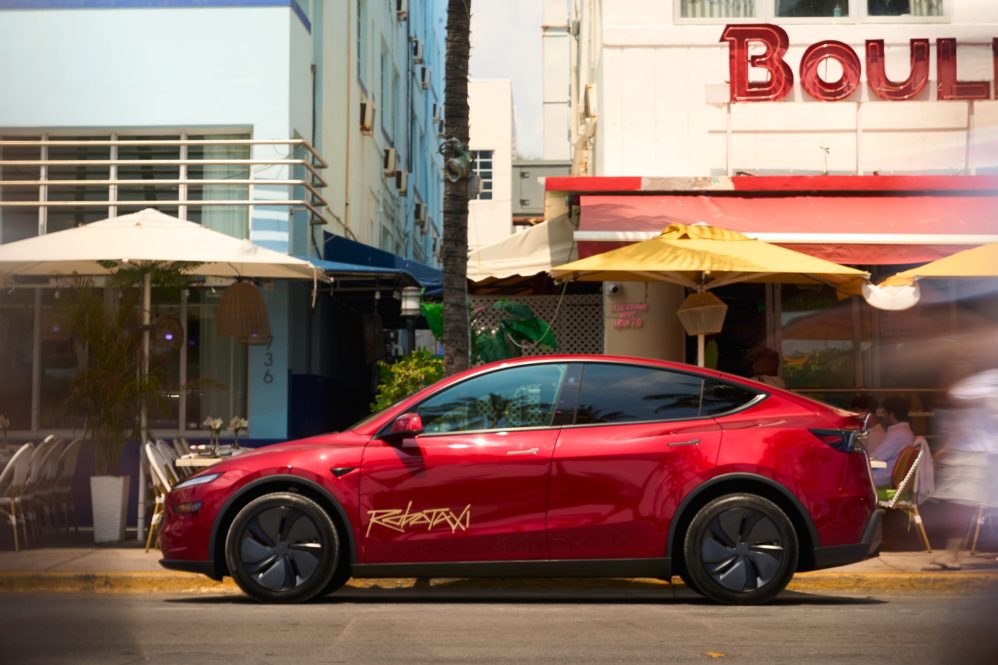
Since launching its Robotaxi service in Austin last June, Tesla has expanded to five additional markets, including Dallas, Houston, Miami, Orlando, and Tampa. However, one question has followed every expansion announcement – where are all the cars?
While the number of cities has grown, third party trackers indicate each market still has only about a dozen (or fewer) Robotaxis in active service.
According to Tesla, however, fleet size isn’t the company’s primary focus at this stage of the rollout. Instead, they are measuring progress by how many unsupervised miles the fleet is driving.
Explaining the strategy during the Q2 2026 earnings call, Vice President of AI Ashok Elluswamy said the company’s goal is to prove that FSD performs consistently across a variety of cities and driving environments.
“The reason we have been expanding across different cities instead of just doubling down on a single city is that we want to make sure that our stack is a very general one,” Elluswamy said.
Elluswamy also argued that fleet size alone can be misleading. A privately owned car may sit parked for most of the day, while a Robotaxi is designed to operate almost continuously. That means each vehicle can generate significantly more driving data, allowing Tesla to validate and improve FSD even with a relatively small fleet.
Why Tesla Is Focused on Miles, Not Cars
Elluswamy revealed the Robotaxi fleet has now driven more than 380,000 miles of unsupervised driving, adding that distance was completed without any notable incidents.
Musk said that figure is only the beginning. According to the CEO, Tesla’s Robotaxi network is currently growing at more than 10% per week in terms of miles driven.
“We’ll continue to scale, I think, very rapidly with more than 10% a week in terms of miles driven. It’s a very high compound growth rate,” Musk said.
As many fans have pointed out, that appears to conflict with Tesla’s Q2 2026 shareholder deck, which shows growth in paid Robotaxi miles beginning to slow toward the end of the quarter. However, the two metrics aren’t necessarily measuring the same thing.
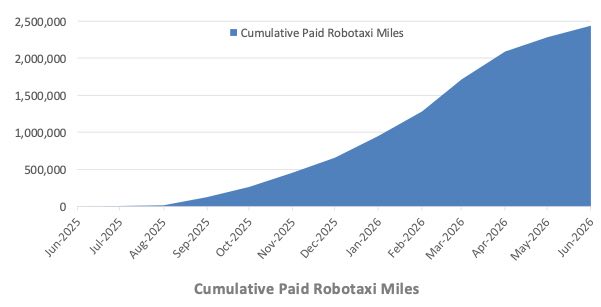
During the earnings call, the focus was on unsupervised miles, while the shareholder deck tracks paid passenger miles. As Tesla expands into new cities and validates new operating areas, more autonomous driving could be dedicated to testing and validation rather than passenger trips, allowing unsupervised miles to grow faster than paid rides.
The Strategy Behind the Rollout
If Tesla can maintain anything close to that 10% a week pace, the number of unsupervised miles driven will grow much faster than many expect, and shows why Tesla believes miles, not fleet size, is currently the better indicator of progress.
Fleet size will eventually become critical. Tesla ultimately needs hundreds of thousands of Robotaxis to support the autonomous ride-hailing network Musk has envisioned. But the earnings call suggests that today, software validation remains the primary bottleneck, not the number of vehicles available for service.
Once Tesla has accumulated enough unsupervised miles and confidence in the software, increasing the size of the fleet becomes a manufacturing challenge rather than an AI challenge – and that’s where Cybercab comes in.

Always get the latest - make Drive Tesla your preferred source on Google
Are you buying a Tesla? If you enjoy our content and we helped in your decision, use our referral link to get three months of Full Self-Driving (FSD).Drive Tesla uses affiliate links, which means we may earn a commission if you make a purchase through them, at no additional cost to you. Thank you for your support.