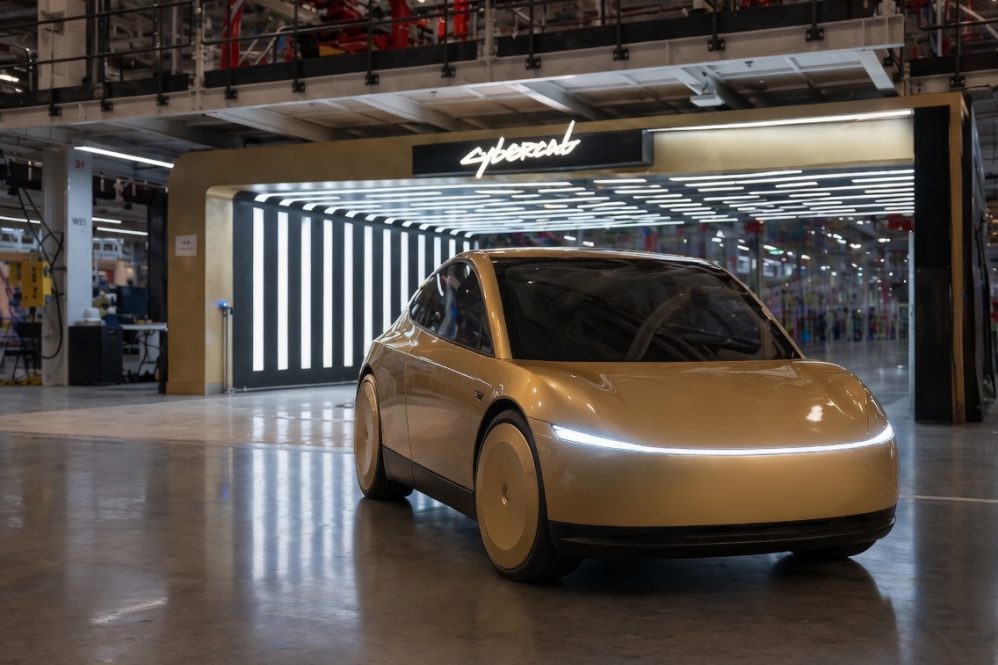
The Tesla Cybercab has achieved a major milestone, with the company now claiming it is officially the most energy-efficient electric vehicle (EV) ever certified.
According to comments made by Tesla Vice President of Vehicle Engineering Lars Moravy during the Model S and X Signature Delivery Event on Wednesday night, the fully autonomous two-seater has received a certified efficiency rating of just 165 Wh/mi, or about 102 Wh/km, setting a new benchmark for EV efficiency.
Lars Moravy, VP of Tesla Vehicle Engineering, says the Tesla Cybercab is officially the most efficient EV ever certified at 165 Wh/mi!
— Nic Cruz Patane (@niccruzpatane) May 21, 2026
That’s around 40% more efficient than a Model 3. WOW. pic.twitter.com/rAvLlJUnE9
More Efficient Than Any Tesla — or Lucid
The number is particularly impressive when compared to Tesla’s current lineup. The Rear-Wheel Drive (RWD) Model 3, already considered one of the most efficient EVs on the market, consumes roughly 240 Wh/mi (150 Wh/km) depending on wheels and configuration.
At 165 Wh/mi, the Cybercab would be approximately 40% more efficient. Even the most efficient EV currently available, the Lucid Air Pure RWD, comes in significantly higher than the Cybercab, at 230 Wh/mi (143 Wh/km).
Designed Specifically for Autonomous Transport
That level of efficiency did not happen by accident. Since unveiling the Cybercab, Tesla has repeatedly emphasized that the vehicle was engineered from the ground up specifically for autonomous transportation. Unlike traditional EVs designed for private ownership, the Cybercab prioritizes low operating costs, aerodynamic optimization, minimal weight, and maximum energy efficiency.
The compact robotaxi features an ultra-low drag design, a lightweight architecture, and a smaller battery pack than Tesla’s existing passenger vehicles. Tesla has also eliminated several traditional components, including a steering wheel and pedals, allowing engineers to further optimize cabin packaging and reduce unnecessary weight.
Why Efficiency Matters for Robotaxis
Efficiency will be critical to Tesla’s success in the robotaxi market. Lower energy consumption means lower charging costs, reduced downtime, and more profitable fleet operations. For a vehicle expected to spend nearly all day transporting passengers autonomously, even small gains in efficiency can have a massive impact when scaled across an entire fleet.
The impressive rating also suggests the Cybercab could achieve strong real-world range despite its relatively small battery pack. Tesla has not yet confirmed official EPA range estimates, but the company previously indicated the vehicle would target roughly 300 miles (483 km) of range.
Production Already Underway
Tesla officially started production of the Cybercab last month using its next-generation unboxed manufacturing platform, with production expected to eventually reach extremely high volumes. CEO Elon Musk has previously said the company intends to produce the vehicle at costs low enough to support autonomous ride-hailing fares cheaper than public transit in some markets.

Always get the latest - make Drive Tesla your preferred source on Google
Are you buying a Tesla? If you enjoy our content and we helped in your decision, use our referral link to get three months of Full Self-Driving (FSD).Drive Tesla uses affiliate links, which means we may earn a commission if you make a purchase through them, at no additional cost to you. Thank you for your support.