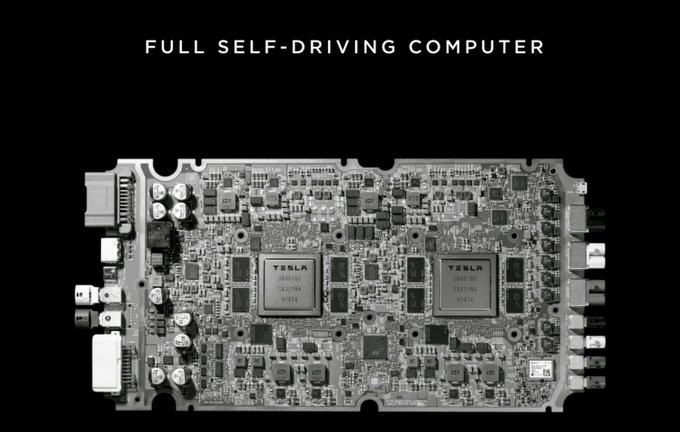
A new class action lawsuit against Tesla is using the company’s own recent comments about Hardware 3 (HW3) as the foundation for claims that customers were misled for years about the future capabilities of Full Self-Driving (FSD).
Filed in California federal court earlier this month, the lawsuit was brought by Kentucky resident David Waller, who purchased a 2020 Model S and paid an additional US$7,000 for FSD. According to the complaint, that decision to add FSD was made after relying on Tesla’s repeated statements that its vehicles already contained the hardware required for future self-driving functionality and that improvements would arrive through over-the-air (OTA) software updates. (via Top Class Actions)
While the lawsuit cites numerous public statements dating back to 2015, including one from 2016 that every Tesla leaving the factory had “hardware necessary for Level 5 Autonomy,” much of the case focuses on comments made much more recently.
During Tesla’s Q4 2024 earnings call, Elon Musk acknowledged the company would need to replace HW3 computers for customers who purchased FSD in order to achieve unsupervised self-driving capability on those vehicles. A few months later, during Tesla’s Q1 2026 earnings call, Musk went a step further, saying that “Hardware 3 simply does not have the capability to achieve unsupervised FSD.”
The complaint argues those statements directly contradict years of messaging that Tesla vehicles already had all the hardware required for full autonomy.
The lawsuit also points to Musk’s comments that upgrading affected vehicles could require replacing not only the onboard computer, but cameras as well, potentially requiring dedicated retrofit facilities to complete the work at scale.
This certainly isn’t the first lawsuit around FSD and its capabilities, what makes this one different is its focus on Tesla’s more recent admissions regarding HW3. Rather than focusing solely on marketing language such as Autopilot or FSD, the complaint points to Musk’s own statements that HW3 vehicles will require new hardware to achieve unsupervised FSD, arguing those comments conflict with years of claims that Tesla vehicles already had the hardware needed for autonomy.
The proposed class action includes anyone in the United States who purchased or leased a Tesla equipped with HW1 through HW3 and paid for FSD. The lawsuit seeks damages for fraud, breach of warranty, and alleged violations of consumer protection laws.
Tesla has not yet filed a response to the complaint. The case is Waller v. Tesla Inc. et al., Case No. 3:26-cv-05350.

Always get the latest - make Drive Tesla your preferred source on Google
Are you buying a Tesla? If you enjoy our content and we helped in your decision, use our referral link to get three months of Full Self-Driving (FSD).Drive Tesla uses affiliate links, which means we may earn a commission if you make a purchase through them, at no additional cost to you. Thank you for your support.