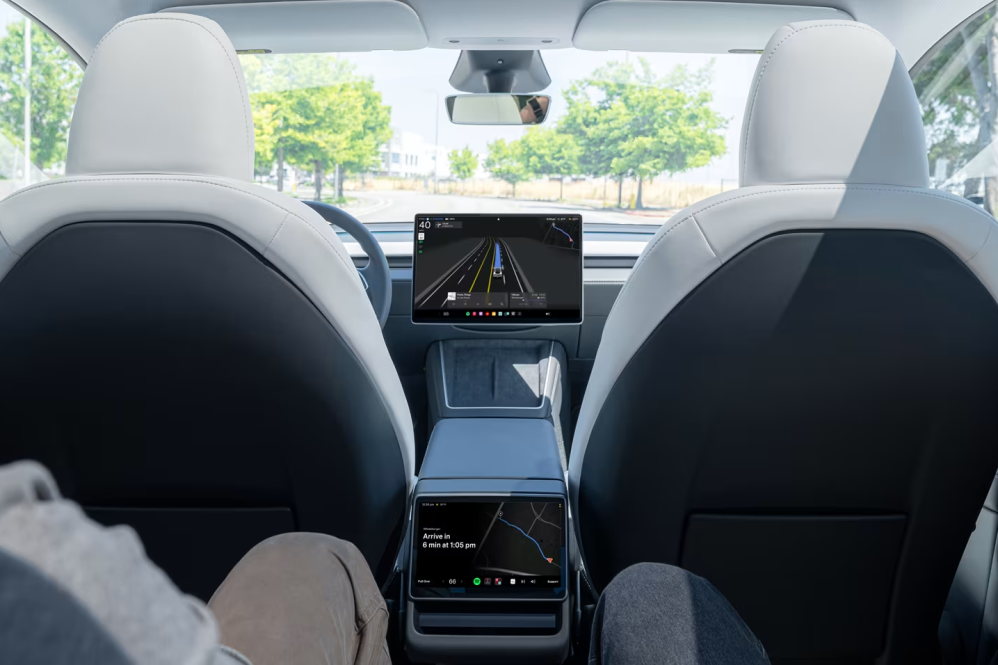
A Tesla Robotaxi safety document confirms the company is classifying its autonomous ride-hailing platform as an SAE Level 4 driving system.
The designation appears in Tesla’s Robotaxi First Responder Interaction Plan, a document created for police, firefighters, paramedics, and other emergency personnel who may encounter the company’s autonomous ride-hailing vehicles during traffic stops, collisions, road closures, and other incidents.
According to the guide:
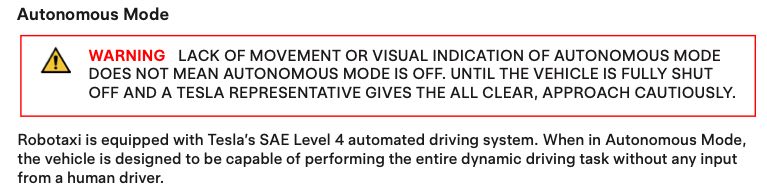
The language is significant because Tesla has historically been careful about how it describes the capabilities of its consumer-facing Full Self-Driving (Supervised) software, always limiting it to SAE Level 2, where owners are required to remain attentive and ready to take control of their vehicles at all times. However, the software behind the Robotaxi service is now being classified as Level 4
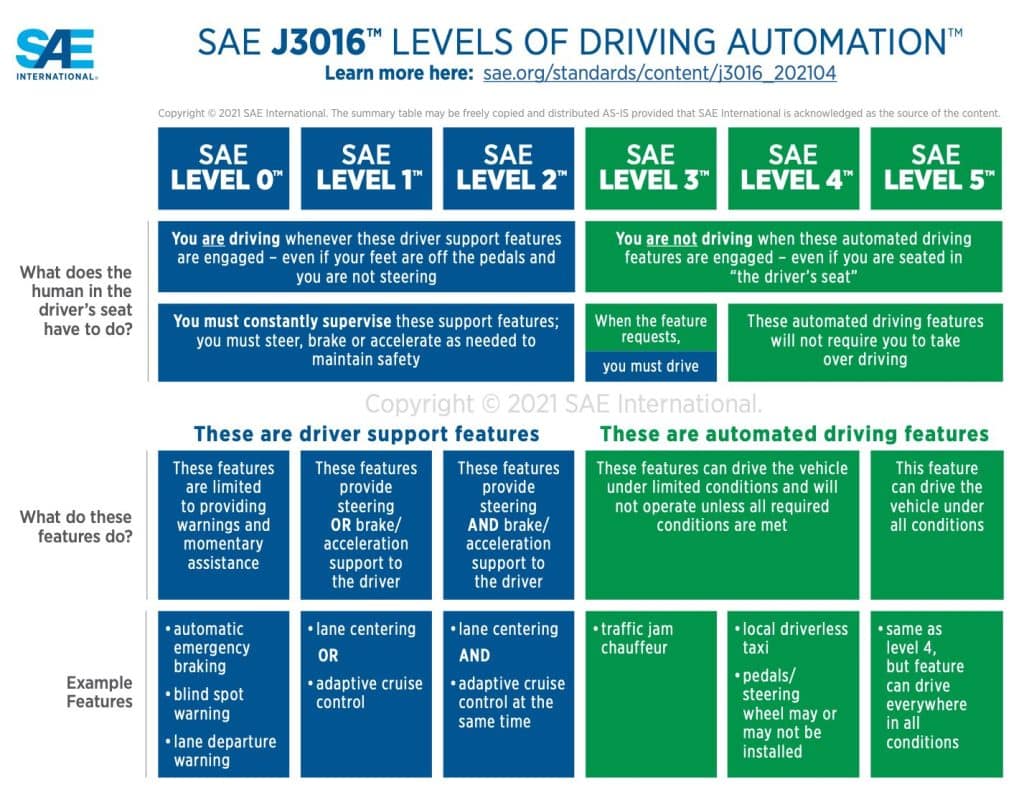
What Is Level 4 Autonomy?
Under the SAE’s autonomous driving definitions, a Level 4 vehicle must be capable of performing the entire driving task without human intervention within its designated operating area, known as its Operational Design Domain (ODD). That includes steering, accelerating, braking, monitoring the environment, responding to traffic conditions, and making driving decisions without requiring a human driver to take over.
Unlike Level 2 systems, such as Tesla’s consumer FSD software, a Level 4 system is not expected to rely on a human driver as a backup. If conditions fall outside its operating domain, such as severe weather or a road closure it cannot navigate, the vehicle must be able to safely stop or otherwise move to safety on its own.
Importantly, the steering wheel and pedals (aka Cybercab) are not required to be installed in the car for Level 4 automation.
Nevada filing already pointed to Level 4 autonomy
The disclosure also helps reinforce information that surfaced earlier this month when Tesla applied for an Autonomous Vehicle Network Company (AVNC) permit in Nevada.
As part of that application, Tesla sought approval to deploy up to 5,000 Robotaxis across Clark County, including Las Vegas, Harry Reid International Airport, and Henderson Executive Airport. The filing included Tesla’s self-certification that its autonomous driving system meets Nevada’s requirements for Level 4 operation.
At the time, the filing showed Tesla intended to classify its Robotaxi platform as a Level 4 autonomous system in Nevada once it officially launches in that state. The first responder guide goes a step further by explicitly using the SAE Level 4 designation in an operational safety document in areas where the service currently operates.
Who Decides Whether a Vehicle Is Level 4?
Unlike vehicle safety ratings, there is no independent organization that certifies autonomous vehicles as Level 4. The classification comes from standards developed by SAE, but companies are responsible for determining whether their systems meet those definitions.
In Tesla’s case, the company self-certified that its Robotaxi platform meets Nevada’s requirements for Level 4 operation as part of its recent permit application. Regulators can review testing data, safety documentation, operational procedures, and other supporting materials before approving commercial deployment, but there is no separate “Level 4 certification” issued by SAE or another third-party organization.

Always get the latest - make Drive Tesla your preferred source on Google
Are you buying a Tesla? If you enjoy our content and we helped in your decision, use our referral link to get three months of Full Self-Driving (FSD).Drive Tesla uses affiliate links, which means we may earn a commission if you make a purchase through them, at no additional cost to you. Thank you for your support.