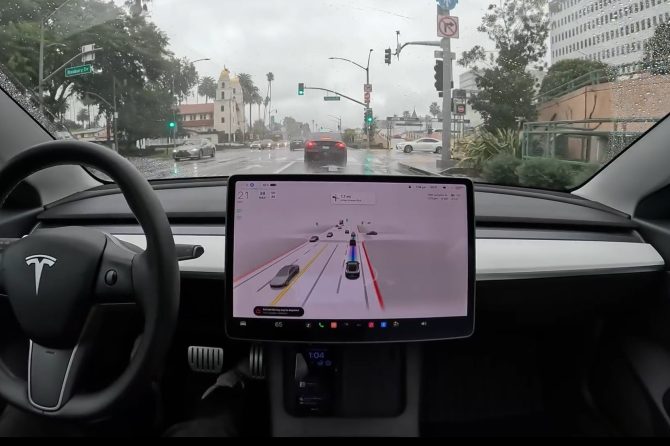
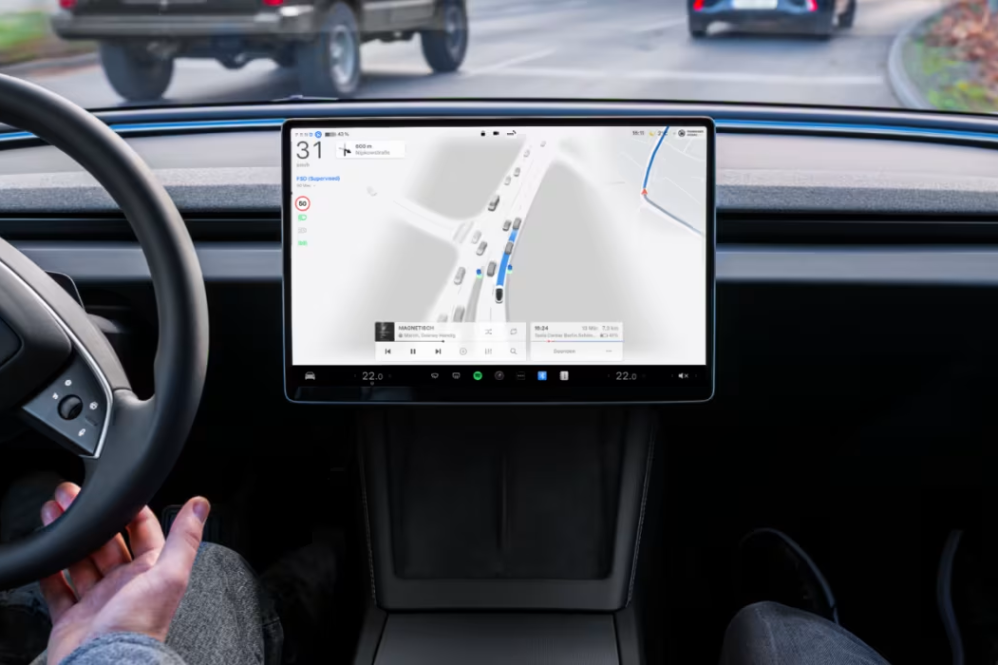
Tesla appears to be taking a more aggressive stance against unauthorized modifications that enable Full Self-Driving (FSD) features in regions where the software is not officially supported. This week the company has started remotely disabling driver assistance functions on these vehicles.
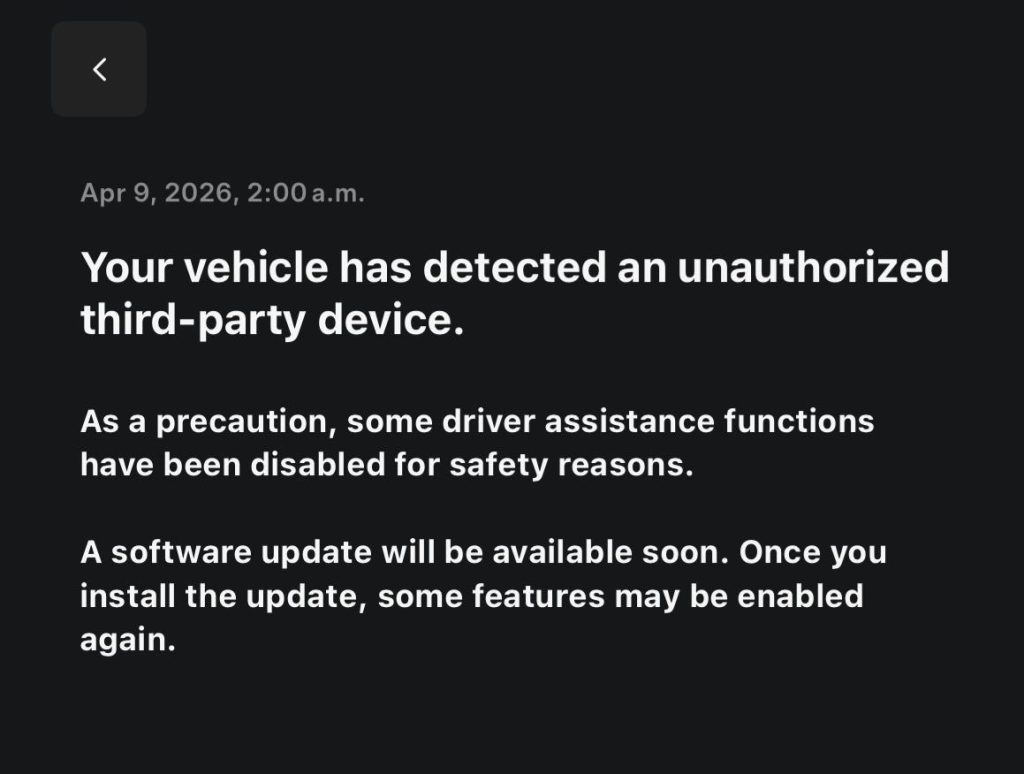
According to reports on social media, owners have started receiving alerts both in their vehicles and through the Tesla app warning, “Your vehicle has detected an unauthorized third-party device. As a precaution, some driver assistance functions have been disabled for safety reasons.”
The message also notes that a future software update could restore some features.
These actions show Tesla is actively identifying and restricting vehicles that have been modified using third-party hardware, commonly tied to CAN bus-based hacks. These devices are designed to bypass Tesla’s regional software restrictions, allowing drivers to activate FSD in markets where it has not yet been approved.
While Tesla has not publicly commented or detailed the scope of the action, reports have been spotted in multiple European countries, as well as China, Japan, and the UK. It appears as though this enforcement is happening server-side, without requiring a software update. Vehicles are reportedly being remotely accessed, flagged based on telemetry data, and restricted accordingly.
In some cases, access to FSD has been completely revoked, alongside other driver assistance features, including Autopilot.
So why is Tesla cracking down? Although the system is capable of generalized driving, it is not trained or configured to properly interpret all local traffic laws, signage, or driving conventions outside approved markets, introducing significant safety risks.
Another reason is likely increased regulatory scrutiny. Earlier this month in South Korea authorities issued warnings that using unauthorized systems to enable autonomous driving features could lead to serious legal consequences, including potential jail time. The country has strict rules governing driver assistance technologies, and unauthorized activation of such features is viewed as a violation of safety regulations.
Since many reports have come from Europe, Tesla is likely also taking preemptive measures to remove FSD from unauthorized vehicles before it is officially approved in the region. That approval is expected tomorrow, first in the Netherlands.
Beyond the crackdown, this situation also highlights the extent of Tesla’s remote capabilities when it comes to managing its vehicles. Tesla can restrict features or adjust functionality with essentially a few key strokes and the flip of a switch. While this level of control allows Tesla to quickly address safety concerns, add new features, and ensure compliance with regulations, it also illustrates how much authority the company retains over vehicle functionality long after the car has been delivered.

Always get the latest - make Drive Tesla your preferred source on Google
Are you buying a Tesla? If you enjoy our content and we helped in your decision, use our referral link to get three months of Full Self-Driving (FSD).Drive Tesla uses affiliate links, which means we may earn a commission if you make a purchase through them, at no additional cost to you. Thank you for your support.