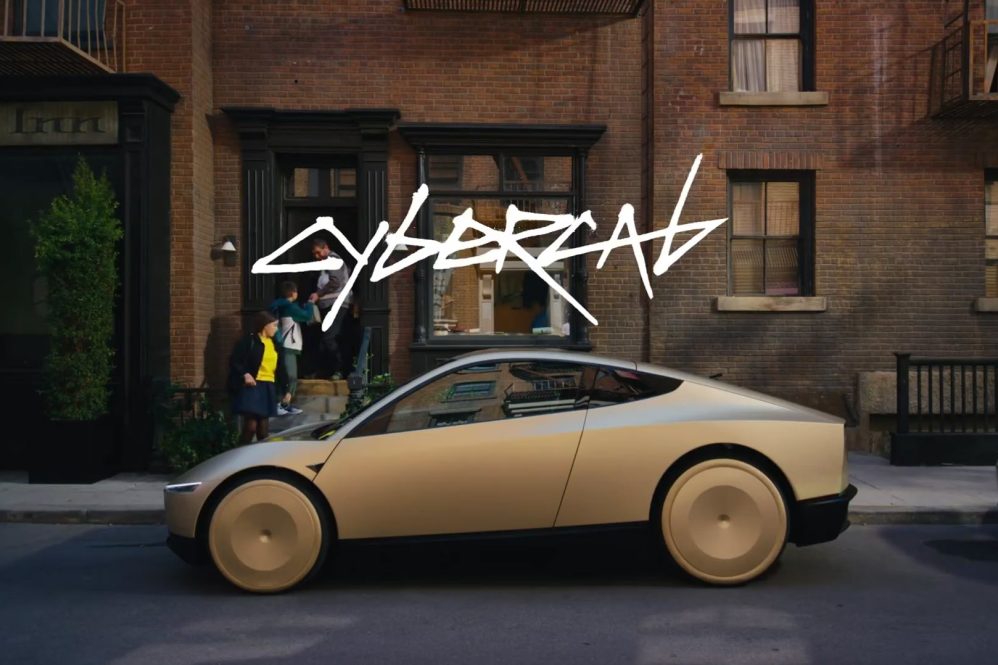
Tesla’s new Cybercab first responder guide has revealed a new piece of hardware hidden in plain sight: external microphones and speakers specifically designed to assist police and emergency responders interacting with driverless vehicles.
According to the document, when a Cybercab is pulled over or involved in an incident, two-way communication is automatically established between the vehicle and Tesla Robotaxi Support.
Unlike the Model Y Robotaxi fleet currently operating in Austin, Cybercab uses external microphones mounted in the B-pillars and speakers located on the underside of the vehicle, allowing first responders to communicate with Tesla personnel without needing to open a door or enter the vehicle.
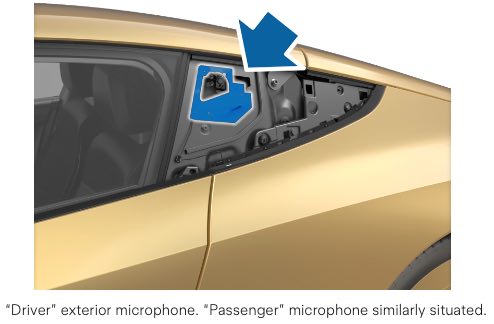
This setup represents an evolution of the procedures Tesla previously outlined for its Model Y Robotaxi fleet.
In the earlier first responder guide, which was specific to the Model Y Robotaxi, emergency personnel were instructed to approach the driver’s side window and communicate using the vehicle’s onboard speaker system after the windows were automatically lowered during a stop or incident.
Cybercab removes that requirement entirely. Instead, officers can approach either side of the vehicle and speak directly to Tesla support personnel through microphones integrated into the exterior of the vehicle. Tesla says the company can also remotely roll down windows, unlock doors, and open the hood or trunk if additional access is required.
The guide notes that first responders can also manually initiate communication by touching the Support icon on the vehicle’s touchscreen if an automatic connection has not already been established.
The system highlights one of the unique challenges facing driverless vehicles: replacing the interactions that would normally occur between a police officer and a human driver during a traffic stop.
Tesla’s solution effectively turns the vehicle itself into a communications device, allowing officers to speak directly with Tesla’s operations team while the company remotely manages the vehicle’s status and provides assistance.

Always get the latest - make Drive Tesla your preferred source on Google
Are you buying a Tesla? If you enjoy our content and we helped in your decision, use our referral link to get three months of Full Self-Driving (FSD).Drive Tesla uses affiliate links, which means we may earn a commission if you make a purchase through them, at no additional cost to you. Thank you for your support.