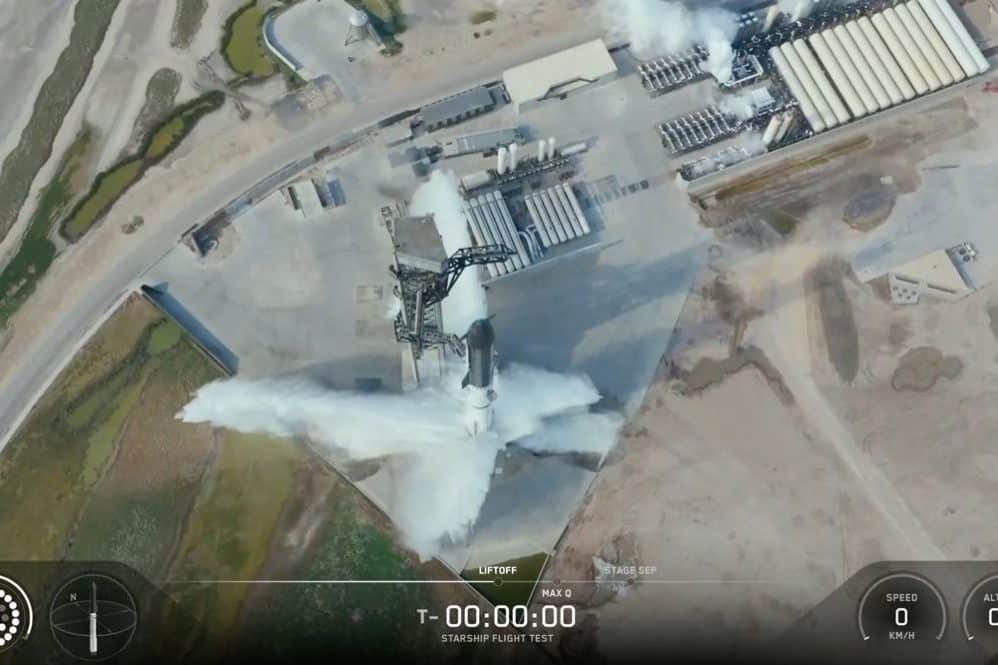
SpaceX’s Starship Flight 13 ended before it ever left the launch pad after the company’s automated safety systems halted the countdown just moments before liftoff.
The launch attempt from Starbase, Texas was progressing normally until the ignition sequence began. As Starship’s 33 Raptor engines started firing, several failed to ignite as expected, prompting the vehicle’s onboard systems to immediately abort the launch, with the remaining engines shutting down almost instantly.
According to telemetry displayed during SpaceX’s livestream, four engines did not ignite during the startup sequence. The company has not confirmed the exact cause, but CEO Elon Musk provided an update shortly after the scrub.
“To be confident of a good flight, 2 Raptors will be removed & replaced. Most probable launch timing is early next week,” Musk wrote on X.
Automatic abort prevented a potentially dangerous launch
While disappointing for spectators, the last-second scrub demonstrated exactly how Starship’s automated launch safety systems are designed to operate. Rather than risk launching with insufficient engine performance, the software detected the anomaly and safely shut down the vehicle before liftoff.
The launch team quickly began detanking Starship following the scrub, a standard procedure after a launch cancellation.
Watch Starship's thirteenth flight test https://t.co/wYoNPiNMz8
— SpaceX (@SpaceX) July 16, 2026
Mission objectives remain unchanged
Flight 13 is set to be the second mission for SpaceX’s upgraded Starship V3 design following its debut in May. That flight successfully reached space but experienced issues during the Super Heavy booster’s descent and an upper-stage engine relight.
This mission also marks the planned debut of 20 next-generation Starlink V3 satellites. Although they are functional, they are only intended for suborbital testing and will re-enter Earth’s atmosphere roughly 20 minutes after deployment. Several of the satellites will also carry cameras to capture images of Starship’s heat shield during flight.
Assuming the engine replacements and inspections proceed as planned, SpaceX could make another attempt as early as next week.

Always get the latest - make Drive Tesla your preferred source on Google
Are you buying a Tesla? If you enjoy our content and we helped in your decision, use our referral link to get three months of Full Self-Driving (FSD).Drive Tesla uses affiliate links, which means we may earn a commission if you make a purchase through them, at no additional cost to you. Thank you for your support.