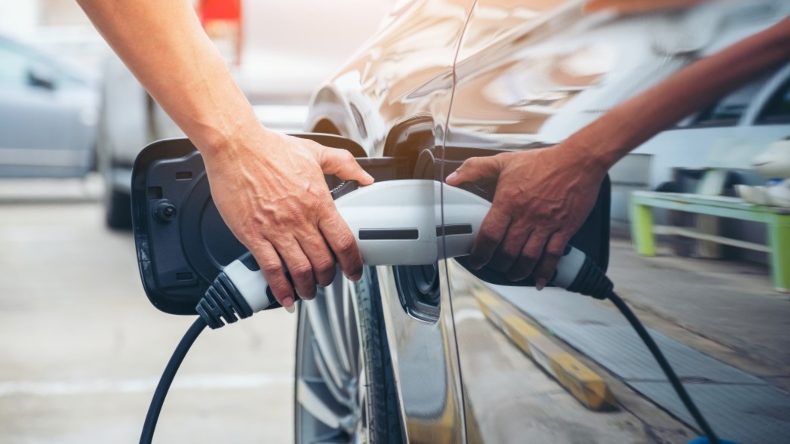
More Canadian municipalities are requiring new buildings to be ready for electric vehicle charging, but where you live still plays a major role in whether those rules exist.
According to a new survey by Electric Autonomy, more than 60 municipalities and two provinces have now codified requirements for new buildings to install EV charging infrastructure or provide rough-ins for future chargers. That represents a roughly 20 per cent increase compared with 2024.
In the last two years alone, more than a dozen municipalities have added EV-ready requirements to their building codes.
The biggest concentration is in British Columbia, where 33 municipalities have adopted requirements. Ontario ranks second with 17. At the provincial level, only B.C. and Quebec have EV-ready legislation, leaving much of the country dependent on individual municipalities to set their own rules.
The uneven approach is particularly important for Canadians living in condos and other multi-unit residential buildings (MURBs), where access to home charging remains one of the biggest obstacles to EV ownership. Residents of strata properties, townhouses and semi-detached homes can also face resistance to charger installations over costs, approvals and uncertainty around existing policies.
We have seen those challenges before. In 2023, a Vancouver strata owner was denied permission to install an EV charger at his parking stall after failing to receive the required approval from other owners.
Making buildings EV-ready during construction can also avoid more expensive retrofits later. A 2025 report from Clean Energy Canada found installing charging infrastructure in new buildings can be three to four times cheaper than upgrading an existing building. The organization says 34 per cent of Canadian households live in apartment buildings.
Governments are also directing funding toward the gap. Earlier this year, Cogir Immobilier received federal support to install 981 Level 2 chargers across Quebec.
However, large parts of Canada still have no EV-ready requirements at either the municipal or provincial level. Electric Autonomy found none in Nunavut, Northwest Territories, Yukon, Prince Edward Island, Nova Scotia, New Brunswick, Manitoba or Saskatchewan.
Calgary, St. John’s and Halifax also have no formal bylaws in place, although all three are considering future requirements through proposals.

Always get the latest - make Drive Tesla your preferred source on Google
Are you buying a Tesla? If you enjoy our content and we helped in your decision, use our referral link to get three months of Full Self-Driving (FSD).Drive Tesla uses affiliate links, which means we may earn a commission if you make a purchase through them, at no additional cost to you. Thank you for your support.