Rivian is expanding its partnership with Redwood Materials, giving the battery recycling company a larger role in managing its batteries, from manufacturing waste to retired battery packs that can be reused for energy storage.
The expanded agreement, announced Wednesday, will see Redwood handle battery scrap from Rivian’s manufacturing operations, while continuing to collect used battery packs through the automaker’s nationwide service network.
Rather than immediately recycling every battery, Redwood will evaluate whether the packs still have enough capacity to be used in stationary energy storage systems. Those that qualify could be deployed at Rivian facilities or other locations, while the remaining batteries will be recycled to recover valuable materials.
Retired EV batteries to power Rivian factory
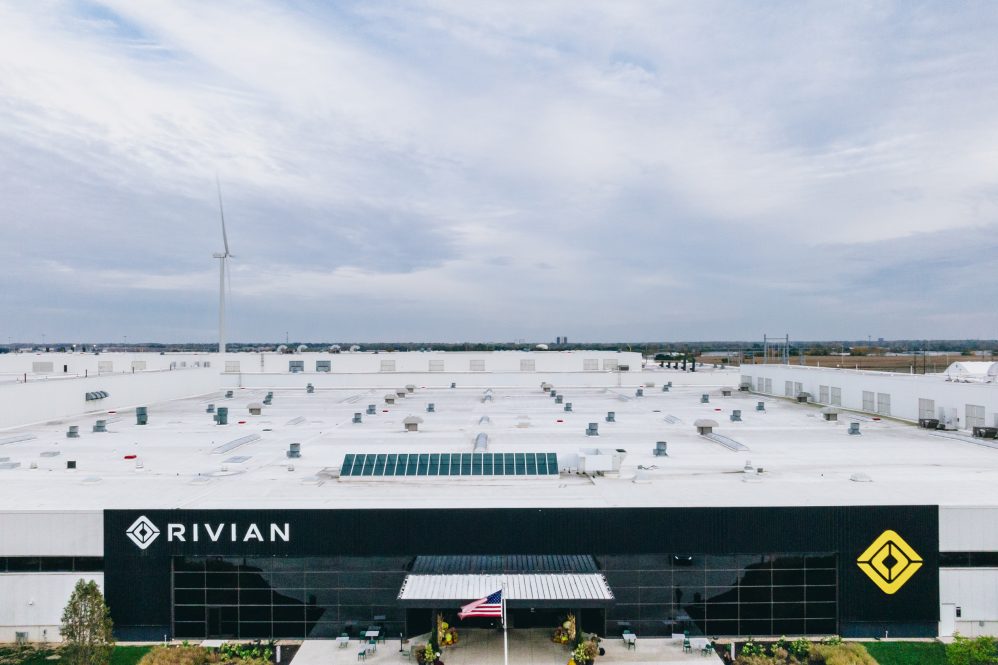
The announcement builds on a partnership revealed in April, when Rivian and Redwood outlined plans to install 10 megawatt-hours (MWh) of energy storage at Rivian’s manufacturing plant in Normal, Illinois.
The system will use repurposed Rivian battery packs to store electricity when demand is low, then discharge that energy during more expensive peak periods.
For Rivian, the arrangement could help reduce electricity costs at its factory while giving retired EV batteries a useful second life.
Redwood Materials was founded by former Tesla executive JB Straubel, who previously served as Tesla’s Chief Technology Officer and played a major role in developing the company’s early battery technology.
Keeping battery materials in circulation
Once batteries can no longer be reused, Redwood says its recycling process can recover more than 95% of critical materials, including lithium, nickel, cobalt, and copper.
Those recovered materials can then return to the battery supply chain, reducing dependence on newly mined resources.
The expanded agreement comes as Rivian prepares to scale production of its more affordable R2 SUV, making battery supply, manufacturing efficiency, and cost management increasingly important.
To help that ramp, the company recently hired Jody Kerns, who will lead R2 general assembly after performing in a similar role at Tesla for the Cybercab program.
Related Articles:
- Rivian and Redwood Materials to Repurpose Used EV Battery Packs for Factory Power
- Veteran Tesla engineering executive moves to Redwood Materials
- Redwood Materials confirms $3.5 billion South Carolina Battery Materials Campus
- Redwood Materials and Toyota partner to recycle old EV batteries

Always get the latest - make Drive Tesla your preferred source on Google
Are you buying a Tesla? If you enjoy our content and we helped in your decision, use our referral link to get three months of Full Self-Driving (FSD).Drive Tesla uses affiliate links, which means we may earn a commission if you make a purchase through them, at no additional cost to you. Thank you for your support.