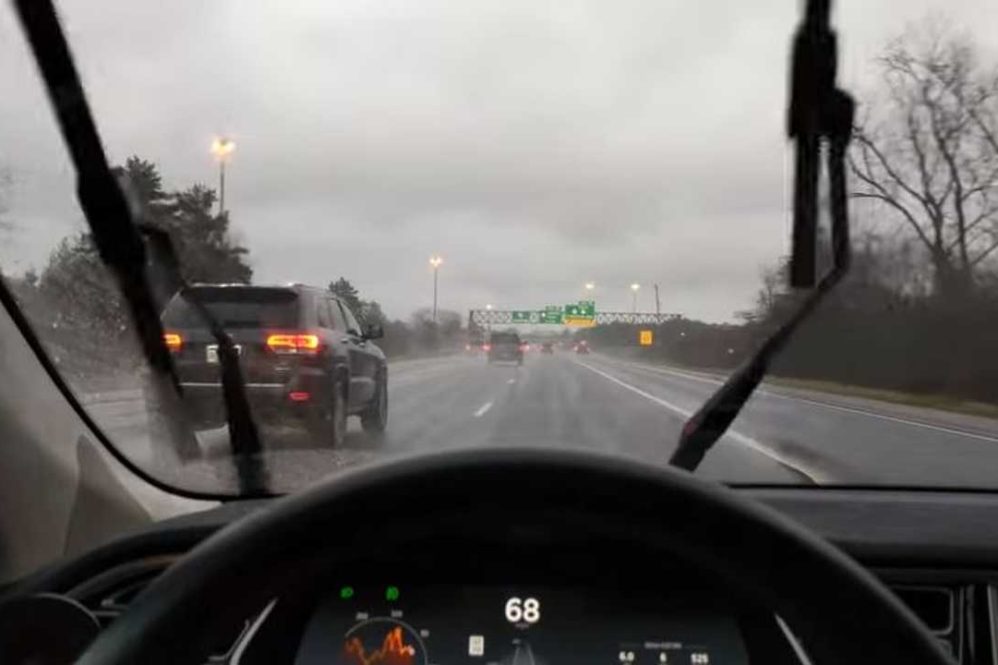
Tesla is taking a new approach to one of its most notoriously discussed features, introducing a new automatic wiper system that rethinks how its vehicles detect rain, ice, and other windshield conditions.
The feature was revealed in a newly published patent, but according to a Senior Staff Engineer at Tesla named in that patent, Yun-Ta Tsai, the system has already been deployed to the entire fleet of vehicles through a free over-the-air (OTA) software update.
What the patent reveals is that Tesla has developed a new software-driven automatic wiper system that no longer relies primarily on camera-based vision. Instead, it turns the wiper motor itself into a sensor, using real-time feedback to determine what’s happening on the windshield.
Rather than trying to “see” rain through the front-facing cameras, something which the company has failed to successfully implement even after years of trying, the updated system measures resistance. By analyzing the electrical power consumption of the wiper motor, the software can estimate how much friction exists between the rubber blade and the glass.
That friction becomes a proxy for conditions like water, debris, frost, or even a dry windshield.


This is a notable shift from Tesla’s earlier reliance on vision-based detection, which has long faced criticism from owners for inconsistent performance. By tapping directly into the physics of the wiper system, Tesla appears to be adding a more reliable layer of feedback that doesn’t depend on lighting, camera clarity, or environmental visibility.
The implications go beyond simply turning the wipers on and off at the right time. The system is also designed to respond dynamically to more challenging conditions. When higher than normal friction is detected, such as when ice or frost is present, the vehicle can automatically activate the defroster to help clear the windshield.
This creates a more integrated response, where multiple systems work together without driver input.
Tesla is also leveraging this data over the long term. By tracking average friction levels over time, the system can identify when the wiper blades are wearing out. Increased resistance from degraded rubber could trigger a notification, prompting owners to replace their blades before performance drops significantly.
Like many of Tesla’s software-driven features, this system is likely to improve over time through OTA updates. As more vehicles contribute data and edge cases are encountered, the algorithms behind the friction detection model will likely become more refined, leading to smoother and more accurate operation – something which is long overdue.
You can read the full patent below.

Always get the latest - make Drive Tesla your preferred source on Google
Are you buying a Tesla? If you enjoy our content and we helped in your decision, use our referral link to get three months of Full Self-Driving (FSD).Drive Tesla uses affiliate links, which means we may earn a commission if you make a purchase through them, at no additional cost to you. Thank you for your support.