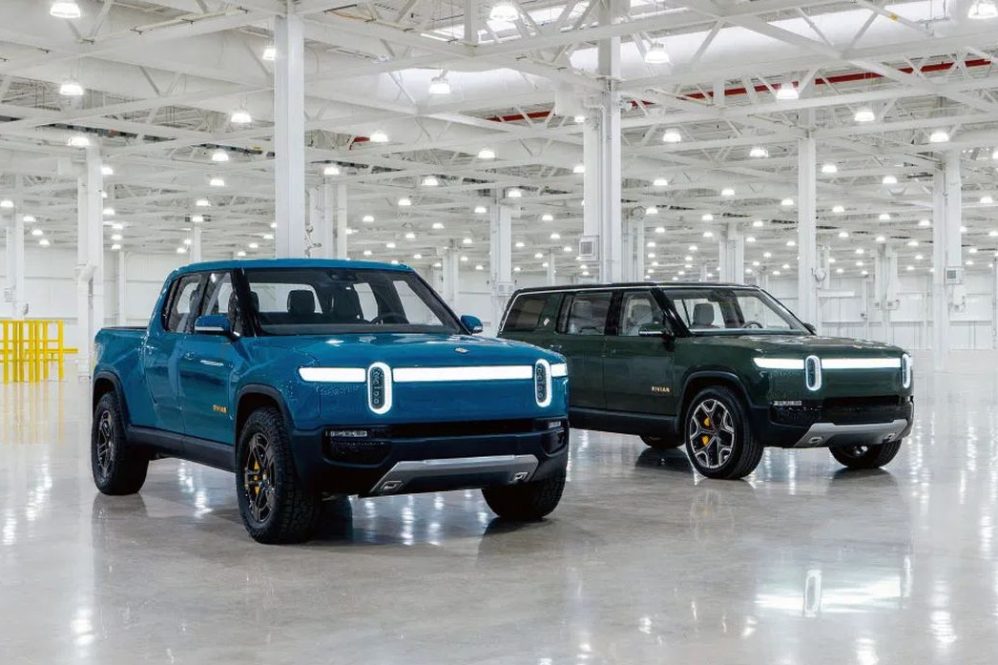
Rivian is facing a proposed class action lawsuit in California that accuses the electric vehicle maker of misleading customers about the future self-driving capabilities of its first-generation R1T pickup and R1S SUV.
The lawsuit, filed this week in the U.S. District Court for the Central District of California, alleges Rivian spent years promoting its Driver+ system as a pathway toward advanced hands-free driving, despite knowing that the hardware in its early vehicles would never be capable of delivering the Level 3 autonomous driving features buyers were led to expect.
According to the complaint, Rivian marketed its first-generation vehicles between 2018 and 2023 as being capable of eventually receiving Level 3 functionality through future software updates.
The plaintiffs argue that promise was never achievable with the hardware installed in the original R1T and R1S.
“In reality, Rivian manufactured its Gen 1 Vehicles without the hardware, cameras, sensors, and compute to enable hands-free driving and/or level 3 autonomous operation,” the complaint states. “Indeed, the Driver+ system was never designed to support the type of autonomous driving Rivian claimed its vehicles could perform. No software update — no matter how sophisticated — will enable its Gen 1 Vehicles to perform as advertised.”
The lawsuit claims Rivian continued making those representations through marketing materials, public presentations, sales staff, and comments from CEO RJ Scaringe. One example cited in the filing references statements made during the company’s early vehicle unveilings regarding the sensor suite and future autonomous driving ambitions.
Three owners from California, Michigan, and Wisconsin are named as plaintiffs. They say they purchased first-generation R1 vehicles in 2022 and 2023 after researching Rivian’s advertised capabilities and paid between US$81,000 and US$97,000 for their vehicles.
“None of them would have purchased a Gen 1 Vehicle — or certainly would not have paid what they did — had Rivian truthfully disclosed that its vehicle would never be capable of true hands-free autonomous driving,” the lawsuit alleges.
The case comes as Rivian’s second-generation R1 vehicles, introduced in 2024, now support hands-free driving through the company’s newer Rivian Autonomy Platform. Those updated vehicles feature a redesigned sensor suite with 11 cameras, five radar sensors, and significantly more computing power than the original models.
In late 2025, Rivian rolled out its Universal Hands-Free feature to second-generation vehicles, allowing hands-free operation on more than 3.5 million miles of roads across the United States and Canada where lane markings are visible.
Rivian has declined to comment on the lawsuit, citing pending litigation.
The lawsuit may also sound familiar to some Tesla owners. For years, Tesla marketed its Hardware 3 (HW3) computer as being capable of supporting future unsupervised autonomous driving through software updates alone. However, Tesla has since acknowledged that newer vehicles equipped with HW4 offer significantly more processing power and capabilities, and CEO Elon Musk has admitted that HW3 vehicles may require hardware upgrades to achieve the company’s long-promised unsupervised Full Self-Driving (FSD) capabilities.

Always get the latest - make Drive Tesla your preferred source on Google
Are you buying a Tesla? If you enjoy our content and we helped in your decision, use our referral link to get three months of Full Self-Driving (FSD).Drive Tesla uses affiliate links, which means we may earn a commission if you make a purchase through them, at no additional cost to you. Thank you for your support.