As part of its expanded investigation into Tesla’s Full Self-Driving (FSD) system, the U.S. National Highway Traffic Safety Administration (NHTSA) is once again looking at how the company markets the technology. A newly released Engineering Analysis information request asks Tesla to justify whether its website, advertising, and public statements accurately describe FSD’s capabilities and limitations.
The request is part of NHTSA’s ongoing investigation into crashes involving FSD operating in reduced visibility conditions, including fog, glare, and dust.
Tesla’s Website, X Posts, and Musk’s Comments
In its 17-page letter, the NHTSA identified a series of examples taken from Tesla’s website, official X account, and posts made by CEO Elon Musk, asking Tesla to explain whether each statement accurately reflects the system’s intended capabilities.
Among the examples cited are Tesla’s description of FSD Supervised as “effectively point-to-point autonomous transport in your own car,” that FSD “can drive in whiteout conditions” and Elon Musk’s statement that “Tesla FSD can operate in all conditions.”
For each example, NHTSA is asking Tesla whether the messaging is consistent with the system’s actual capabilities, whether it could imply a greater level of automation than currently exists, and whether the company has taken, or plans to take, steps to clarify the messaging.
Videos Encouraging Driver Complacency
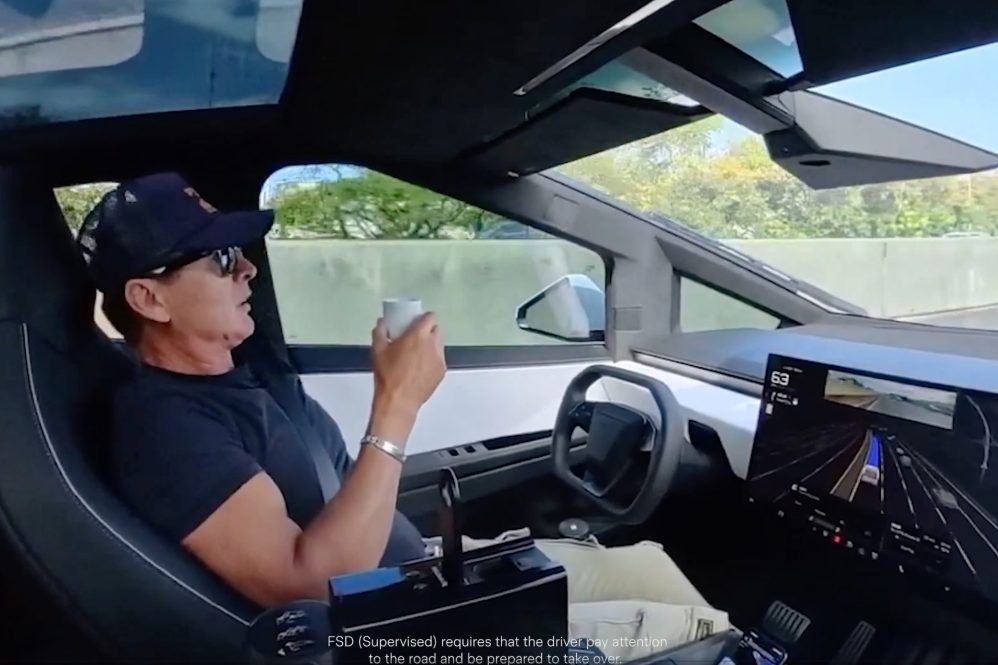
The regulator is also taking a closer look at several videos shared by Tesla and Musk that depict drivers engaging in activities other than actively supervising the vehicle.
Among the examples referenced are videos showing occupants making espresso, dancing, reclining their seats, and interacting with objects inside the cabin while FSD Supervised is engaged. NHTSA also cited a post in which Musk responded to a question about texting while using FSD.
The agency wants Tesla to explain whether these examples accurately represent the intended use of FSD and whether they could contribute to consumer misunderstanding about the driver’s responsibility to remain attentive.
FSD Supervised gives you back time & energy
— Tesla (@Tesla) July 3, 2025
All while making the roads safer for you & others pic.twitter.com/PDvondh7Rh
According to the letter, Tesla must respond to the requests by August 12, 2026.
Not The First Time
This isn’t the first time NHTSA has scrutinized Tesla’s messaging around Full Self-Driving. In late 2024, the agency sent the automaker a warning letter expressing concern that posts on Tesla’s official X account could lead consumers to believe FSD was capable of operating autonomously without active driver supervision.
That letter ultimately prompted Tesla to update some of its website language and marketing materials.
Part of a Broader Investigation
As we noted, the review of Tesla’s marketing forms just one portion of a much larger Engineering Analysis focused on nine crashes involving FSD in reduced visibility conditions. NHTSA is also requesting extensive technical documentation, internal testing, and engineering analyses related to how the system detects degraded visibility and alerts drivers when intervention may be required.

Always get the latest - make Drive Tesla your preferred source on Google
Are you buying a Tesla? If you enjoy our content and we helped in your decision, use our referral link to get three months of Full Self-Driving (FSD).Drive Tesla uses affiliate links, which means we may earn a commission if you make a purchase through them, at no additional cost to you. Thank you for your support.