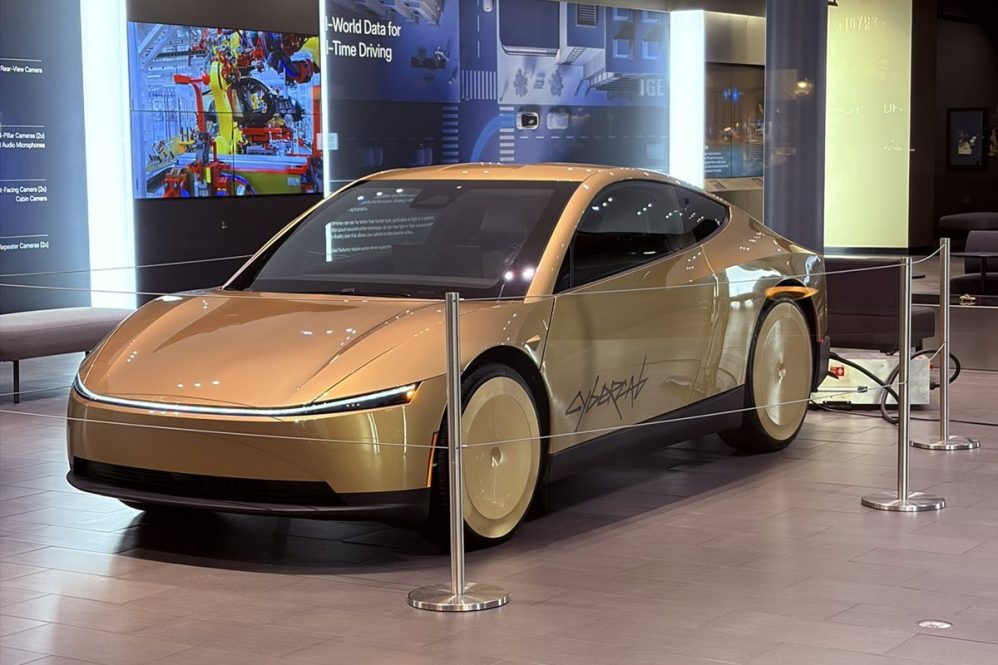
Tesla has officially revealed that the Cybercab will be the first vehicle in its lineup to feature built-in Starlink integration. The confirmation comes after months of speculation fueled by sightings of prototype robotaxis equipped with Starlink hardware.
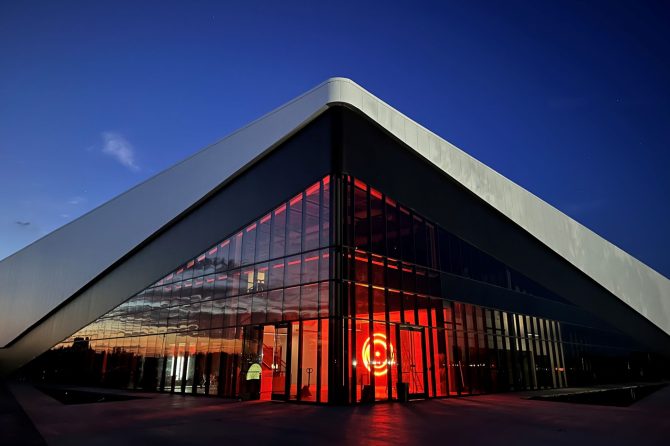
The integration was revealed at the Santana Row showroom in California, which has just undergone a renovation to focus on Cybercab and Robotaxi. Along with a production version of the Cybercab, Tesla has also added a new display showcasing the Cybercab’s hardware layout.
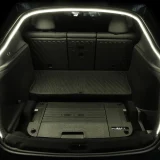
Among the items labeled on the diagram is “Starlink Integration” as part of the vehicle’s architecture. The component is shown mounted in the rear of the vehicle, just behind the passenger compartment, confirming earlier sightings of Starlink antenna installed on prototype Cybercabs during testing. (via @Starscream_SJC)
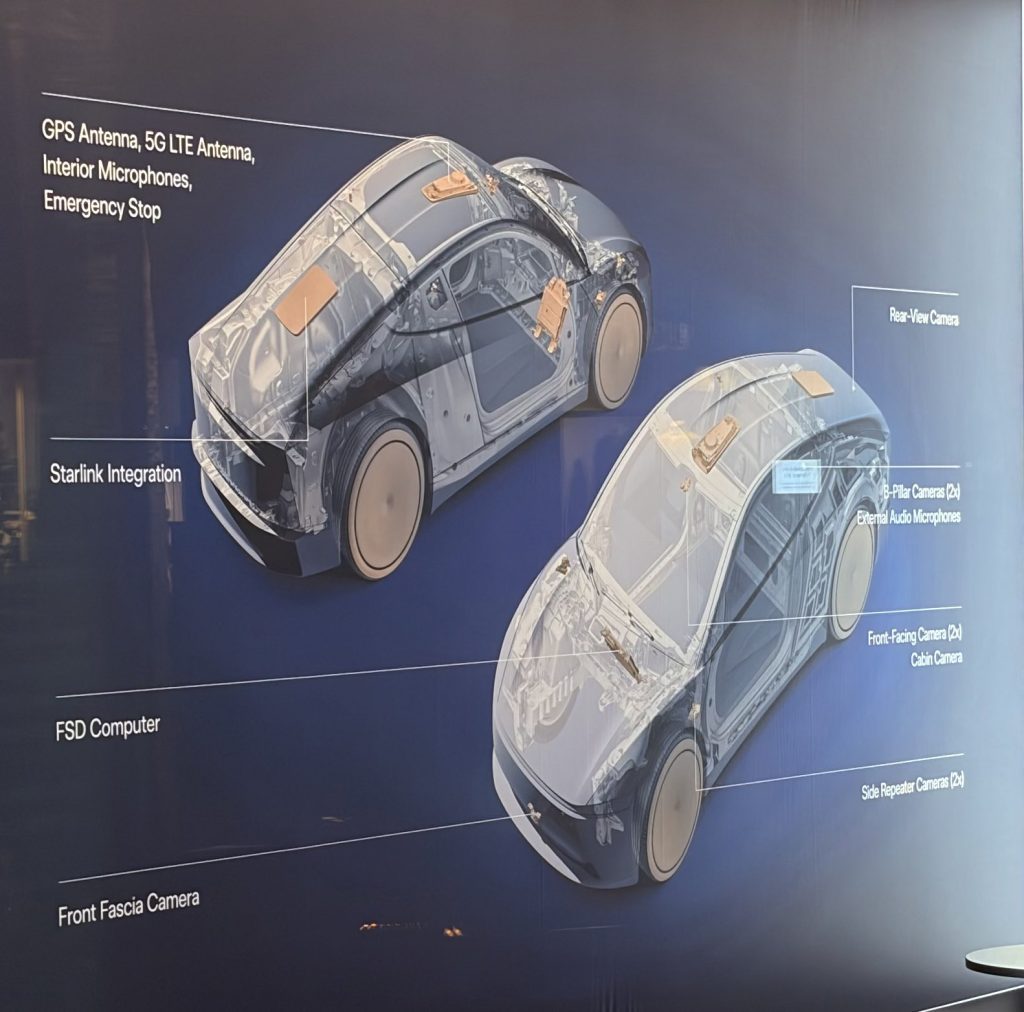
Although it is difficult to tell from the diagram above, it appears as though Tesla has been able to integrate the Starlink antenna underneath the trunk lid, or at least flush with it. This differs from the test vehicles, which had the antenna crudely mounted on the rear trunk with wiring visible from the exterior.
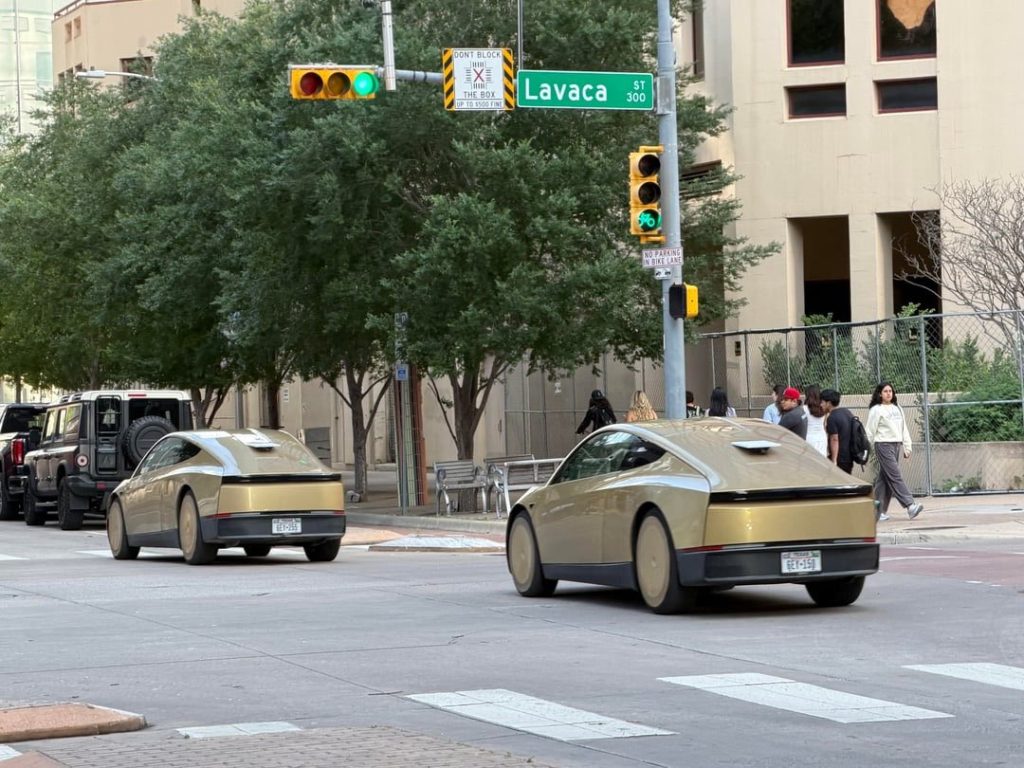
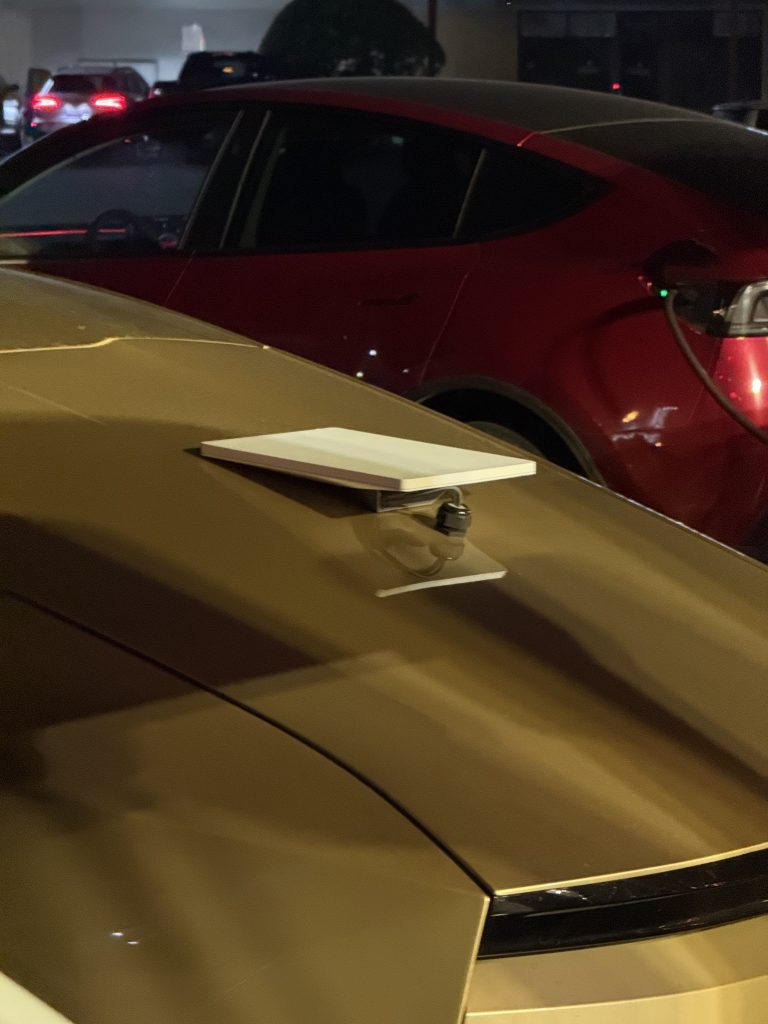
The integration makes sense for a vehicle designed to operate as a fully autonomous robotaxi. Unlike consumer Teslas, which primarily rely on cellular networks for connectivity, a fleet of Cybercabs could benefit from satellite communications in areas with poor cellular coverage or during network outages.
A secondary communications path could improve fleet management, software updates, diagnostics, and potentially maintain connectivity in situations where terrestrial networks are unavailable.
Tesla’s confirmation also comes as a recently published patent application revealed the company is developing an RF-transparent polymer roof capable of integrating satellite communication hardware directly into the vehicle. While the patent never mentions Starlink by name, it describes embedding satellite antennas and communication modules into the roof to provide an unobstructed connection with satellites while eliminating the need for traditional external antennas.
Whether future consumer Teslas will receive built-in Starlink remains unknown. However, with the Cybercab now confirmed to include the technology, and Tesla actively developing vehicle architectures optimized for satellite communications, it appears the company is laying the groundwork for broader Starlink integration across its vehicle lineup in the years ahead.

Always get the latest - make Drive Tesla your preferred source on Google
Are you buying a Tesla? If you enjoy our content and we helped in your decision, use our referral link to get three months of Full Self-Driving (FSD).Drive Tesla uses affiliate links, which means we may earn a commission if you make a purchase through them, at no additional cost to you. Thank you for your support.