
ChargePoint has unveiled a new ultra-fast EV charger that could significantly reduce charging times and improve station efficiency, addressing one of the biggest barriers to electric vehicle adoption.
The California-based company introduced the Express Solo, a next-generation DC fast charger capable of delivering up to 600 kW of power. That puts it well above most chargers currently available in North America, many of which top out between 150 kW and 350 kW.
While few production vehicles today can fully take advantage of that peak output, the station is designed to support future EVs with higher charging capabilities.
What sets the Express Solo apart is not just its maximum speed, but how it distributes power. Unlike many existing chargers that reduce output when multiple vehicles are plugged in, ChargePoint says this system can dynamically share a total of 600 kW across up to four vehicles without cutting performance as drastically.
In its base configuration, the unit includes two charging cables, but it can be paired with an additional dispenser to serve four EVs simultaneously.
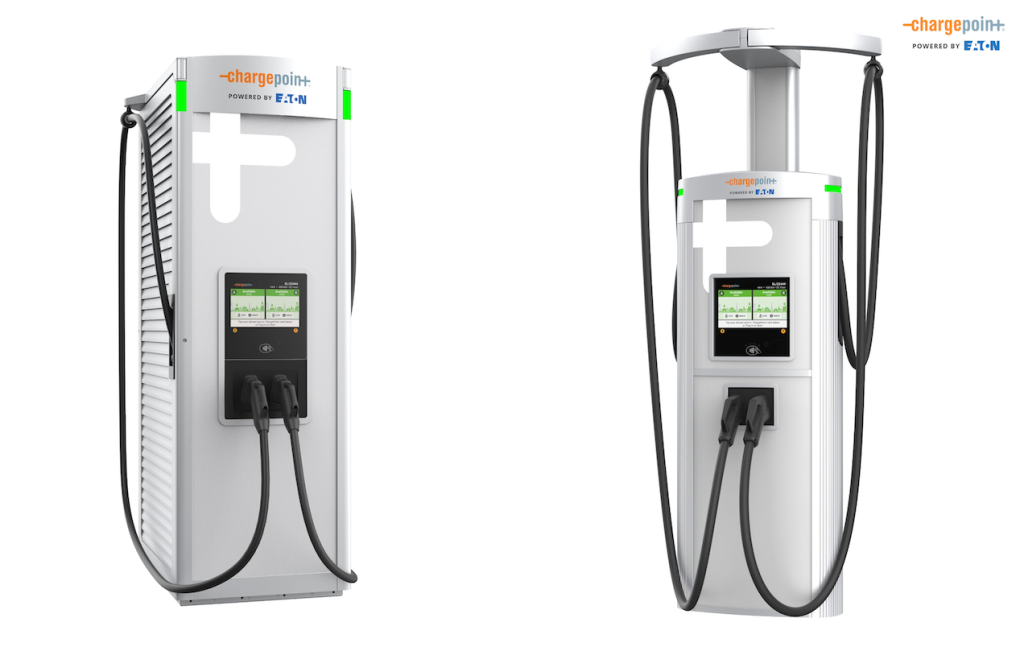
The Express Solo also introduces a more compact design compared to traditional high-powered charging setups. Typically, ultra-fast chargers rely on large, separate power cabinets, which can limit where they can be installed. ChargePoint however has been able to integrate all necessary components into a single enclosure, enabling deployment in tighter urban locations or existing gas station footprints.
According to the company, the charger delivers approximately 40% higher power density than competing DC fast-charging systems, meaning more power can be delivered from a smaller physical footprint. That could help reduce installation costs and make it easier to expand charging networks in space-constrained areas.
Another key feature is ChargePoint’s Omni Port system, which supports both NACS and CCS connectors. This ensures compatibility with nearly all modern EVs without requiring drivers to carry adapters, a growing concern as North America transitions toward Tesla’s charging standard.
The system is also designed to work with battery storage and enable bidirectional charging, allowing energy to flow back to the grid or other systems when needed.

Always get the latest - make Drive Tesla your preferred source on Google
Are you buying a Tesla? If you enjoy our content and we helped in your decision, use our referral link to get three months of Full Self-Driving (FSD).Drive Tesla uses affiliate links, which means we may earn a commission if you make a purchase through them, at no additional cost to you. Thank you for your support.