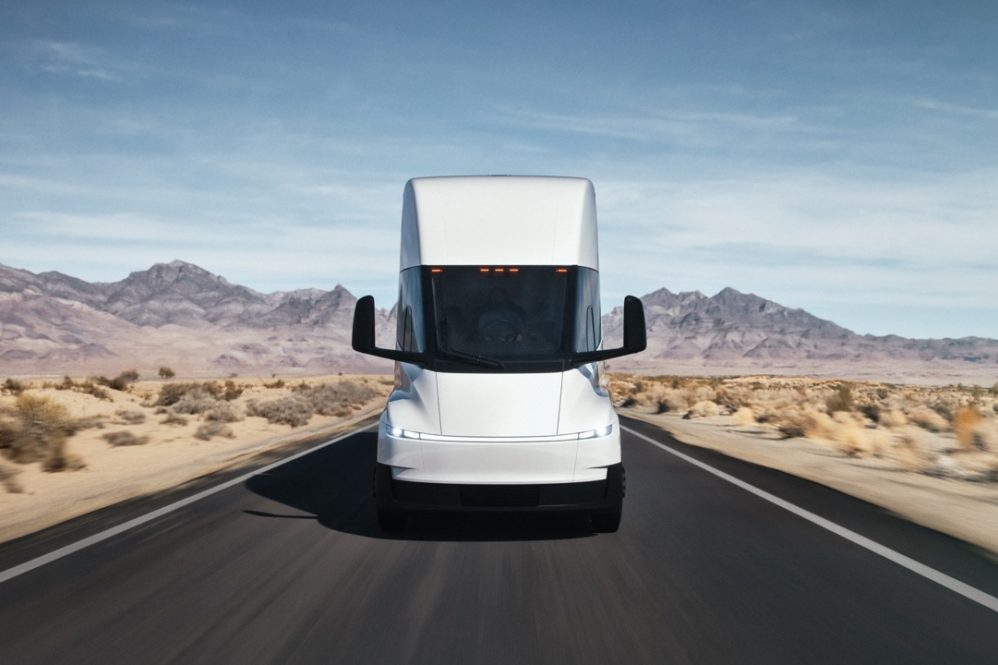
Tesla has provided its first timeline for when Full Self-Driving (FSD) could arrive on the Semi, with CEO Elon Musk saying the electric Class 8 truck should gain autonomous driving capabilities as soon as the end of this year.
During Tesla’s Q2 2026 earnings call, Musk confirmed the company expects to have FSD working on the Semi “probably around the end of this year or early next year,” while emphasizing that passenger vehicles remain the company’s top priority.
“We expect to get self-driving working on the Tesla Semi probably around the end of this year or early next year. I just don’t want it to be a distraction on the march of nines of safety for self-driving on the Model 3/Y and Cybercab. It will definitely be working next year,” he said.
While the timeline is great news for the Semi program, it should be taken with a large grain of salt. Musk’s timelines, especially when it comes to FSD milestones, are almost always too optimistic and the actual timelines ends up being much longer than he anticipated.
Built with autonomy in mind
Although customer Semis today still require a licensed commercial driver behind the wheel, Tesla designed the truck with future autonomy in mind from the outset. Every production Semi is equipped with 10 exterior cameras, an interior cabin camera, and the onboard computing hardware required to support FSD.
The company has previously described the truck as being “autonomy-ready,” even though FSD has not yet been enabled.
Tesla executives have also confirmed the company is already training its FSD neural networks using data collected from the existing Semi fleet. That development effort has become increasingly visible in recent months, with multiple Semi prototypes spotted carrying roof-mounted ground truth validation equipment used to compare real-world sensor data against what Tesla Vision perceives.
Passenger vehicles come first
Musk also explained why the Semi has taken a back seat to Tesla’s consumer vehicle lineup. During the call, he described autonomous trucking as “actually very important,” pointing to the ongoing shortage of commercial truck drivers and the potential safety benefits of self-driving technology.
However, because the Semi fleet represents only a small fraction of Tesla’s vehicles, the company is first focusing its engineering resources on improving the safety and reliability of FSD for the Model 3, Model Y, and Cybercab.
If Tesla achieves generalized unsupervised driving for those vehicles on its current timeline, the same technology can then be adapted for the Semi.
When that happens, FSD on the Semi and fully driverless freight operations will still depend on regulatory approval and additional validation. For now, all customer Semis continue to operate with a human driver.

Always get the latest - make Drive Tesla your preferred source on Google
Are you buying a Tesla? If you enjoy our content and we helped in your decision, use our referral link to get three months of Full Self-Driving (FSD).Drive Tesla uses affiliate links, which means we may earn a commission if you make a purchase through them, at no additional cost to you. Thank you for your support.