Tesla may be rethinking the Cybertruck’s role after investor questions about a more conventional pickup prompted Elon Musk to propose an autonomous cargo delivery future.
After the unveiling of the Cybertruck in 2019, Musk later suggested that if the unconventional design failed to sell well, Tesla could pivot to a more traditional truck design. That comment resurfaced during Tesla’s Q4 2025 earnings call, when a shareholder asked how practical it would be to create a conventional pickup using the Cybertruck’s underlying architecture—and whether such a vehicle could be built efficiently on the existing Cybertruck production lines.
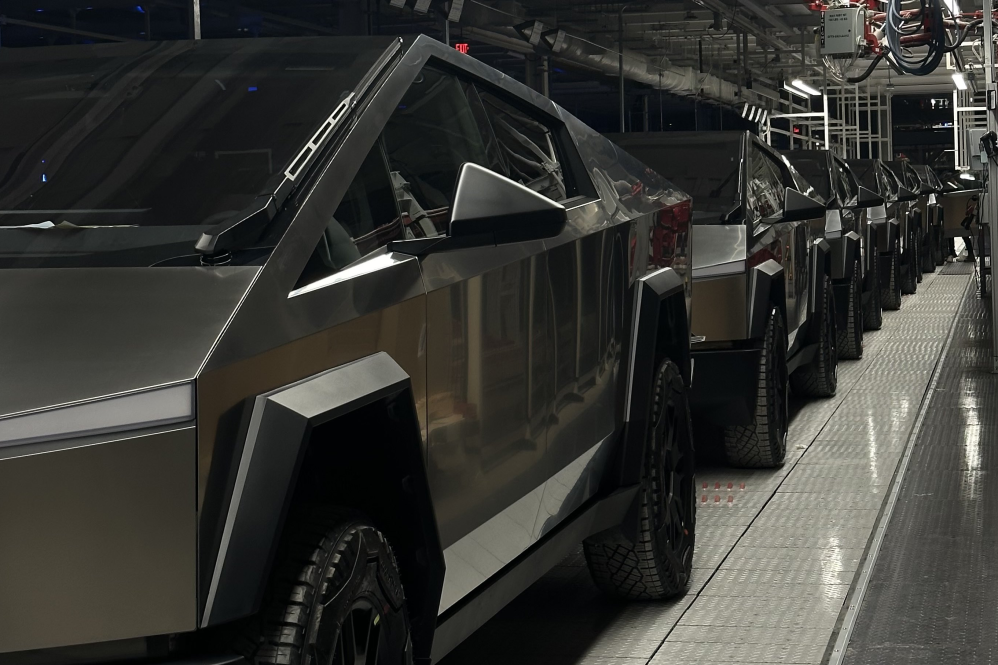
In response, Musk did not outline plans for a redesigned truck. Instead, he revealed that Tesla intends to eventually convert the Cybertruck production line into a fully autonomous operation, reframing the vehicle’s future around localized cargo delivery rather than private ownership.
“We will transition the Cybertruck to a fully autonomous line. There is obviously a market there for cargo delivery— localized cargo delivery. An autonomous Cybertruck could be useful for that,” Musk said.
The comments come as Tesla continues to face challenges with Cybertruck demand. Despite early hype and a lengthy reservation list reportedly close to 2 million, the vehicle has struggled to gain sustained traction in the market. In 2025 alone, Cybertruck sales fell by 48% to only about 20,000 units, far below the installed production capacity of up to 250,000.
While Tesla has consistently positioned the Cybertruck as a category-defining product, its unconventional design, high price point, and limited utility compared to traditional pickups appear to have narrowed its appeal. That unconventional and polarizing design has also led it to become synonymous with Musk himself, which has also tainted the truck’s appeal due to the CEO’s involvement in politics over the last few years.
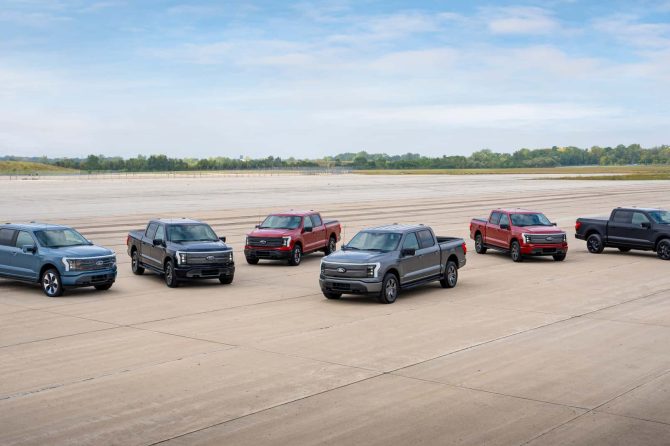
Tesla’s Head of Vehicle Engineering, Lars Moravy, addressed the questions, saying that the Cybertruck production line is adaptable and could be reconfigured for other products if needed, while also stressing that the Cybertruck remains the best-selling electric pickup truck on the market, even though the F-150 Lightning sold over 27,000 units in 2025 (and has now been discontinued due to low sales).
Still, the idea of repurposing the Cybertruck as an autonomous delivery vehicle has drawn skepticism. In its current form, the Cybertruck is far from optimized for cost-effective logistics. Its stainless steel exoskeleton, unconventional bed design, large footprint, and premium hardware make it an expensive platform for cargo delivery compared to purpose-built autonomous vans or smaller, bare-bones delivery vehicles. If a genuine market exists for autonomous last-mile delivery, it could likely be served more efficiently with a clean-sheet design at a lower production and operating cost than that of the Cybertruck.