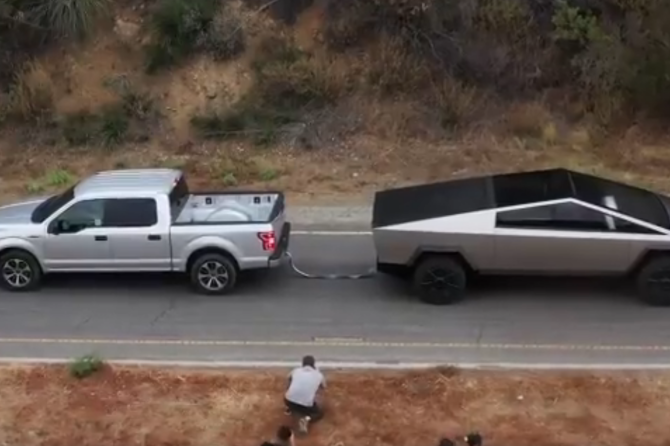
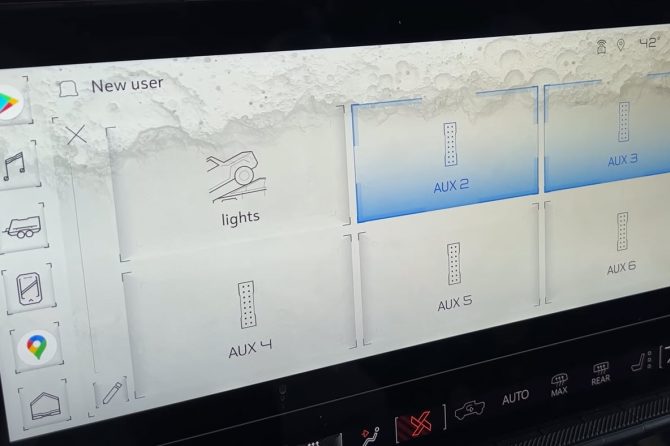
Tesla may not have abandoned its Cybertruck range extender after all—it may just look very different from what was originally promised. A newly published patent suggests the company is still actively developing a solution to boost range, but instead of a battery pack that sits in the truck bed, the latest concept points to a towable, trailer-based system.
The filing, titled “Electric Vehicle Range Extender Integration,” outlines how a vehicle could seamlessly operate with a secondary battery working alongside its primary pack. While Tesla previously scrapped its Cybertruck bed-mounted range extender last year, this latest patent indicates the underlying technology has continued to evolve behind the scenes.
A New Take on a Familiar Idea
Tesla first teased a range extender in 2023, even taking deposits for a Cybertruck add-on designed to sit in the truck bed. After several delays, that product was ultimately cancelled, with customers refunded their US$16,000 reservations. However, this new patent suggests Tesla hasn’t abandoned the concept—only reimagined it.

Instead of occupying valuable cargo space, one of the biggest limiting factors of the proposed design, the updated system introduces the idea of a towable battery pack. Patent drawings show the auxiliary battery housed in a trailer, connected to the vehicle through a high-voltage interface. This approach could be particularly useful for towing scenarios, where electric trucks typically suffer significant range loss.

Smart Energy Management
According to the patent, the system would incorporate a sophisticated control architecture designed to manage two battery packs operating at different voltages—typically 800V for the vehicle and 400V for the auxiliary unit.
During everyday driving, the system uses what Tesla describes as “state of energy” balancing. This ensures both batteries discharge proportionally, with the vehicle automatically pulling more power from whichever pack has more available energy. The system can also temporarily prioritize maximum output from both packs during high-demand situations like acceleration or towing, before rebalancing afterward.

When navigating to a fast charger, the system switches strategies. It begins aligning the voltage of both battery packs—a process known as open-circuit voltage matching—so they can safely charge in parallel. This allows both packs to receive power simultaneously, potentially reducing charging times significantly.
Not a Product—Yet
As with all patents, there’s no guarantee this technology will make it to production. However, the level of detail in the filing suggests Tesla is continuing to invest heavily in modular energy solutions, particularly for trucks and high-demand use cases.
For Cybertruck owners and prospective buyers, the idea of a detachable, trailer-based battery could offer a compelling alternative to permanently carrying extra weight. However, it also introduces an obvious trade-off. Towing is already one of the biggest factors that reduces range, often cutting efficiency dramatically due to added weight and aerodynamic drag.
Adding a trailer—especially one carrying a heavy battery—could offset some of the intended gains, limiting its practicality in real-world use.
Then there’s the trade-off that towing an extra battery also means you can’t tow anything else, effectively removing one of the key scenarios where additional range would be most useful.
You can read the full patent application below.

Always get the latest - make Drive Tesla your preferred source on Google
Are you buying a Tesla? If you enjoy our content and we helped in your decision, use our referral link to get three months of Full Self-Driving (FSD).Drive Tesla uses affiliate links, which means we may earn a commission if you make a purchase through them, at no additional cost to you. Thank you for your support.