The Boring Company is offering something that sounds almost too good to be true: a fully built, one-mile tunnel, constructed for free, to whoever submits the most compelling proposal.
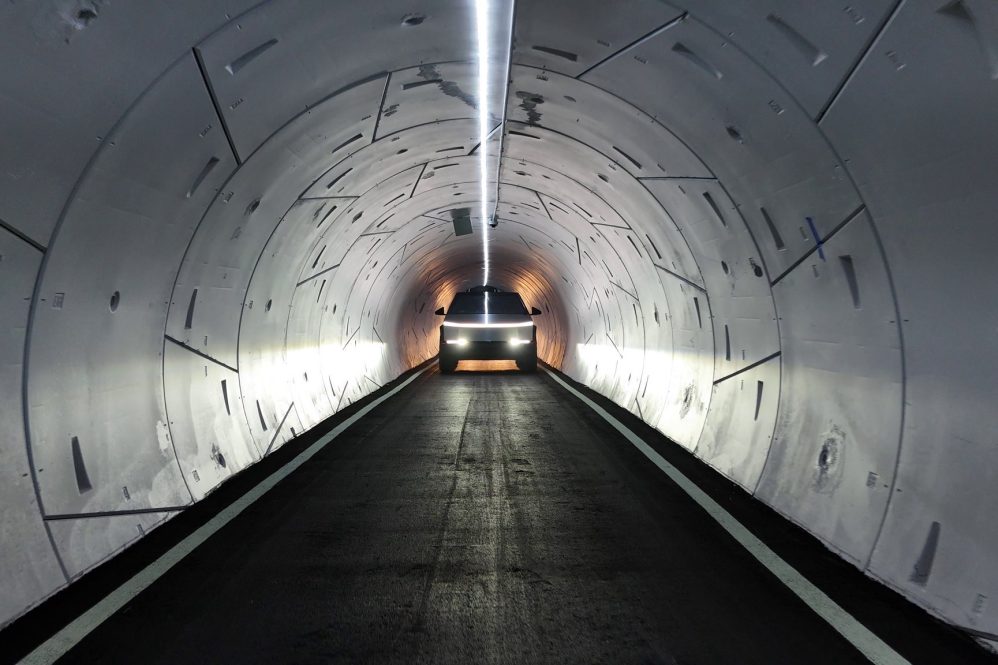
The company has launched what it calls the “Tunnel Vision Challenge,” inviting individuals, companies, and governments around the world to pitch a practical tunnel project that solves a real transportation, logistics, or infrastructure problem. The winning proposal will be built using The Boring Company’s Prufrock tunneling machine, with construction costs covered by the company.
Submissions are due by February 23, 2026, and the winner will be announced on March 23, 2026.
Unlike past projects that have dealt strictly with commuters, this challenge is open globally and deliberately broad in scope. The tunnel can be used for a Loop system, freight transport, pedestrians, utilities, water, or any other practical use case — as long as it fits within a 1-mile length and 12-foot inner diameter.
According to The Boring Company, proposals will be judged on three main criteria:
• Usefulness – How big of a problem does the tunnel solve, and how much time or cost does it save?
• Stakeholder Engagement – Support from governments, landowners, and local communities, backed by letters or statements.
• Technical, Economic, and Regulatory Feasibility – The project must be physically buildable, affordable, and realistically permitted.
Early ideas already circulating online include a pedestrian tunnel linking neighborhoods in Thailand, a Vegas Chinatown Loop connecting malls and restaurants, and a shortcut under Austin-Bergstrom International Airport to reduce terminal congestion.
To enter, teams must submit a detailed proposal including:
• A general description and rationale for the tunnel
• Data-backed projections showing time or cost savings
• A map of the proposed route and land ownership details
• Bonus points for geotechnical and subsurface data
If the winning proves to be a high-impact success, it could become a powerful proof point for how fast, low-cost tunneling might reshape urban infrastructure worldwide — and make gridlock a thing of the past.