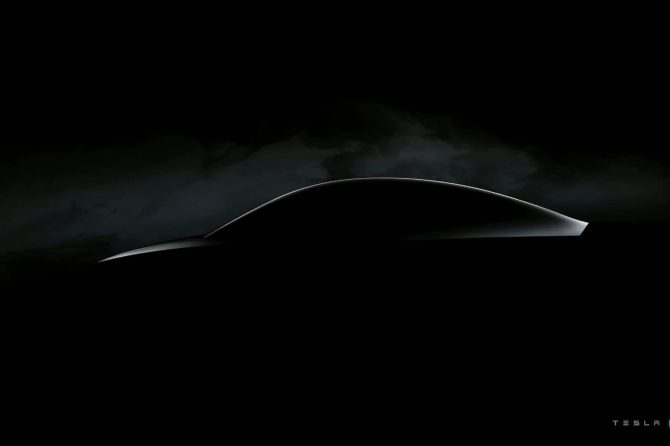
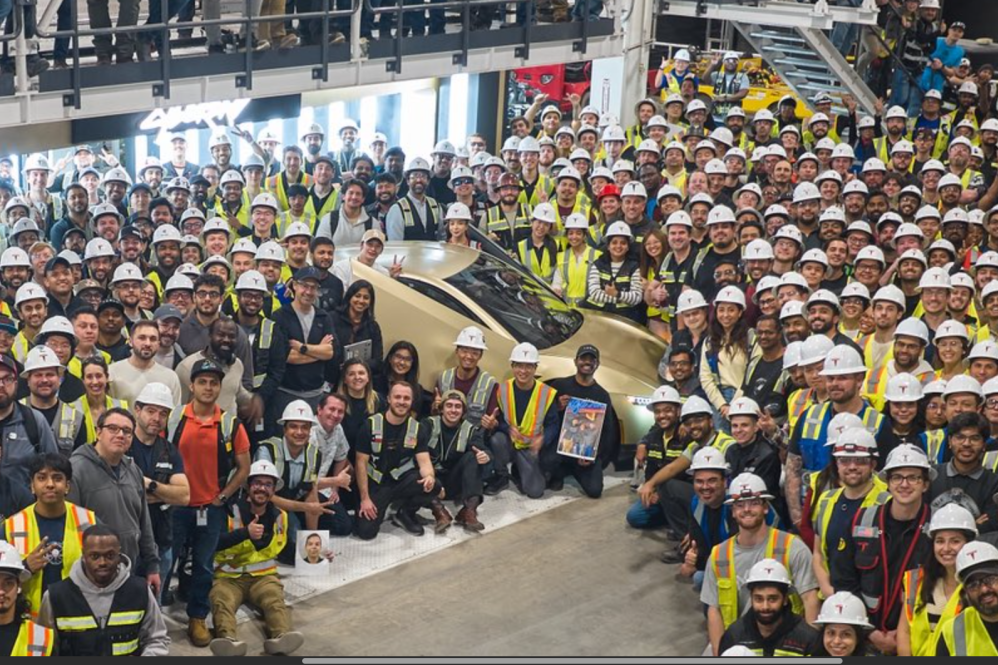
Tesla has reached a major milestone in its Cybercab vehicle program, revealing the first unit has officially rolled off the production line at Giga Texas. The milestone comes about a month and a half before the planned official start of production.
Tesla shared the news on X, posting a photo of employees gathered around the newly built vehicle and confirming the start of early production activity. The announcement also comes just a few days after CEO Elon Musk reaffirmed that volume production remains on schedule to begin in April.
While the first Cybercab rolling off the line marks an important milestone, it does not yet represent full-scale production. Instead, this initial unit is likely part of Tesla’s early production validation process, allowing the company to refine assembly techniques and validate manufacturing workflows before scaling up output.
Tesla plans to manufacture Cybercab using its new “unboxed” production method, which involves assembling large vehicle subcomponents separately before bringing them together in final assembly. The approach is designed to reduce factory footprint, lower costs, and accelerate production speeds compared to traditional assembly lines.
If successful, this manufacturing strategy could enable Tesla to produce Cybercab at unprecedented scale. Musk has previously suggested the company could eventually build millions of robotaxis annually, although the initial ramp will likely be painfully slow.
However, even with the first validation units rolling off the line and the official start of production less than two months away, if current timelines hold, the biggest remaining question is whether Tesla will be able to solve autonomy to a point where the vehicles can be safely operated without traditional controls.
So far Tesla’s robotaxi rollout in Austin has been slower than anticipated, with the company missing goals of having 500 robotaxis in Austin and removing safety operators by the end of 2025. While the company has started removing safety operators, the number of robotaxis operating without a human inside the vehicle remains small, and the total number of robotaxis in Texas remains below 50 units.