Rivian used its first-ever Autonomy & AI Day to lay out its plans for a full stack of custom hardware, new AI models, and a sweeping software roadmap designed to bring hands-free and eventually Level 4 self-driving capabilities to its lineup.
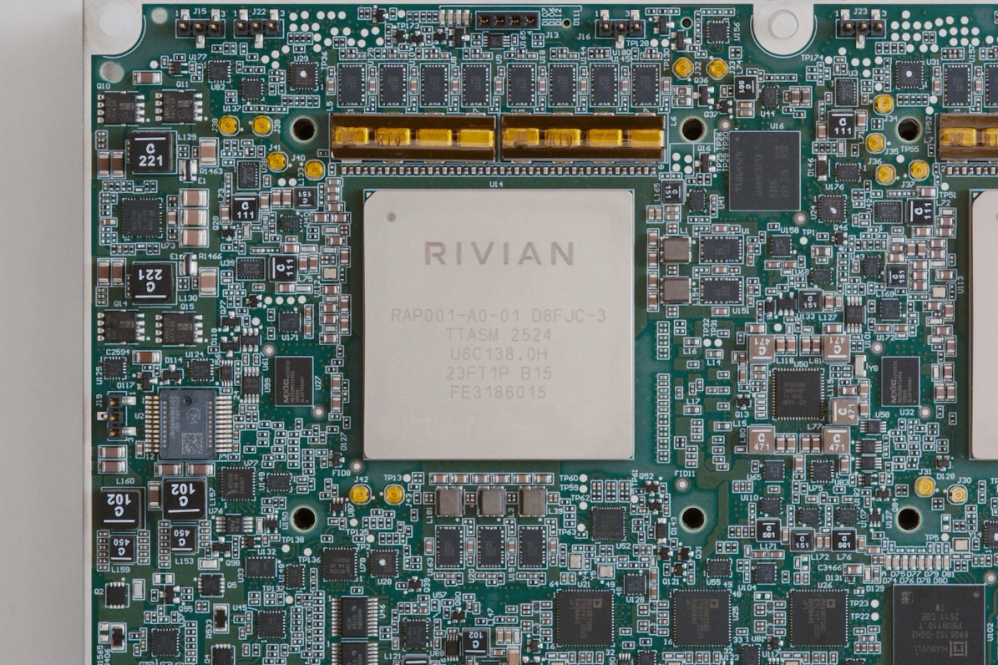
At the center of Rivian’s strategy is a new in-house autonomy processor — developed with Arm and TSMC — set to replace Nvidia hardware beginning in late 2026. The chip features “multi-chip module” packaging, 205 GB/s of memory bandwidth, and a neural engine capable of 800 TOPS, performance Rivian says is essential for powering the camera-centric AI models behind its next-generation capabilities.
Meet the Rivian Autonomy Processor.
— Rivian (@Rivian) December 11, 2025
Fast, smart, scalable and purpose-built for autonomous driving and the world of physical AI. Hitting the open road in 2026. pic.twitter.com/0wYXi5WKy7
Universal Hands-Free Driving Covers 3.5 Million Miles of Roads
One of the biggest user-facing features announced is “Universal Hands-Free,” an assisted driving system that takes Rivian’s highway-only hands-free tech and extends it to nearly any road with clearly painted lane lines. That unlocks roughly 3.5 million miles of roads across Canada and the U.S.

The feature will be included in Rivian’s new Autonomy+ subscription, launching early next year at US$2,500 upfront or US$49.99 per month. Rivian says a future software update will activate the capability for supported vehicles, offering hands-free lane keeping and distance control but not full navigation or traffic light handling.
More than any other feature, our owners have asked for more hands-free miles.
— Rivian (@Rivian) December 11, 2025
With Universal Hands-Free, you can now enjoy hands-free assisted driving on any road with clearly defined lanes. That’s roughly 3.5 million miles in the U.S. and Canada.
Look for it in our next… pic.twitter.com/ZFhwVzvt6b
The company also reiterated that it is designing its autonomy roadmap around lidar and radar — unlike Tesla, which relies on a camera-only approach — with Rivian targeting eventual Level 4 operation. Scaringe said these advances also give Rivian the foundation to pursue robotaxi opportunities over time.
Each of us navigates our surroundings using sight and sound together. The sensor system in the Rivian Autonomy Platform works the same way.
— Rivian (@Rivian) December 11, 2025
It takes data from cameras, radar and – coming soon – LiDAR, then fuses them together in an instant. Not as separate inputs but as one… pic.twitter.com/D6lFsRevRG
Rivian’s New AI Assistant Arrives in Early 2026
Beyond driving features, Rivian confirmed that its two-year effort to build an in-house conversational AI assistant will debut in early 2026 — and it won’t be limited to new vehicles. The assistant will be available across both Gen 1 and Gen 2 R1 models, giving existing owners access to voice-controlled climate settings, navigation, vehicle functions, and even third-party apps.
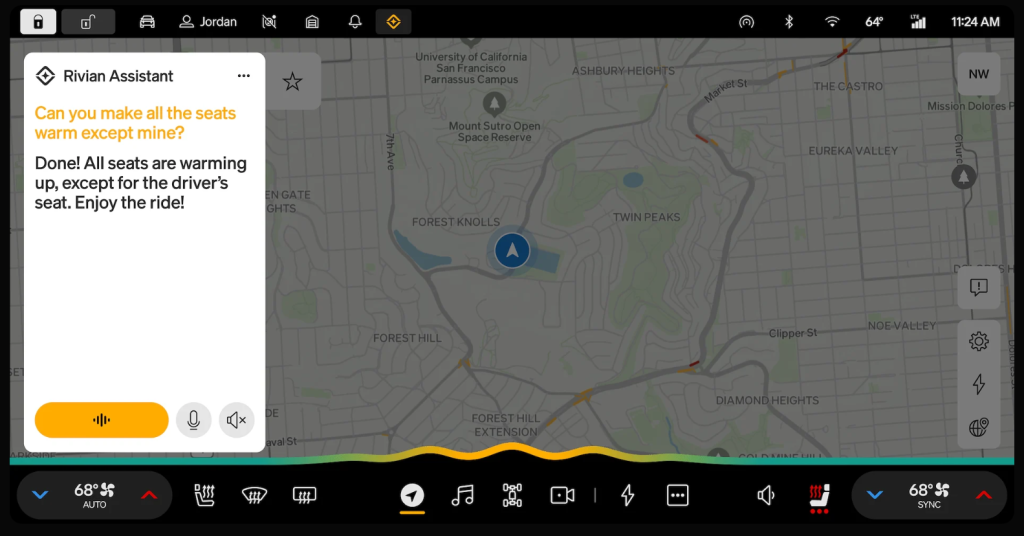
Google Calendar will be the first integrated service, letting drivers schedule or cancel events or simply tell the vehicle to navigate to their next appointment. The system layers Rivian’s in-house models with other external models for natural conversation and grounding.
This all runs on Rivian Unified Intelligence (RUI), the company’s new hybrid AI platform responsible for orchestrating multiple models for voice control, diagnostics, and eventually autonomous driving behaviors.