Ford’s electric vehicle (EV) sales dropped significantly in the final months of 2025, even as the Detroit-based automaker experienced one of best sales years in recent memory. Fourth-quarter U.S. deliveries fell to 14,513 units, a 52% decline year over year, aligning with Ford’s decision to end the all-electric F-150 Lightning, its flagship electric pickup.
For the full year, Ford sold 84,113 EVs, down 14% from 2024, despite posting its strongest overall sales performance since 2019. With Lightning volumes collapsing to 4,273 units in Q4, the EV slowdown was no longer confined to shifting incentives or seasonal demand, but increasingly reflected Ford’s pullback from higher-priced electric trucks as it refocused on hybrids and internal combustion models.
The result is a widening contrast in Ford’s U.S. sales mix. While total deliveries rose 6% year over year and market share climbed to 13.2%, EVs accounted for a shrinking portion of that growth. Hybrid vehicles, meanwhile, surged to record levels.
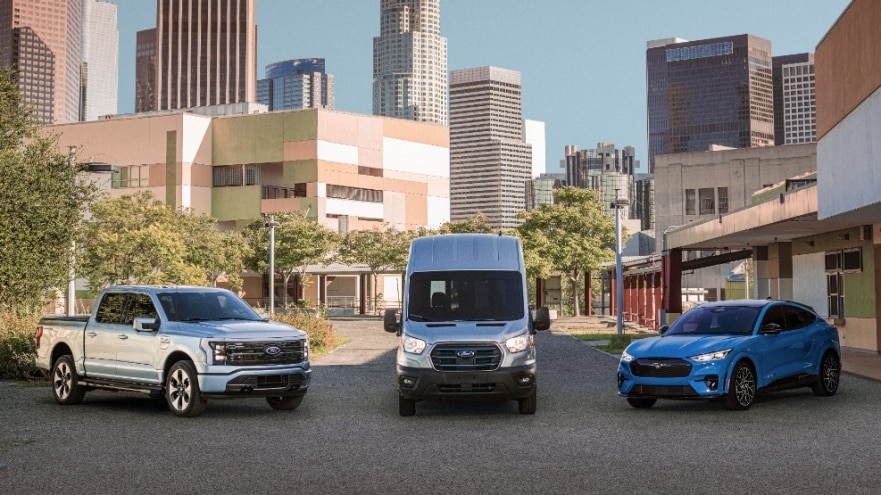
The drop in EV demand wasn’t isolated to the Lightning, but extended across Ford’s three electric nameplates. The Mustang Mach-E remained the brand’s volume leader with 9,658 units sold in Q4, but that figure was down sharply from the 16,119 units sold a year earlier. The F-150 Lightning recorded 4,273 deliveries, down 60% from the previous year, while the commercial-focused E-Transit added just 582 units during the quarter, down a whopping 83%.
By contrast, Ford’s broader electrified strategy leaned heavily on hybrids, which more than offset the EV slowdown. Hybrid sales surged 22% year over year to 228,072 vehicles, marking Ford’s best hybrid year ever. In Q4 alone, the company delivered 55,374 hybrid vehicles, a quarterly record that reinforced management’s “power of choice” approach.
“This past year proved that Ford has the right product and powertrain offering for the lives of our customers,” said Andrew Frick, president of Ford Blue and Model e. “We’re growing share and beating the trend because we offer a great range of products, from accessible entry-level models to high-performance off-roaders.”
Ford’s experience mirrors a broader trend among legacy automakers, many of which are leaning back into hybrids and internal combustion vehicles as EV adoption slows.