The Canadian government has released the first official list of electric vehicles (EVs) eligible for its new Electric Vehicle Affordability Program (EVAP), which officially begins February 16, 2026. The list provides Canadians with their first look at which models qualify for incentives of up to $5,000, and as we suspected, the Tesla Model Y Rear-Wheel Drive (RWD) does not qualify, yet.
According to Transport Canada, the program was designed to accelerate EV adoption by focusing specifically on lower-cost vehicles, offering incentives of up to $5,000 for battery-electric and hydrogen fuel cell vehicles, and up to $2,500 for plug-in hybrid electric vehicles. Unlike the previous federal rebate program, EVAP does not rely on a strict MSRP cap. Instead, eligibility is determined by the vehicle’s final transaction value, which must be $50,000 or less for non-Canadian made EVs. Canadian-made EVs have no price cap.
UPDATE: Based on the information the federal government released today, there will not be a definitive list of eligible EVs like the last program.
Instead, eligibilty will depend on final transaction price, which in the case of legacy dealerships, will vary from location to location depending on dealer specific discounts.
For Tesla, the Model Y RWD should qualify in its base form with no options (paint), even if it’s not included on the “list.”
Transport Canada has also clarified exactly how the program calculates final transaction value, and it doesn’t include every cost associated with buying a car, excluding several common charges. Freight and pre-delivery inspection (PDI) fees, taxes, winter tires, extended warranties, and government rebates do not count toward the limit. However, the base vehicle price, trim upgrades, factory options, accessories, and dealership fees are included. This distinction is important because it means an EV with a sticker price close to $50,000 could still qualify even if the total purchase price exceeds that amount after freight, PDI, and taxes are added, giving automakers some flexibility to adjust pricing to meet the program’s eligibility threshold.
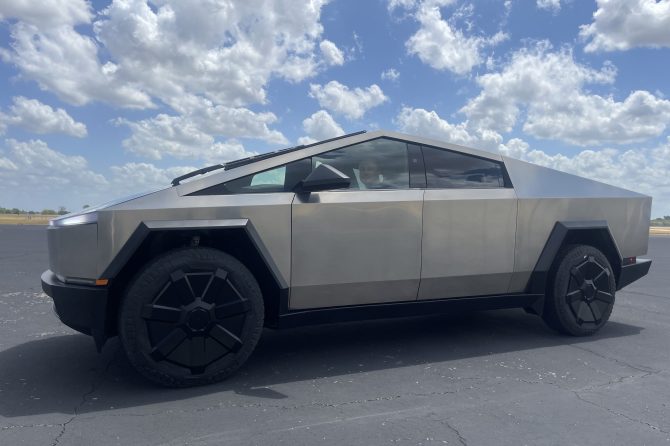
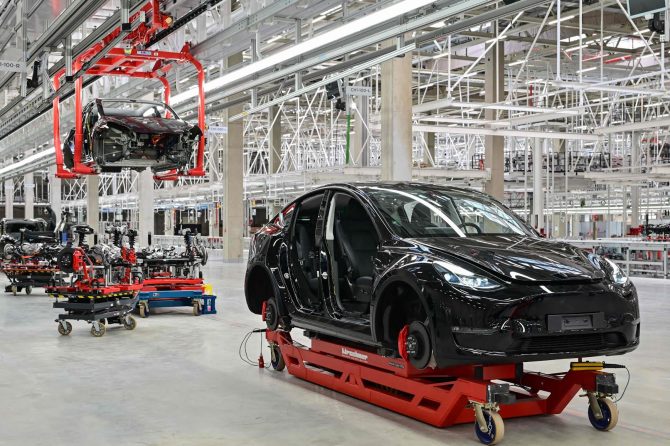
This pricing structure is particularly relevant to the Tesla Model Y Rear-Wheel Drive, which currently starts at $49,990 in Canada—just $10 below the EVAP’s $50,000 eligibility threshold. Because freight and PDI charges are excluded from the final transaction value calculation, the Model Y RWD should still qualify even though its total purchase price exceeds $50,000 once those fees are added. However, any optional features, paint upgrades, or price increases would count toward the limit and could push the vehicle above the threshold. Despite this, the Model Y RWD is currently not on the government’s list of eligible vehicles, though that could still change by Monday.
As it stands today, Transport Canada has confirmed that 35 vehicles meet the program’s criteria. The list includes a mix of compact EVs, crossovers, and plug-in hybrid vehicles from several major automakers. You can find the full list at the bottom of this article.
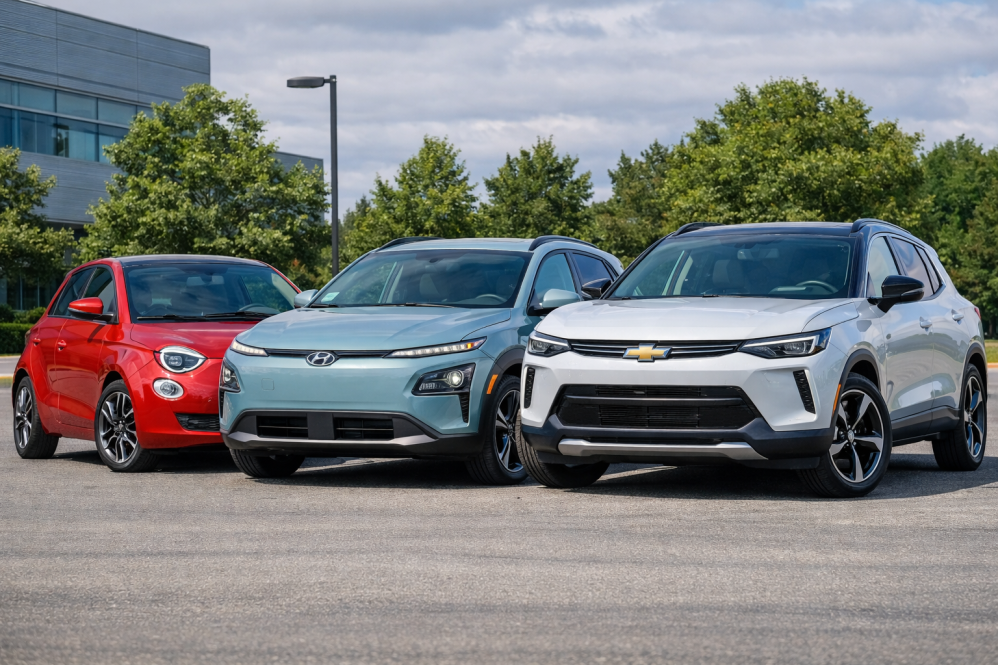
Among the eligible battery-electric vehicles are the Chevrolet Equinox EV (LT and RS trims), Hyundai Kona Electric (Preferred and Ultimate trims), Fiat 500e in multiple configurations, and the upcoming Chevrolet Bolt LT and RS. Ford’s Mustang Mach-E Select Standard Range, both rear-wheel drive and all-wheel drive versions, also qualify.
Several plug-in hybrid models are included as well, such as the Chrysler Pacifica plug-in hybrid (made in Canada) and Ford Escape plug-in hybrid, which qualify for up to $2,500 instead of the full $5,000 incentive offered to fully electric vehicles.
The list also includes the Dodge Charger Daytona EV, which starts above $50,000, but is made in Canada so it is still eligible.
Transport Canada emphasized that the published vehicle list is intended as a guide rather than a strict limitation. “What really matters to qualify for the incentive is the final transaction value, which cannot exceed $50,000,” the agency explains. This means additional vehicles could be added over time, and some vehicles not currently listed could still qualify if their final negotiated purchase price meets the program’s requirements.
With the official list now available and the program launching in days, Canadian buyers finally have a clearer picture of which EVs qualify—and which automakers may need to adjust pricing to remain competitive.
Eligible Battery-Electric Vehicles (BEV) – Up to $5,000 incentive
Chevrolet
- 2025 Chevrolet Equinox EV LT
- 2025 Chevrolet Equinox EV LT AWD
- 2025 Chevrolet Equinox EV RS
- 2026 Chevrolet Equinox EV LT
- 2026 Chevrolet Equinox EV LT AWD
- 2027 Chevrolet Bolt LT
- 2027 Chevrolet Bolt RS
Dodge
- 2024 Dodge Charger R/T
- 2024 Dodge Charger Scat Pack
- 2025 Dodge Charger R/T
- 2025 Dodge Charger Scat Pack
- 2026 Dodge Charger R/T
- 2026 Dodge Charger Scat Pack
Fiat
- 2025 Fiat 500e Red
- 2025 Fiat 500e La Prima
- 2025 Fiat 500e Giorgio Armani
- 2026 Fiat 500e Pop
- 2026 Fiat 500e Icona
Ford
- 2026 Ford Mustang Mach-E Select RWD Standard Range
- 2026 Ford Mustang Mach-E Select eAWD Standard Range
Hyundai
- 2025 Hyundai Kona Electric Preferred
- 2025 Hyundai Kona Electric Preferred w/ Trend Package
- 2026 Hyundai Kona Electric Preferred
- 2026 Hyundai Kona Electric Preferred w/ Trend Package
- 2026 Hyundai Kona Electric Preferred w/ Ultimate Package
Eligible Plug-in Hybrid Vehicles (PHEV) – Up to $2,500 incentive
Chrysler
- 2025 Chrysler Pacifica Select
- 2025 Chrysler Pacifica Limited
- 2025 Chrysler Pacifica FAV
- 2026 Chrysler Pacifica Select
- 2026 Chrysler Pacifica 100th Anniversary Edition
- 2026 Chrysler Pacifica Limited
- 2026 Chrysler Pacifica Pinnacle
Ford
- 2024 Ford Escape Plug-in Hybrid
- 2025 Ford Escape Plug-in Hybrid
- 2026 Ford Escape Plug-in Hybrid
Editor’s note: This article has been updated to add information about freight, PDI, and other charges being excluded from the definition of ‘final transaction value.’