The Government of British Columbia is adjusting its electric vehicle (EV) strategy, lowering its long-term zero-emission vehicle (ZEV) sales targets while continuing to invest in charging infrastructure—but notably without reinstating its consumer EV rebate program.
Announced this week, the province will amend its Zero-Emission Vehicles Act, reducing its 2035 ZEV sales requirement from 100% to 75%. The government says these changes align the province’s targets more closely with federal policy and reflect shifting market conditions.
“B.C. is a leader in electric vehicle (EV) adoption in North America, and in leading, we are giving people greater choice while reducing air pollution and emissions in our communities,” said Adrian Dix. “We are recalibrating our ZEV targets to be consistent with the federal government’s new ZEV policy and to give industry and consumers greater flexibility.”
As part of the legislative changes, the province will also remove the planned ban on the sale of new internal combustion engine vehicles by January 1, 2035. Instead, automakers will be required to meet revised ZEV sales targets, which will now be governed more flexibly through regulations rather than strict legislative mandates.
The updated framework is expected to maintain the existing 26% ZEV sales requirement for 2026 and 2027, while targets for 2028 through 2030 will be determined after the federal government releases updated fleet emissions standards later this year.
However, absent from the announcement was any indication that provincial EV purchase incentives will return. British Columbia’s popular CleanBC Go Electric rebate program—which previously offered up to $4,000 toward the purchase or lease of a new EV—was paused in 2025 and has not been reinstated.
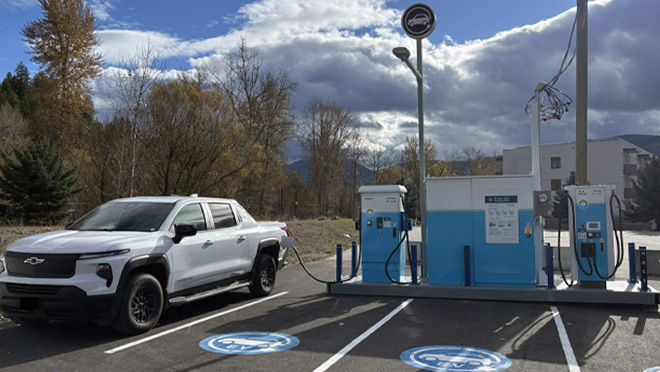
Alongside the policy changes, British Columbia is continuing to expand its EV infrastructure. Through the CleanBC Go Electric program, the province is committing $19.1 million to fund 75 new public charging projects.
These projects will add 277 DC fast-charging ports and 51 Level 2 chargers across 41 communities, including major urban centres like Vancouver and Richmond, as well as key travel corridors such as Kamloops and Revelstoke.
British Columbia currently has more than 8,800 public charging ports, an 86% increase since 2023, as it continues to build out one of the largest EV charging networks in Canada.
Despite the reduced targets and the absence of rebates, the province says its revised approach will still support long-term EV adoption, with a focus on infrastructure expansion and improving access to a wider range of electric vehicles across different price points.