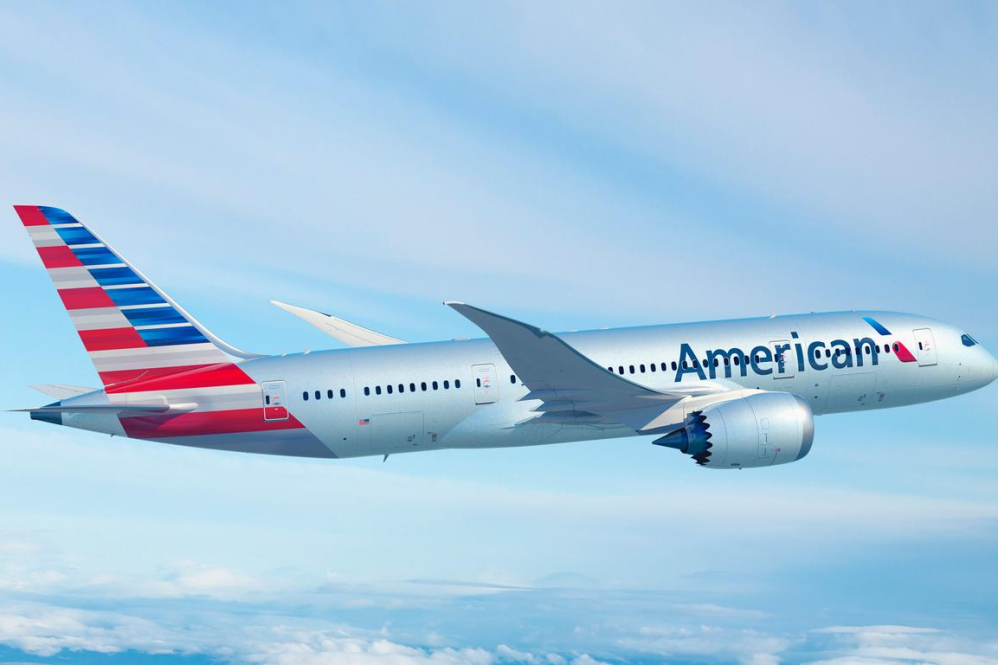
American Airlines has entered discussions with Amazon about using its low Earth orbit satellite network, Leo, to power onboard Wi-Fi.
According to a report from Bloomberg, American Airlines has held preliminary conversations with Amazon regarding Leo, the satellite constellation formerly known as Project Kuiper. The airline currently relies on Viasat and Intelsat for onboard connectivity, but like its competitors, American is under pressure to provide faster, more reliable, and scalable internet access across a fleet of more than 1,000 aircraft.
Airlines have increasingly turned their attention to Starlink and its low Earth orbit satellite network because it offers significantly lower latency and higher throughput than traditional geostationary systems. In the U.S., United Airlines and Alaska Airlines have committed to Starlink, while JetBlue previously announced plans to deploy Amazon’s Leo starting in 2027, while some of the largest international airlines have also signed a deal with Starlink.
American Airlines CEO Robert Isom confirmed the airline is evaluating multiple providers, noting that the company is focused on ensuring customers have access to fast, dependable internet in the air.
Even if American Airlines ultimately chooses Amazon’s Leo, passengers are unlikely to see immediate changes. Any fleetwide rollout would likely occur closer to 2027, aligning with Leo’s expected commercial readiness. Until then, the airline appears content to evaluate all available options while the competitive landscape continues to evolve.
For Amazon, securing American Airlines would represent a significant milestone. Leo is still in the early stages of deployment, with roughly 150 satellites currently in orbit as of December 2025. The full constellation is expected to include more than 3,200 satellites, with broader commercial availability targeted later this decade. Amazon has also been ramping up its hardware offerings, unveiling new satellite internet terminals designed for enterprise and aviation use.
The talks have not gone unnoticed. SpaceX executives have publicly questioned the viability of alternative solutions. Michael Nicolls, SpaceX’s Vice President of Starlink Engineering, offered a pointed response to the report on X, saying, “Only fly on airlines with good connectivity… and only one source of good connectivity at the moment,” a not-so-subtle nod to his belief that Starlink currently sets the standard for in-flight internet performance.
Then there was Elon Musk, who also commented on the talks, warning that “American Airlines will lose a lot of customers if their connectivity solution fails.”