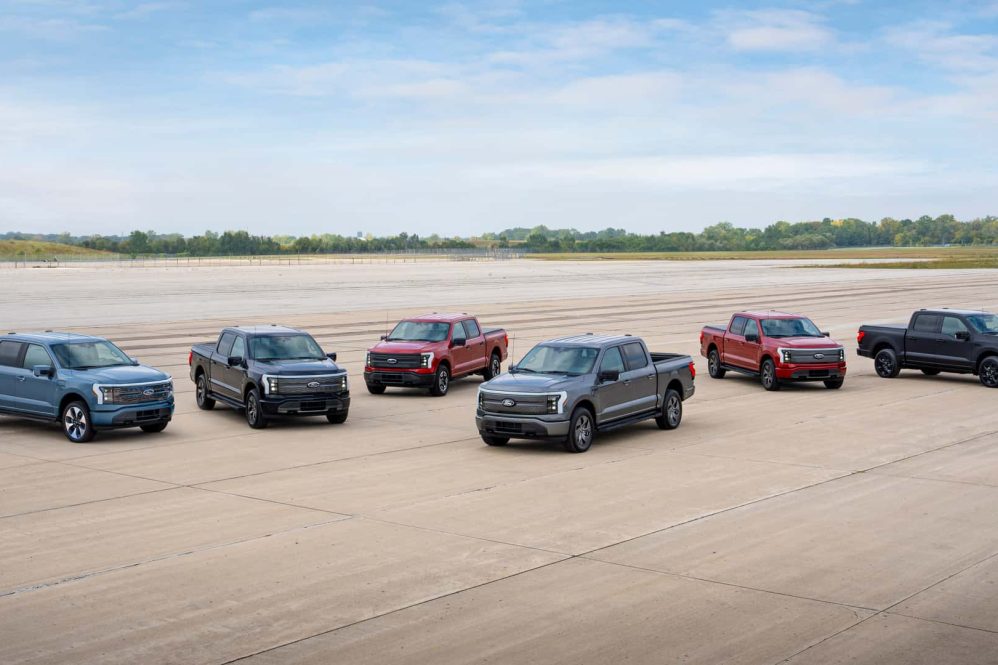
Ford has officially pulled the plug on the all-electric F-150 Lightning. As part of a sweeping strategic reset, Ford is abandoning its next-generation electric pickup and redirecting billions of dollars toward gasoline, hybrid, and range-extended electric vehicles (EREV) instead, marking one of the most dramatic reversals yet by a legacy automaker that once positioned battery-electric trucks as central to its future.
The automaker confirmed this week that production of the 2025 F-150 Lightning has already ended, following a pause at Ford’s Rouge Electric Vehicle Center in Dearborn, Michigan. While Ford had previously indicated the line would restart, executives now say the current Lightning will not return.
Rather than continuing with a fully electric successor, Ford says the Lightning nameplate will live on as an EREV. The upcoming version will retain electric motors, but add a gasoline-powered generator designed to recharge the battery on the go. Ford claims the setup will deliver more than 700 miles (1,126 km) of total range, addressing customer concerns around towing, long-distance travel, and charging availability.
The decision also means the end of Ford’s highly anticipated next-generation electric truck, internally known as “T3.” That EV platform, built from the ground up, has been scrapped entirely, along with plans for a next-generation electric commercial van. Ford says the existing E-Transit will continue, but future large EV programs no longer make financial sense under current market conditions.
“Ford no longer plans to produce select larger electric vehicles where the business case has eroded due to lower-than-expected demand, high costs, and regulatory changes,” the company said in a statement.
The shift comes with a significant financial hit. Ford expects to record $19.5 billion in charges related to factory retooling, canceled programs, and battery plant changes, most of it landing in the fourth quarter of 2025. Several EV and battery facilities will now be repurposed to support hybrid vehicles or energy storage production, including a major investment in lithium iron phosphate (LFP) battery cells for data centers.
When the F-150 Lightning debuted in 2022, it was billed as a turning point for EV adoption in America. Ford once targeted annual sales of up to 150,000 units, but actual demand never came close. Sales peaked below 40,000 units annually, with quarterly deliveries often hovering around 7,000 trucks.

Always get the latest - make Drive Tesla your preferred source on Google
Are you buying a Tesla? If you enjoy our content and we helped in your decision, use our referral link to get three months of Full Self-Driving (FSD).Drive Tesla uses affiliate links, which means we may earn a commission if you make a purchase through them, at no additional cost to you. Thank you for your support.