Tesla is accelerating its artificial intelligence (AI) hardware roadmap at a pace rarely seen in the semiconductor industry, with CEO Elon Musk revealing that the company is now aiming for a nine-month design cycle for its custom AI chips.
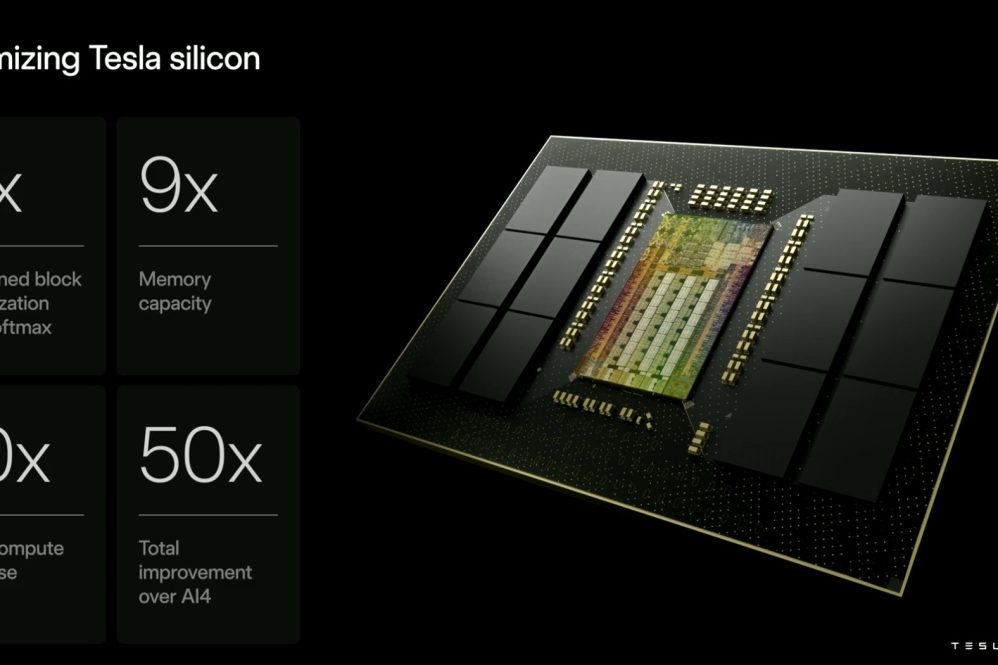
Musk confirmed that Tesla’s next-generation AI5 chip is nearly complete while its successor is already underway, reiterating previous comments, saying on X, “Our AI5 chip design is almost done and AI6 is in early stages, but there will be AI7, AI8, AI9 … aiming for a 9-month design cycle,” while also calling for people to join the Tesla AI team to help make it happen
The update is significant because it points to Tesla moving from its traditional multi-year chip cycle to a much more rapid-iteration model more commonly associated with software than silicon. Designing a new processor every nine months would place Tesla among the fastest-moving chip developers on the planet, and far ahead of most automotive and AI hardware competitors.
However, even if Tesla can truly lock in a new chip design every nine months, that doesn’t mean those processors will be in cars nine months later. After a chip is finished and sent to manufacturing, it can typically take another 12 to 24 months before it reaches meaningful, high-volume production — and even longer before it is validated, qualified for automotive use, integrated into vehicle computers, and rolled out globally. But if Tesla’s aggressive nine-month design cycle is any indication, Musk will push for much shorter timelines than that.
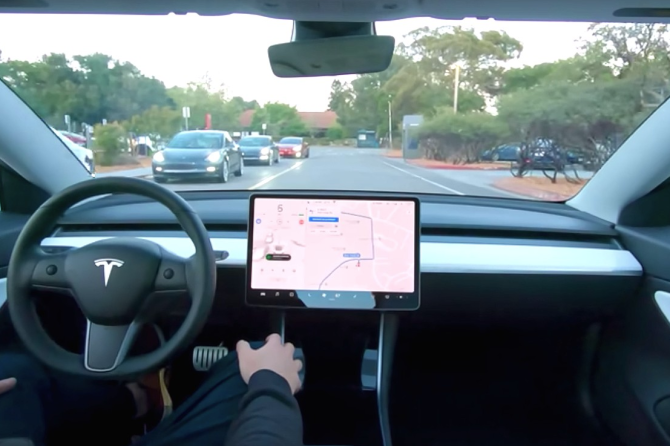
Tesla’s current vehicles run on AI4, which powers the latest versions of Full Self-Driving (Supervised) and enables real-time neural network inference for perception and planning. The upcoming AI5 chip is expected to deliver a major jump in performance and efficiency, supporting larger end-to-end neural networks, faster video processing, and more advanced autonomy features.
AI5 is expected to be produced by both TSMC and Samsung, while AI6 and beyond are slated for Samsung’s new Texas facility under a $16.5 billion dollar agreement announced earlier this year.
This aggressive cycle follows years of hard lessons. Tesla’s earlier Hardware 3 (HW3/AI3) platform, introduced in 2019, eventually became a bottleneck as neural networks grew larger and more complex. The company has since acknowledged that AI3 lacks the compute power needed for its latest autonomy models, forcing Tesla to limit advanced Full Self-Driving features to newer AI4 vehicles and plan future computer upgrades, or as we told you earlier today, they may not need to upgrade AI3 at all.