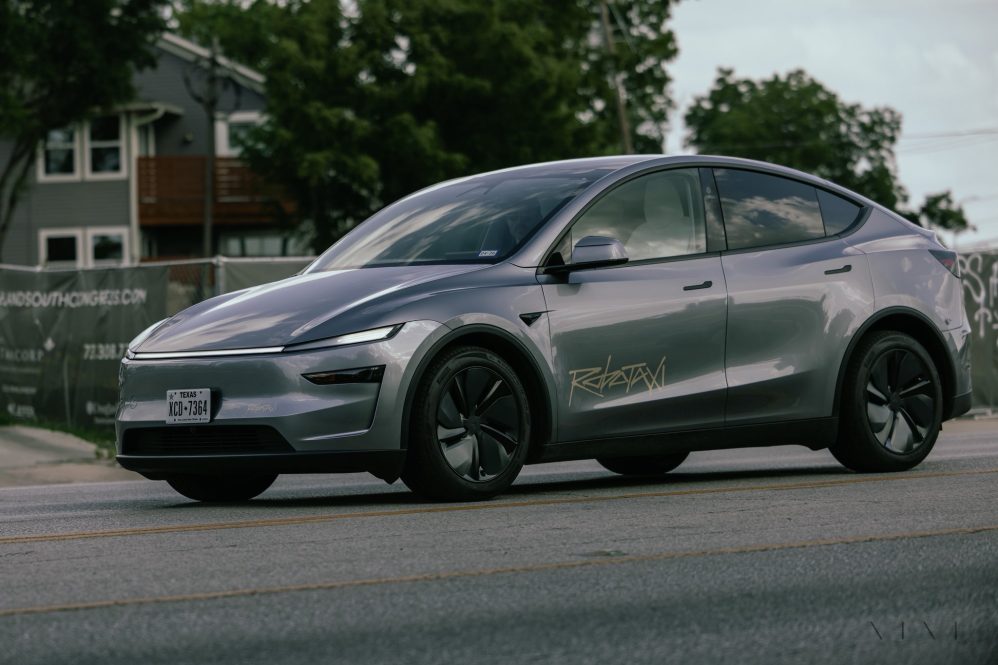
Tesla has disclosed five new accidents involving its autonomous driving system in Austin, offering an updated look into how the company’s robotaxi software performs on public roads. The crashes, all of which occurred between December 2025 and January 2026 at low-speeds, involved Tesla Model Y robotaxis operating with Full Self-Driving (Unsupervised) engaged at the time of impact.
Fortunately, none of the incidents resulted in injuries. All five crashes were classified as property damage only, and most occurred at very low speeds, highlighting the relatively minor nature of the events.
Low-Speed Maneuvers Account for Most Incidents
According to the newly released reporting data via the National Highway Traffic Safety Administration (NHTSA), nearly all of the crashes took place during slow maneuvers such as parking, reversing, or navigating tight urban spaces.
Two of the incidents occurred in parking lots while the vehicle was backing up autonomously. In one case, the Model Y struck a fixed object at just 2 mph (3 km/h), while another involved a collision with a pole or tree at approximately 1 mph (1 km/h).
Another incident took place on a city street, where a Model Y traveling at 4 mph (6 km/h) collided with a parked heavy truck. Similarly, in the event with the highest speed recorded, a Tesla traveling at 17 mph (27 km/h) struck a stationary object while proceeding straight.
The fifth incident involved a bus. The report indicates the Tesla was making a right turn just before the crash, but was stopped (0 mph) when contact occurred. The Austin Police Department responded to that crash, but like the others, no injuries were reported.
Importantly, each of the five incidents occurred while Tesla’s autonomous system was actively controlling the vehicle. The reports specifically list the automation status as “Verified Engaged,” meaning the software—not a human driver—was responsible for vehicle operation at the time.
Early Data Shows No Serious Safety Events
While any autonomous crash attracts scrutiny, the details suggest these were relatively minor incidents. All crashes occurred at speeds below 20 mph (32 km/h), and several happened at walking pace or while reversing.
This type of data provides valuable insight into how Tesla’s system performs in dense urban conditions, particularly in complex scenarios like parking lots or maneuvering around stationary vehicles.
As Tesla continues expanding its autonomous fleet ahead of the Cybercab launch, regulators will be closely watching incident data to evaluate both safety and system maturity.
For now, the latest reports reinforce that while minor property damage incidents still occur, Tesla’s autonomous system has not been linked to any injuries in these Austin robotaxi-related events.