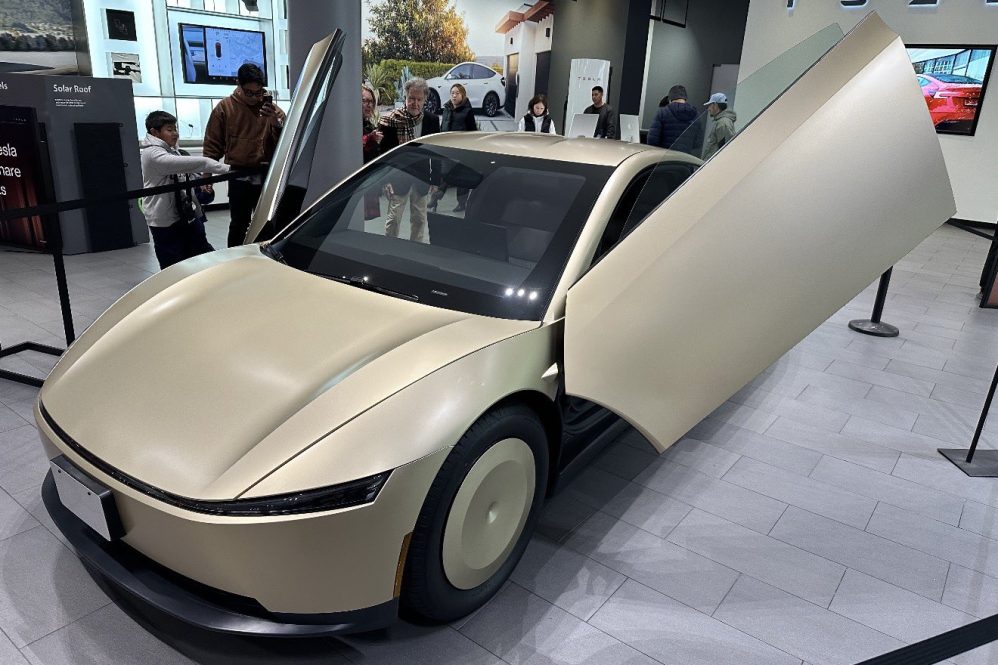
Tesla has revealed what appears to be a production-ready version of the Cybercab for the first time, placing the vehicle on public display at its Santana Row location in San Jose, California. The Cybercab now appears far closer to a road-legal, mass-produced vehicle than the earlier concept prototypes unveiled last year.
At first glance, the Cybercab retains the futuristic, minimalist design that first captured attention when it was first unveiled at the We, Robot event in Hollywood last year – but nearly every surface has been refined.
The most obvious update is the front lighting, which now features a production-style lightbar with integrated headlights and required orange reflectors. Additional orange reflectors have been added near the front wheel arches, signaling compliance with North American safety regulations.
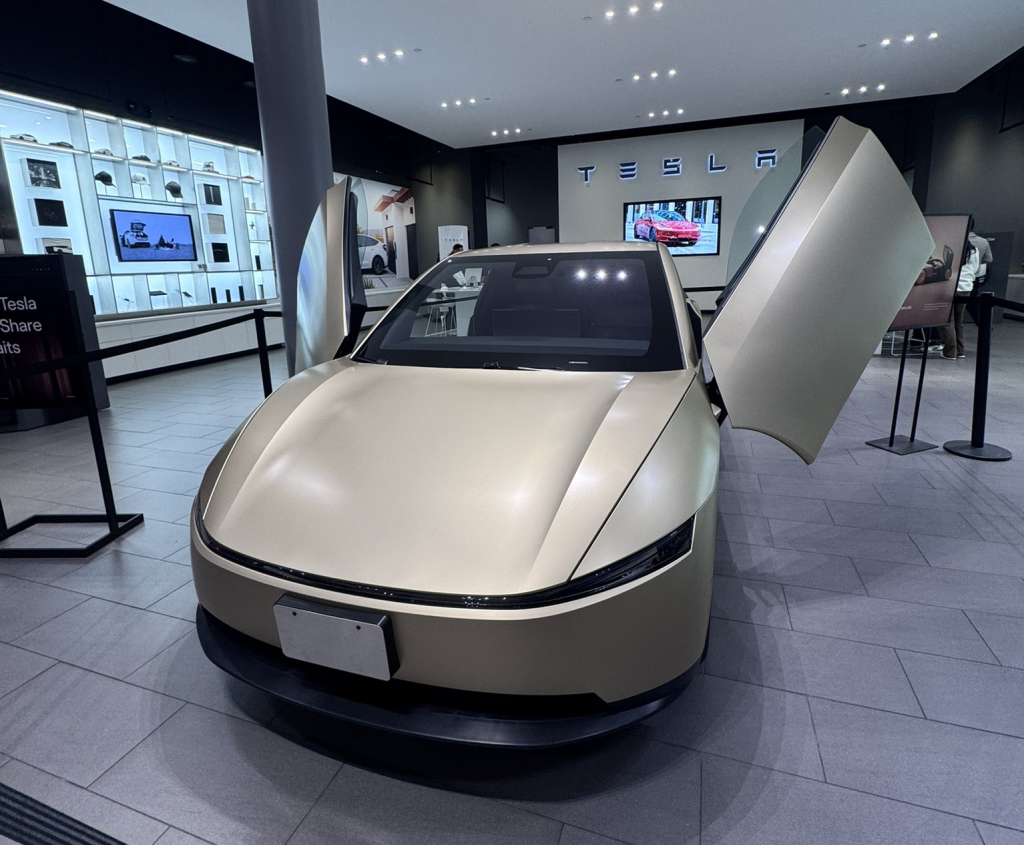
A larger front bumper lip and a front license plate bracket further reinforce that this is no longer a design study, but a vehicle intended for public roads.
Tesla has also subtly reworked the Cybercab’s proportions. The side repeater cameras remain unpainted but have been repositioned slightly forward, while the B-pillar has shifted ahead as well, allowing for larger door openings and revised door panel geometry.
Around the rear, the tail shape now rises slightly—likely for aerodynamic efficiency—along with a redesigned rear bumper, relocated red reflectors, and increased space for indirect rear lighting.
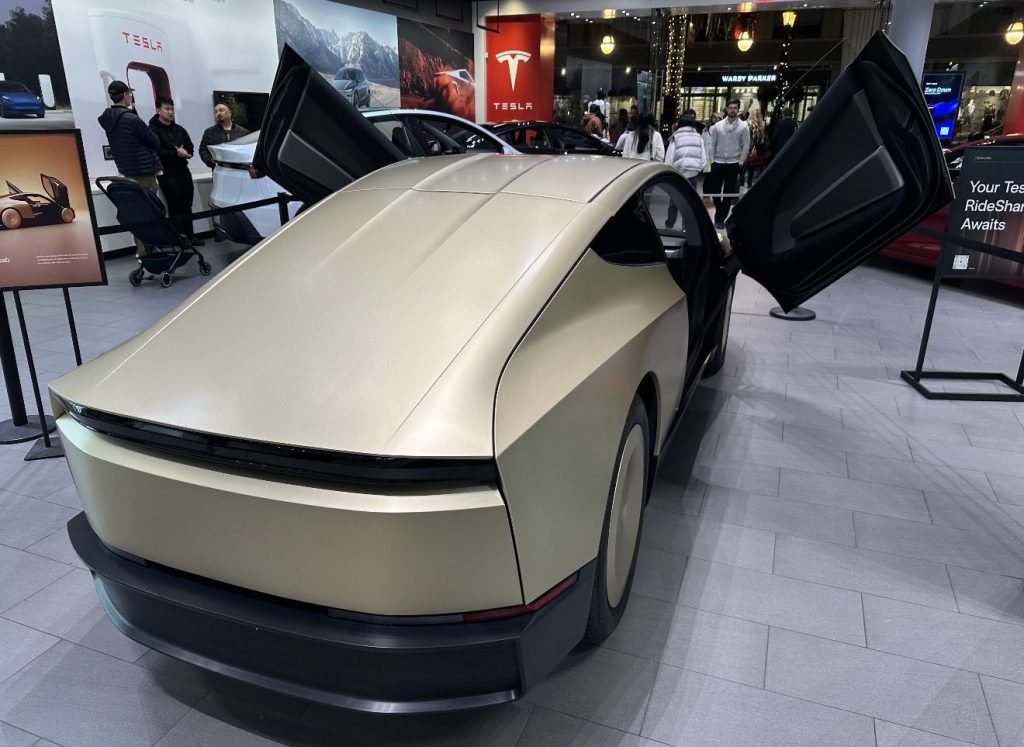
One of the more practical changes is the addition of a second windshield wiper. Earlier prototypes featured a single wiper, but the production-ready Cybercab now uses a dual-wiper setup.
Also missing from this production-ready Cybercab? Side mirrors.
A More Familiar, Finished Interior
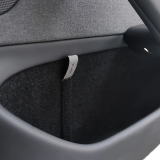
Inside, the Cybercab feels significantly closer to Tesla’s current production vehicles. The dashboard adopts a Model 3 and Model Y–style dash, paired with redesigned door panels, updated interior carpeting, and ambient lighting across the front and doors.
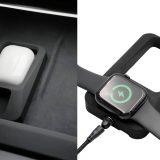
The seats have been refined with new cushions and headrests, while the center area features revised cupholders. Tesla has also added powered door struts, further emphasizing the premium, finished feel of the cabin.
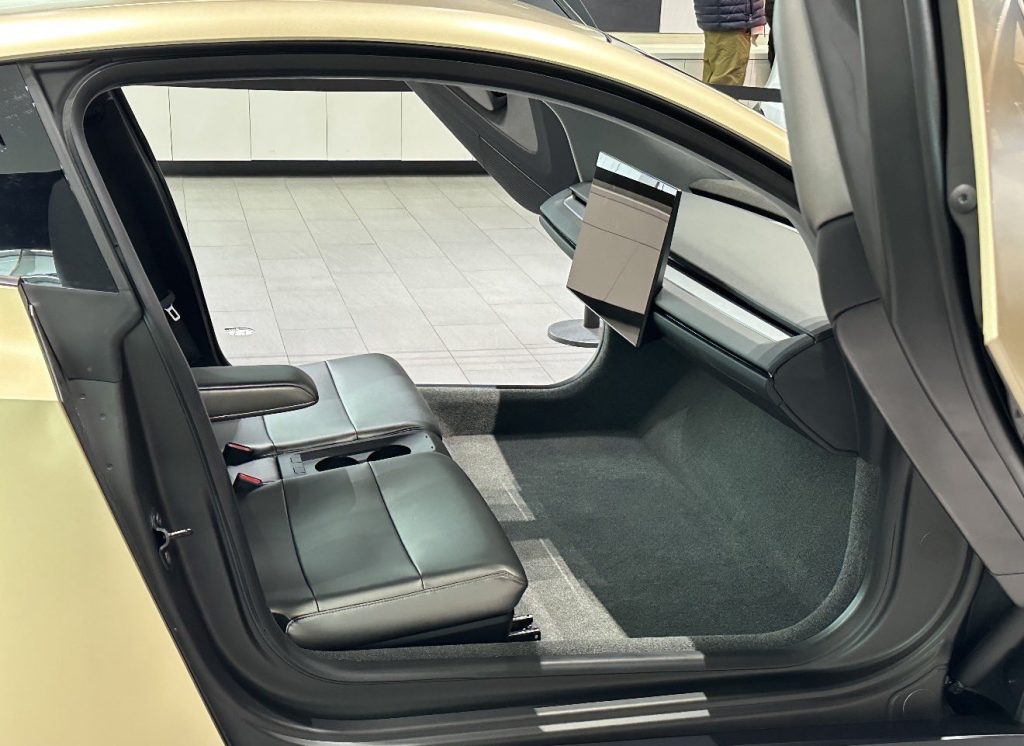
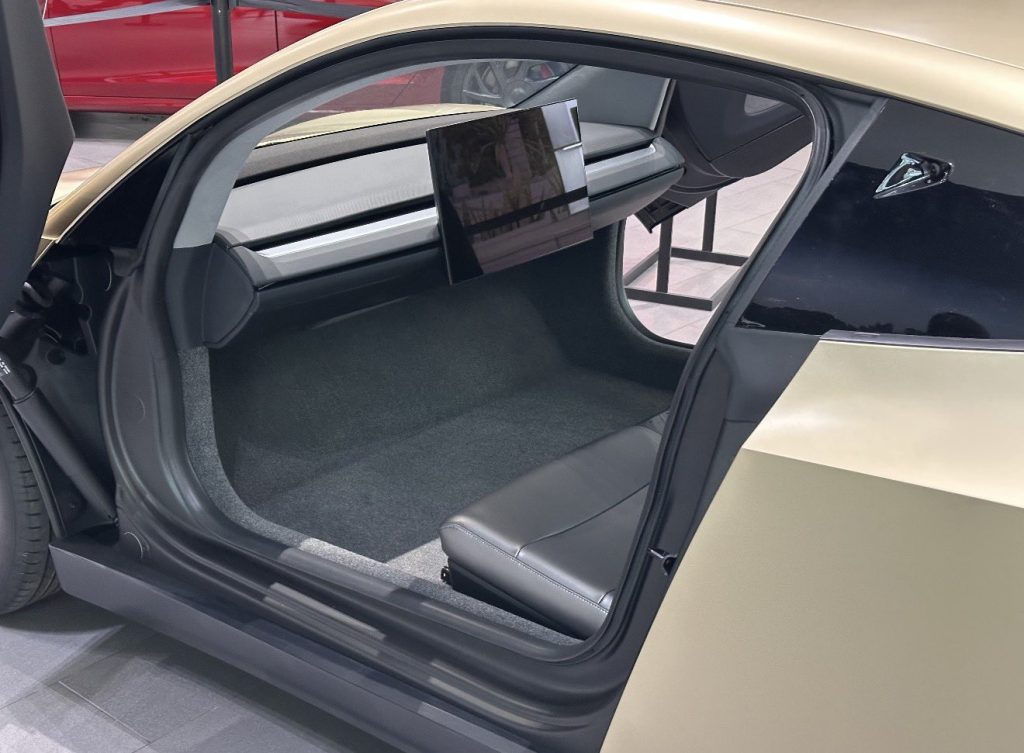
Despite these refinements, the Cybercab remains unmistakably purpose-built for autonomy. There is no steering wheel or pedals.
Is The Cybercab Robotaxi Ready?
Putting the Cybercab on public display is a strong signal that Tesla is moving beyond prototypes and toward execution. Tesla has previously said it plans to begin series production of the Cybercab in April 2026, just over four months away.
If Tesla’s Full-Self Driving (Supervised) software matures to Unsupervised, and regulatory approvals align, the Cybercab could soon be joining Tesla’s autonomous ride-hailing service, which currently consists of Model Y vehicles in Texas and California.