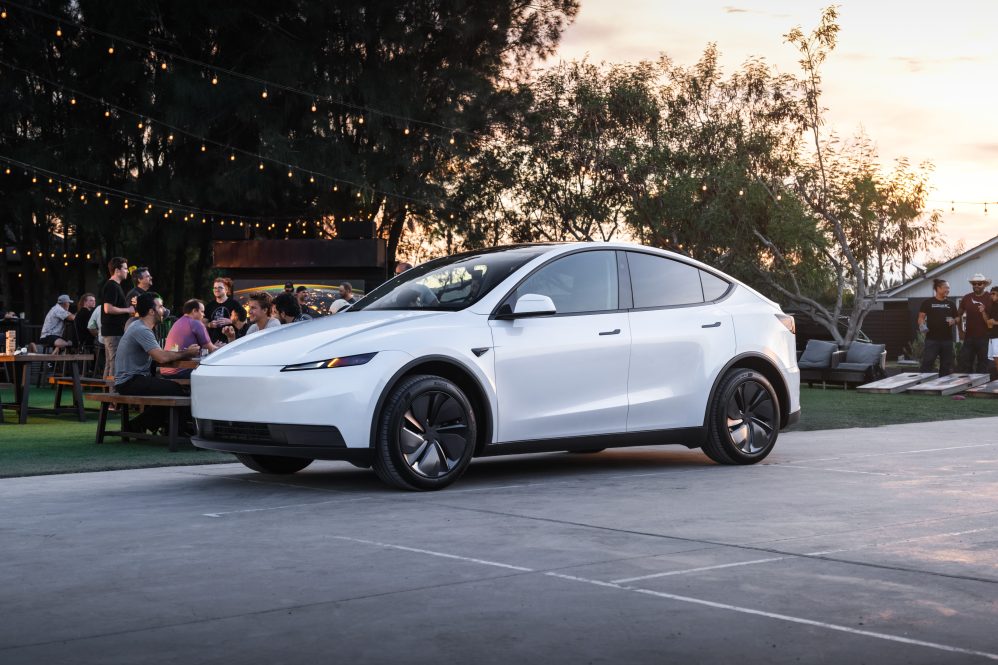
Tesla’s most affordable Model Y Standard is delivering an unexpected win in real-world driving, proving that entry-level doesn’t have to mean limited capability. Independent testing shows the 2026 Tesla Model Y Standard comfortably exceeded its official range estimate, putting it at the top of the Model Y lineup for real-world driving distance and reinforcing Tesla’s growing reputation for conservative range ratings.
According to recent testing by Edmunds, the 2026 Tesla Model Y Standard traveled 337 miles (542 km) in the publication’s standardized EV Range Test, surpassing its EPA-estimated range of 321 miles (516 km). That result doesn’t just make the Model Y Standard impressive for its price point—it makes it the longest-range Model Y Edmunds has ever evaluated under the same real-world conditions.
Historically, higher-trim versions of the Model Y have held the advantage when it comes to range, at least on paper. Previous Long Range variants carried EPA estimates as high as 330 miles (531 km), yet real-world testing often told a different story. Edmunds notes that a prior-generation Model Y Long Range managed only 310 miles (499 km) in its test, while a newer Launch Series version landed almost exactly on its estimate at 327 miles (526 km).
Efficiency played a major role in the result. Despite having a smaller battery pack than the Premium and Performance versions of the Model Y, the Standard used just 22.8 kWh to travel 100 miles (161 km) during testing, thanks in part to its new 18-inch wheels. For context, the Model Y Launch Series required 26.8 kWh to cover the same distance, highlighting how Tesla continues to refine efficiency through drivetrain optimization and software improvements.
There are trade-offs with the Standard trim. Interior features are more basic, seat comfort and adjustability are reduced, and performance is toned down compared to Premium variants. Even so, the vehicle still offers more than enough power for daily driving, along with a compliant suspension and a ride quality that remains comfortable over long distances. The controversial covered glass roof also appears to help with cabin temperature regulation, reducing the need for aggressive climate control use.
The results also point to a broader shift in Tesla’s approach to range estimates. Edmunds observed that Teslas from the 2018 to 2023 model years frequently failed to reach their EPA ratings in real-world testing. That trend has now reversed, beginning with the latest Model 3 and continuing through the Cybertruck and Model Y.
Beyond test results, Tesla’s in-car range predictions are reportedly becoming more accurate, giving drivers greater confidence in what the vehicle displays.