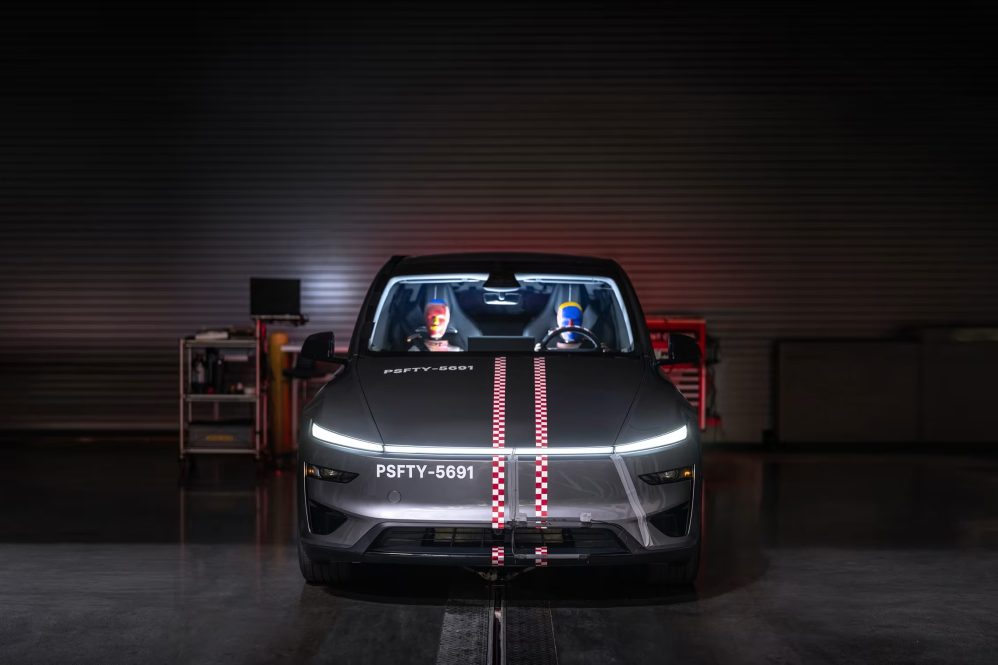
Tesla has just introduced a new Safety page on its website. The page gives a closer look at how its EVs are built to reduce crashes and limit harm in the event of an accident.
In an update shared on the automaker’s official X account, an overview of how Tesla vehicles protect occupants and other road users was provided.
Tesla’s safety page is organized into three key areas: five‑star safety ratings, data‑driven safety, and continuous improvement.
The company’s vehicles have already earned top marks from the U.S. National Highway Traffic Safety Administration, but Tesla isn’t stopping there. The automaker is aiming refine its designs to go beyond regulatory standards across every category.
Avoiding accidents altogether is the best form of safety, and Tesla has put up new features for it. The page has features such as Forward Collision Warning, Automatic Emergency Braking, lane monitoring, blind spot alerts, and drowsiness detection. These are positioned as systems that work together to reduce risk before a collision happens. These are positioned as systems that work together to reduce risk before a crash occurs.
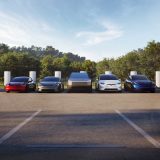
The EV maker also points to the enormous global fleet of approximately 8.6 million vehicles as a major safety advantage. Real-world driving data are being collected anonymously from these cars to identify risks and improve them.
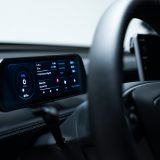
These improvements are delivered through free software updates, making Tesla EVs safer over time. Recently, Tesla introduced a real-time global Full Self-Driving miles counter to support its safety claims around supervised autonomy.
In the event of a crash, Tesla’s safety page explains how the reinforced passenger cabins, energy‑absorbing structures, adaptive airbags, and advanced seat belts work together to reduce injury. After the accident, features such as automatic emergency calls, doors that unlock for first responders, hazard-light activation, and battery systems that disconnect high‑voltage power to reduce fire risk are in place.
Recently, the Cybertruck was named the safest pickup ever tested by the IIHS.