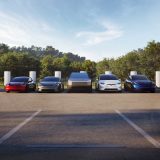
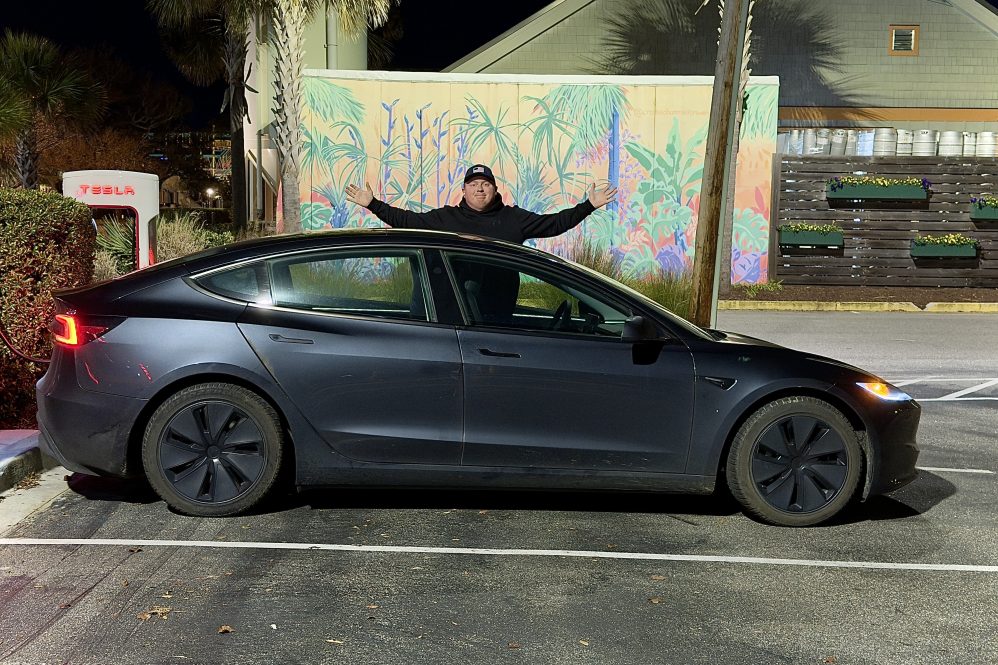
Tesla’s Full Self-Driving (Supervised) software has reached a landmark moment in real-world autonomy, after David Moss successfully completed what is being recognized as the first fully autonomous coast-to-coast drive across the United States, without a single driver intervention.
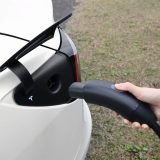
The journey began on December 29, 2025, departing from the Tesla Diner in Los Angeles, and concluded 2 days and 20 hours later in Myrtle Beach, South Carolina. In total, Moss’s 2025 Tesla Model 3 Premium Long Range RWD covered 2,732.4 miles, crossing 24 states entirely on Tesla FSD v14.2, including all highway driving, city streets, parking maneuvers, and Supercharger stops.
“I am proud to announce that I have successfully completed the world’s first USA coast-to-coast fully autonomous drive,” Moss wrote following the completion of the trip. “This was accomplished with Tesla FSD V14.2 with absolutely 0 disengagements of any kind — even for all parking, including at Tesla Superchargers.”
Importantly, the achievement wasn’t based on estimates or rounded figures. The drive was verified using telemetry data tracked by the third-party FSD Database, which logs real-world Full Self-Driving usage with sub-mile precision. Since reaching Myrtle Beach, Moss has continued on his journey, and his intervention-free total distance now exceeds 11,600 miles, with mileage tracked to the decimal rather than rounded totals.
The leaderboard confirms that Moss did not manually steer, brake, accelerate, or disengage FSD at any point during the trip.
ALSO READ: Tesla Owner Logs 10,000+ Consecutive Miles on FSD Without a Single Intervention
The milestone quickly drew attention from within Tesla itself. Tesla’s Head of Autopilot and AI, Ashok Elluswamy, publicly acknowledged the drive as the world’s first coast-to-coast run completed entirely on Tesla’s autonomy stack. Tesla CEO Elon Musk also reacted, reposting Moss’s announcement with a succinct endorsement: “Cool.”
Why This Drive Matters
Unlike geo-fenced autonomous systems that operate only within limited urban areas, Tesla’s approach relies on a single, camera-based neural network capable of navigating diverse environments. Moss’s drive spanned deserts, mountains, dense cities, highways, construction zones, and charging infrastructure—without human assistance.
While Tesla still classifies Full Self-Driving as Supervised, the completion of a fully autonomous coast-to-coast journey marks a pivotal moment in the technology’s evolution. It demonstrates that long-distance, end-to-end autonomy is no longer theoretical, but already functioning on public roads.