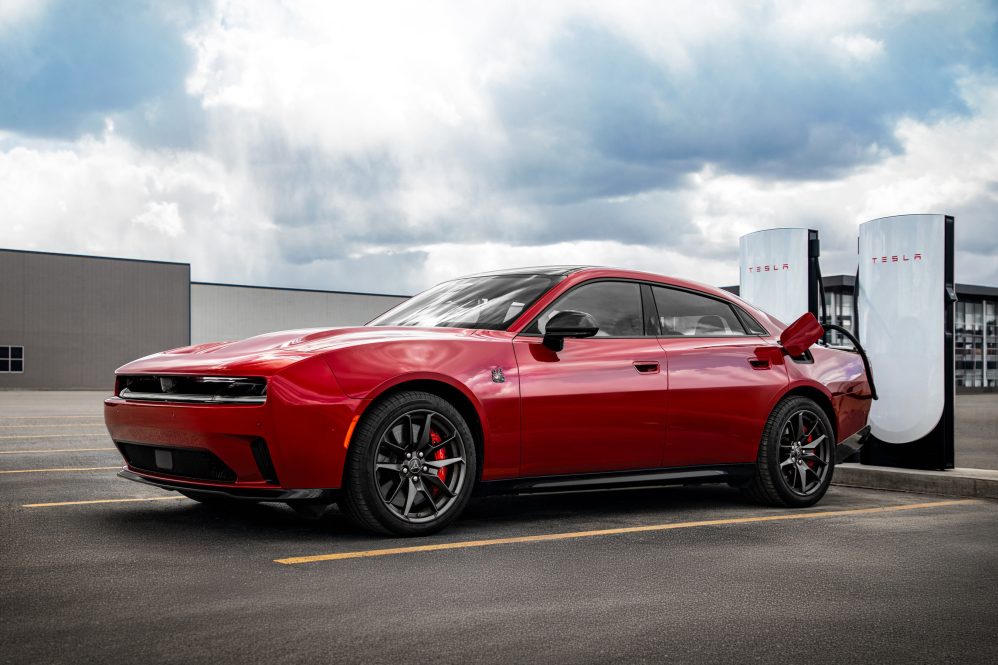
Stellantis has officially opened the door for its electric vehicle (EV) customers to tap into Tesla’s vast Supercharger network across North America, marking a major step forward in charging accessibility for brands like Dodge, Jeep, Ram, FIAT, and Maserati.
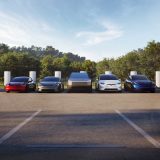
Starting this week, owners of select Stellantis battery-electric vehicles (BEVs) can plug into more than 27,500 Tesla Supercharger stalls in Canada and the United States, significantly expanding fast-charging options for drivers.
Stellantis was the last of all major automakers to adopt Tesla’s North American Charging Standard (NACS).
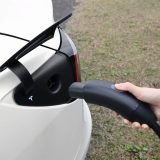
To use Tesla Superchargers, Stellantis drivers will need a NACS-to-CCS1 DC fast-charging adapter, sold through dealerships and Mopar’s online store. Alternatively, some Tesla stations already feature built-in solutions—either through “Magic Dock” adapters or newer V4 Superchargers equipped with integrated CCS compatibility.
Charging sessions can be managed through Stellantis’ Free2move Charge app, which allows drivers to locate compatible stations, initiate charging, and handle payments.
While this rollout improves access, it’s not yet a fully seamless experience. Unlike Tesla vehicles, most Stellantis EVs do not currently support Plug & Charge functionality, meaning drivers still need to manually start sessions through an app.
The list of supported vehicles includes several of Stellantis’ newest EVs, such as the Dodge Charger Daytona, Jeep Wagoneer S, Fiat 500e, and multiple Maserati Folgore models. The upcoming Jeep Recon is also expected to be compatible when it launches.
Stellantis plans to eliminate the need for adapters altogether. The 2027 Dodge Charger Daytona will be the company’s first model to feature a native NACS port, allowing direct access to Tesla Superchargers without additional hardware.
This news follows Stellantis’ long-awaited decision in 2024 to adopt Tesla’s charging standard. The delay made Stellantis’ position increasingly difficult, especially as NACS rapidly became the dominant standard across North America. With this latest move, the company is finally delivering on its promise to bring Supercharger access to its customers in early 2026.
The timing of this Supercharger come just after the automaker took a massive $26 billion writedown tied to cancelled programs, restructuring costs, and a broader pullback from its electrification plans after overestimating EV demand. It also exited its high-profile battery joint venture in Windsor, Ontario.