Rivian is preparing a major upgrade to its Electric Delivery Van (EDV), introducing new All-Wheel Drive (AWD) variants and larger battery packs designed to significantly expand capability and range.
The updated EDV models are expected to address two key limitations of the current design—range and traction—helping Amazon deploy the vans beyond dense urban routes and into more challenging environments.
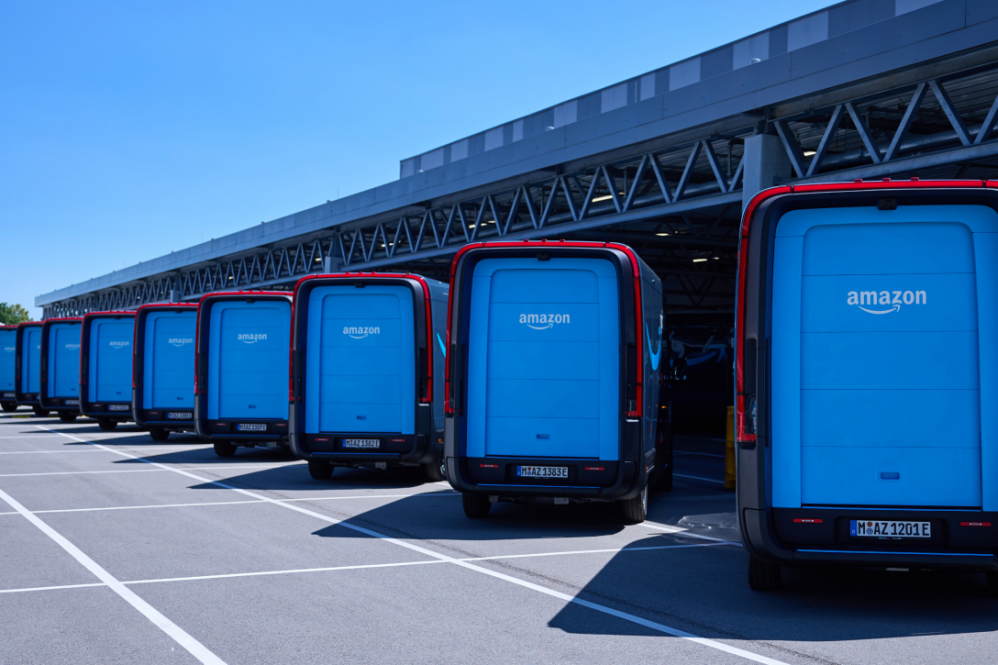
The announcement comes as Amazon’s Rivian-powered delivery fleet surpasses a major milestone, making it one of the largest electric commercial vehicle deployments in the world.
New AWD and Larger Battery to Expand Route Coverage
Since its launch in 2021, Rivian’s EDV has been configured with Front-Wheel Drive (FWD) and a battery pack delivering approximately 160 miles (257 km) of range, depending on the variant. While sufficient for city deliveries, this setup has limited the vehicle’s effectiveness in rural regions, harsher climates, and routes requiring longer distances between charging stops.
As outlined in its Q4 2025 shareholder letter, Rivian is now developing new versions with larger battery packs expected to boost range by roughly 30%, potentially increasing maximum range to about 209 miles (336 km). In addition, the introduction of AWD will improve traction in snow, mud, and other challenging road conditions.
According to Rivian, these upgrades will “expand EDV route coverage in Amazon’s network,” allowing the vans to operate in a broader range of delivery scenarios and geographic regions.
Amazon Fleet Surpasses 30,000 Rivian Electric Vans
Amazon remains Rivian’s largest commercial customer and investor, and the partnership continues to scale rapidly. The e-commerce giant now operates more than 30,000 Rivian electric delivery vans across thousands of cities, adding approximately 10,000 units in just the past year alone.
These custom-built vans were designed specifically for Amazon’s delivery workflow. Features like an automatic bulkhead door that opens when drivers reach delivery stops help improve efficiency and reduce time between deliveries.
The EDV has also proven cost-effective, with Rivian claiming lower total ownership costs compared to traditional combustion-powered delivery vehicles due to reduced maintenance and fuel expenses.
The two companies originally agreed in 2019 that Rivian would supply Amazon with 100,000 electric vans by 2030, making the current fleet size a significant step toward that target.