The U.S. National Highway Traffic Safety Administration (NHTSA) has taken the next step in its investigation into Tesla’s Full Self-Driving (Supervised) system, upgrading its probe into a more advanced “engineering analysis”—a move that significantly expands both the scope and scrutiny of the review.
While this escalation is often seen as a precursor to a recall, it’s important to note it does not automatically mean one is coming. Instead, it shows the agency believes the issue warrants deeper technical analysis.
Investigation expands
The newly opened investigation, identified as EA26002, now applies to an estimated 3.2 million Tesla vehicles across nearly the entire lineup—from Model S and Model X to Model 3, Model Y, and the Cybertruck. This is an increase from the 2.4 million vehicles covered in the initial probe.
At the center of the probe is Tesla’s “degradation detection system,” a component designed to recognize when camera-based visibility is compromised and alert the driver in time to take over.
Focus on low-visibility performance
Regulators are specifically examining how FSD performs in reduced visibility conditions such as glare, dust, or other airborne obstructions. Because Tesla relies on a vision-only system—using cameras rather than radar—the ability to detect and respond to degraded visibility is critical.
According to the NHTSA, incident data suggests there may be gaps in how the system handles these scenarios. In several cases reviewed, the system either failed to recognize impaired visibility or did not provide sufficient warning before a crash occurred. Investigators also noted instances where FSD lost track of a lead vehicle entirely under these conditions.
The agency will now dig deeper into how the system behaves in these environments, including how and when drivers are alerted, and whether those warnings come early enough to prevent a collision.
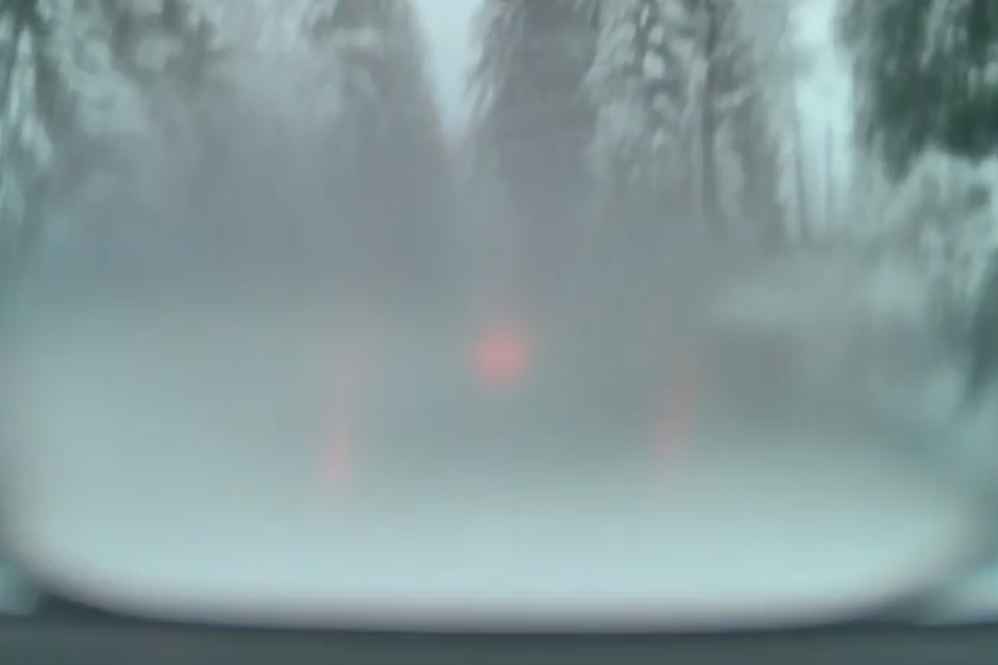
Recent footage shared online highlights the kind of scenarios now under review. In one case posted last week, a Cybertruck owner captured a collision where the vehicle’s cameras appeared to be almost completely obstructed by snow. Despite the reduced visibility, the system appeared to continue operating without an alert for driver intervention.
Accident on #FSD. Sure I am responsible as I was looking at the screen. But how is FSD driving with almost no visibility, remember human visibility has been fine without any issues. I don't even think I had a camera visibility alert or the system was asking to pay attention. pic.twitter.com/VYnqSV5gzY
— Painkiller (@illegalimigrent) March 13, 2026
From fatal crash to expanded probe
This latest development builds on an investigation first launched in October 2024 following multiple crashes involving FSD in low-visibility situations, including a fatal incident in Arizona where a Model Y struck a pedestrian.
That earlier phase—known as a preliminary evaluation—looked at a smaller number of incidents. Now, with the transition to an engineering analysis, regulators will broaden their review to include additional crashes and Tesla’s own updates to the system.
Notably, Tesla says it had already begun working on improvements to its degradation detection system in mid-2024, shortly after submitting data related to the fatal crash. However, the NHTSA says it is still working to determine which vehicles received those updates and how effective they have been.
What happens next?
During this phase, investigators will request more data from Tesla, analyze additional crash reports, and evaluate any software updates related to visibility detection. The outcome could range from no action to a required over-the-air (OTA) software recall.
For Tesla, the investigation couldn’t come at a worse time. The company is pushing toward broader deployment of its FSD technology, including for unsupervised driving in select markets. Any findings from this investigation could influence how—and how quickly—those plans move forward.
You can read the full ODI resume below.