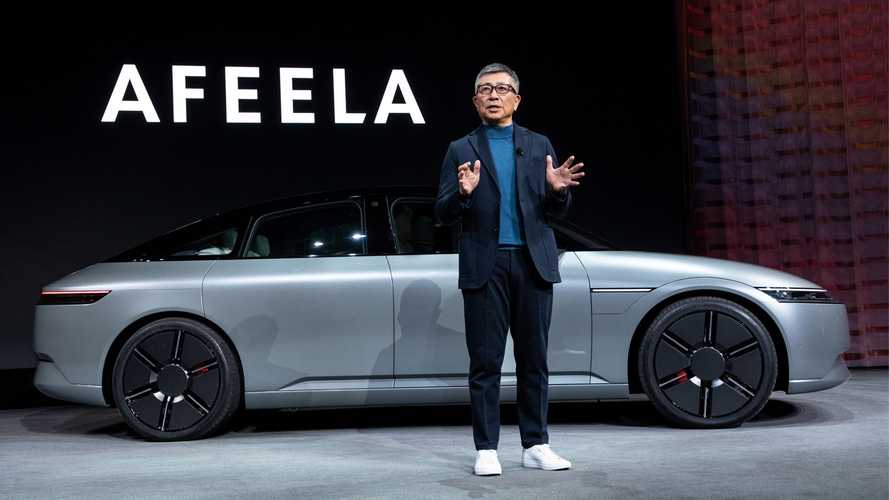
Honda and Sony have pulled the plug on their electric vehicle (EV) joint venture, with the companies confirming they are cancelling the Afeela program and reassessing the future of their partnership. The decision after a Honda announced a major shift in its EV strategy earlier this month.
In a joint statement released Wednesday, the companies confirmed they will “discontinue the development and launch of its first model, AFEELA 1, and its second model,” while also reassessing the broader direction of their joint venture, Sony Honda Mobility (SHM).
The move comes just weeks after Honda announced it would cancel several upcoming electric vehicles planned for North America. With those projects scrapped, key technologies and production plans that Afeela relied on are no longer viable, effectively undermining the entire program.
Originally unveiled with significant fanfare, the Afeela lineup was intended to represent a new kind of EV—one that leaned heavily on Sony’s strengths in entertainment, connectivity, and AI. The Afeela 1 sedan, which carried a starting price of around US$89,000, was expected to enter production in late 2026, with a second SUV model planned to follow.
However, despite multiple concept reveals and updates at CES, the vehicles never came close to reaching production.
While the companies stopped short of officially dissolving Sony Honda Mobility, the future of the joint venture now appears uncertain. The statement noted that SHM will “continue to discuss and evaluate the future,” but with no vehicles in development, its role going forward is unclear.
Honda’s broader challenges in the EV space help explain the sudden reversal. The automaker has struggled to gain traction with battery-electric vehicles, particularly in North America. Its Prologue SUV, developed in partnership with General Motors, initially saw moderate success but has faced declining sales following changes to U.S. EV incentives. As a result, the Prologue will reportedly be scrapped at the end of this year.
As part of this strategic reset, Honda now expects to record significant losses tied to its EV investments and related assets. Instead, the company is placing renewed emphasis on hybrid technology, with next-generation hybrid models expected to play a larger role in its lineup starting in 2027.