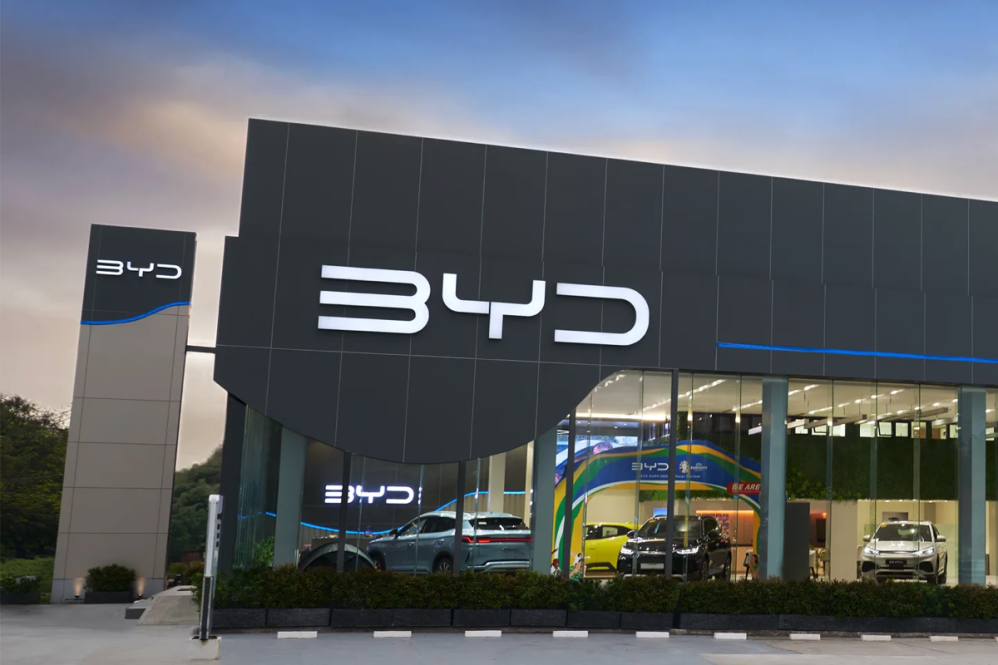
China’s largest electric vehicle (EV) manufacturer BYD appears to be taking early steps toward entering the Canadian market, as new details have emerged about potential retail expansion plans.
According to industry sources, BYD is exploring opportunities to establish a physical sales presence in Canada, with initial discussions focused on three dealership locations in the Greater Toronto Area. While the company has not officially announced a launch timeline, BYD is reportedly aiming to open as many as 20 locations within its first year, starting in Ontario before expanding into Vancouver, Montreal, and Calgary.
Farid Ahmad, CEO of Dealer Solutions Mergers & Acquisitions, says his firm has been working with BYD to identify potential retail locations. “They’ve asked us to help them find as many of the 20 that they possibly can, but they’re out there doing that themselves, as well,” he said. Ahmad added that multiple Chinese automakers are now evaluating similar entry strategies for Canada. (via Globe and Mail)
That aggressive rollout strategy follows a major policy shift earlier this year, when Canada reduced tariffs on Chinese-built electric vehicles from 100% to 6.1%. The change effectively reopened the market to automakers like BYD, which had previously been priced out due to the steep import duties.
BYD’s arrival would be significant. The automaker recently became the world’s top-selling EV brand, delivering more than 2.2 million battery electric vehicles (BEVs) last year, in addition to a similar number of plug-in hybrids.
However, Canada’s new import framework comes with limitations. A cap of 49,000 Chinese EVs has been set initially, with that figure increasing to 70,000 over the next five years. There are also import price limitations after the first year, but as we have previously reported, those limits do not extend to the retail price that consumers may ultimately end up paying.
At the same time, the new EVAP rebate program is restricted to vehicles built in Canada or in countries with free-trade agreements, meaning BYD vehicles would not qualify. Provincial programs in British Columbia and Quebec also maintain their own eligibility requirements, which could further impact pricing competitiveness.
The policy shift has also drawn criticism from automakers with existing Canadian operations, who argue Chinese manufacturers benefit from lower labour costs and, in some cases, state support. Still, growing consumer demand for more affordable EV options appears to have played a role in Ottawa’s decision.
BYD is not alone in targeting Canada. Chery and Geely are also reportedly preparing an entry, signaling that multiple Chinese brands see an opportunity in a market that has historically been difficult to access.