
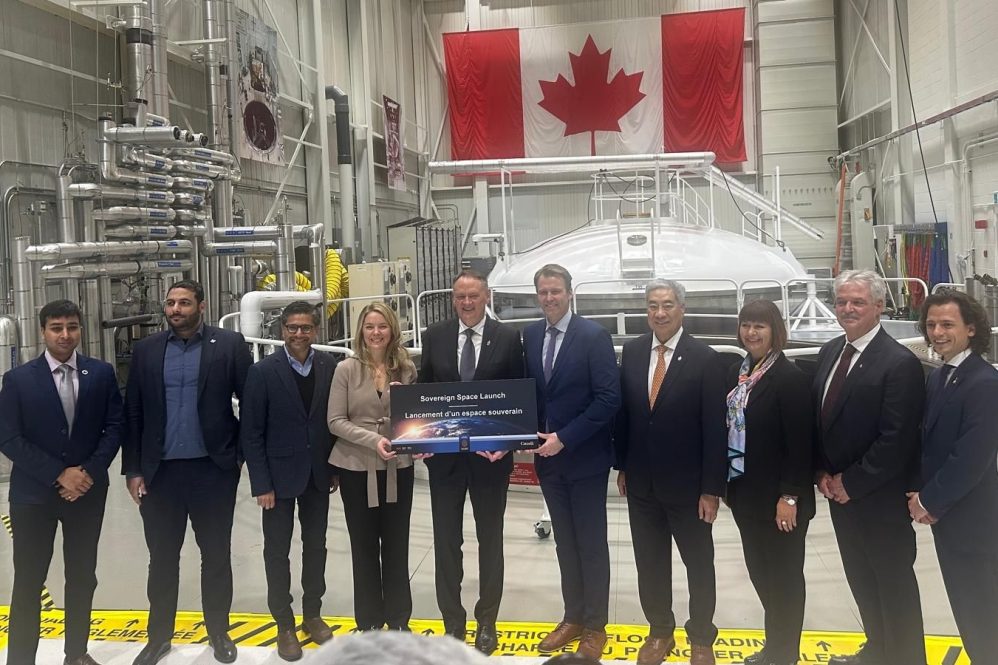
Canada is taking a major step toward building its own path to orbit. The federal government has announced a new 10-year, $200 million agreement to secure access to Spaceport Nova Scotia, a private launch site near Canso, on the far northeastern tip of the province.
The deal will eventually give Canada a dedicated launch pad through Maritime Launch Services and is part of a wider push to establish sovereign launch capability for defence and commercial needs and reduce its reliance on foreign launch providers, including SpaceX.
For years, Canada has designed and built satellites, but when it came time to getting them into orbit, it largely had to rely on other countries. That dependence has left the country exposed to geopolitical tensions, limited launch availability, and the priorities of foreign companies and governments.
In announcing the agreement on Monday, Ottawa said, “Reliable and independent launch access will enable Canada to place critical satellites into orbit even during global uncertainty, geopolitical tensions, or disruptions in foreign launch markets.”
The Nova Scotia agreement is intended to change that. Under the contract, Maritime Launch Services will receive $20 million per year, with the agreement retroactive to April 1, 2025. The company has said most of the funding is expected to be spent in Canada to support domestic industry and workforce development. The government also says the arrangement opens the door to launching satellites and other payloads from Canadian soil using Canadian-built rockets and Canadian-operated infrastructure.
The timing is particularly notable given Canada’s current reliance on SpaceX for major satellite deployments. One of the country’s largest satellite operators, Telesat, is using Falcon 9 rockets to launch its next-generation Lightspeed low Earth orbit constellation, highlighting both SpaceX’s dominance in the commercial launch sector and Canada’s lack of a domestic alternative.
This new deal does not mean Canada will suddenly stop relying on SpaceX however. Spaceport Nova Scotia is still working toward full orbital operations, and it will take years before Canadian launch systems are ready to compete with the speed, price, and launch cadence SpaceX offers today. Still, the investment makes it clear Ottawa wants a backup plan and, eventually, a launch option that is fully under Canadian control.