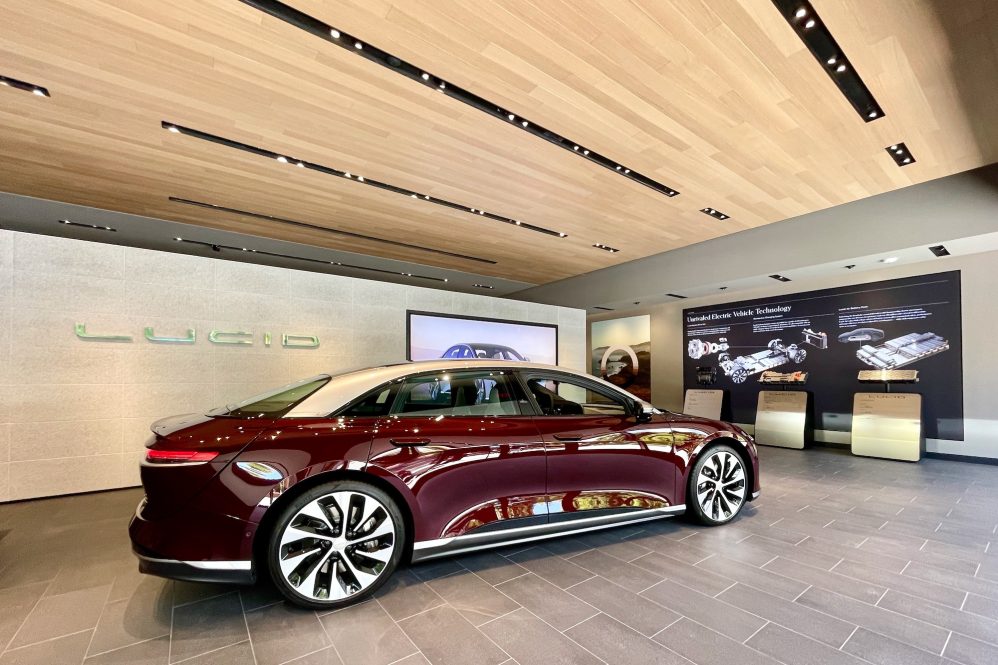
Washington State is preparing to overhaul its sales rules around electric vehicles (TVs), ending Tesla’s long-held advantage and allowing rivals like Rivian and Lucid to sell directly to customers.
Lawmakers in the state have officially approved Senate Bill 6354, which now awaits the signature of Governor Bob Ferguson, and would expand direct sales rights beyond Tesla for the first time in more than a decade. Once signed, the legislation could take effect within roughly 90 days.
Tesla’s First-Mover Advantage
When Tesla entered the market in the early 2010s, it successfully pushed for an exception to Washington’s dealership laws, allowing it to bypass the traditional franchise model and sell vehicles directly to buyers. That advantage helped the automaker establish a strong foothold in EV-friendly regions like Seattle.
However, as the EV market matured and new players gained traction, that one-company exemption increasingly stood out. Rivian and Lucid, despite growing popularity, were limited to operating showrooms where customers could view vehicles but not complete a purchase. Buyers were often forced to order online or travel to another state to finalize their transactions.
The new legislation effectively removes that imbalance by extending similar privileges to a small group of qualifying EV manufacturers.
A Narrow Path to Direct Sales
Rather than opening direct sales to the entire auto industry, lawmakers designed the bill with strict criteria. Only companies that exclusively produce battery electric vehicles, are based in the United States, operate service facilities within Washington, and had an established customer base in the state before 2026 can qualify.
These conditions effectively limit eligibility to Rivian and Lucid, preventing larger legacy automakers from using the same pathway. The goal is to expand EV access without dismantling the existing dealership system that many traditional manufacturers rely on.
The compromise reflects a careful balancing act between encouraging EV adoption and protecting local dealer networks, which remain a significant part of the automotive retail landscape.
Political Pressure Forced a Deal
Momentum for the bill accelerated earlier this year when Rivian signaled it was prepared to take the issue directly to voters. The company backed a proposed ballot initiative that could have broadly legalized direct sales for all automakers, potentially upending the dealership model across the state.
That threat appears to have pushed stakeholders to negotiate. Instead of risking a sweeping policy change through a public vote, lawmakers, EV startups, and dealer groups worked out a more limited solution that addressed immediate concerns without opening the door too wide.
Debate Over Fairness Continues
Despite the compromise, the legislation has drawn criticism from parts of the auto industry. Opponents argue the bill creates an uneven regulatory environment by allowing certain EV makers to bypass dealerships while others remain bound by existing rules.
There are also concerns that selectively granting exemptions could lead to further fragmentation in how vehicles are sold, especially as more EV startups enter the market.
Supporters, however, see the move as a practical step forward—one that increases consumer choice, removes unnecessary barriers to EV adoption, and reflects the changing dynamics of the automotive industry.

Always get the latest - make Drive Tesla your preferred source on Google
Are you buying a Tesla? If you enjoy our content and we helped in your decision, use our referral link to get three months of Full Self-Driving (FSD).Drive Tesla uses affiliate links, which means we may earn a commission if you make a purchase through them, at no additional cost to you. Thank you for your support.