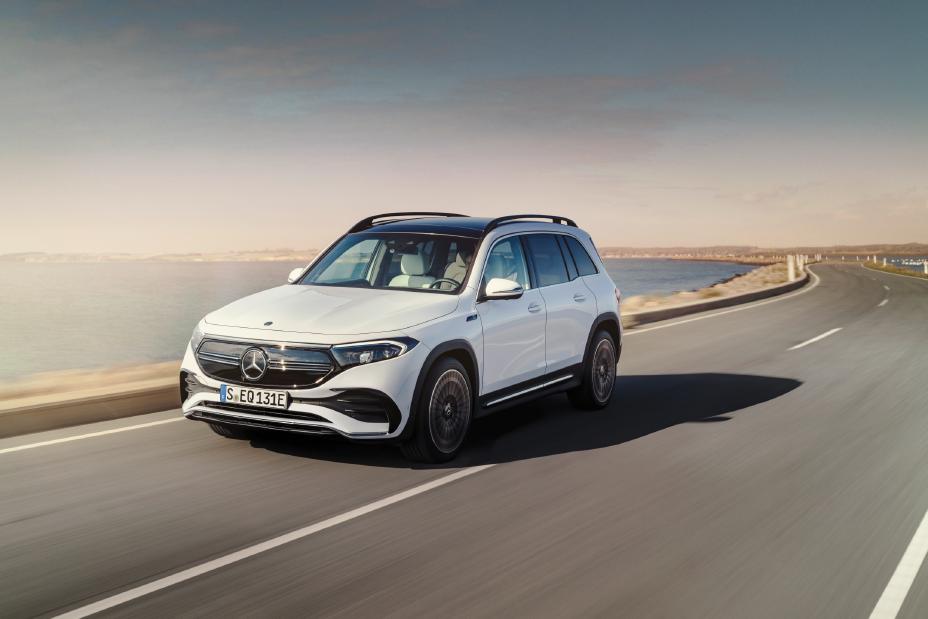
Mercedes-Benz has issued a third recall for its EQB electric crossover in Canada and the United States. While previous fixes involved software update, they proved to be ineffective and now the automaker will replace the battery packs on 12,732 EQB 250+, EQB 300 4MATIC, and EQB 350 4MATIC vehicles from 2022 to 2024 model years.
While owners wait for the replacement, Mercedes is advising to park outside and limit charging to 80% due to a potential high-voltage battery fire risk.
The Issue
According to documents filed with Transport Canada and the National Highway Traffic Safety Administration (NHTSA), Mercedes determined that certain early-production battery cells supplied by Farasis Energy may be less robust under specific stress conditions.
The automaker goes on to explain that if those conditions occur, “an internal short circuit of a battery cell in the high-voltage battery, might lead to a thermal event. Subsequently, an increased risk of a fire cannot be ruled out.”
Mercedes says the issue is most likely to occur at a high state of charge (SoC). While drivers may receive a warning message in the instrument cluster if a thermal event happens while driving, incidents occurring while parked may happen without warning.
What Owners Need to Do
Until repairs are completed, owners are advised to park their vehicle outside and away from structures, and limit charging to a maximum of 80% battery capacity. Dealers will replace the high-voltage battery pack free of charge.
Mercedes says it is aware of two fire incidents in the U.S. linked to this issue. Vehicles produced after July 31, 2024 incorporate revised supplier production processes designed to prevent the defect.
Third Recall for the Same Problem
This latest recall replaces two earlier recalls that attempted to address the problem through software updates designed to better monitor battery behaviour. However, after additional analysis and further incidents outside North America, Mercedes concluded that “the effectiveness of the current software update to sufficiently reduce the risk of thermal incidents cannot be fully confirmed for all affected vehicles.”
You can read the full NHTSA recall notice below, or the Transport Canada recall on their website.

Always get the latest - make Drive Tesla your preferred source on Google
Are you buying a Tesla? If you enjoy our content and we helped in your decision, use our referral link to get three months of Full Self-Driving (FSD).Drive Tesla uses affiliate links, which means we may earn a commission if you make a purchase through them, at no additional cost to you. Thank you for your support.