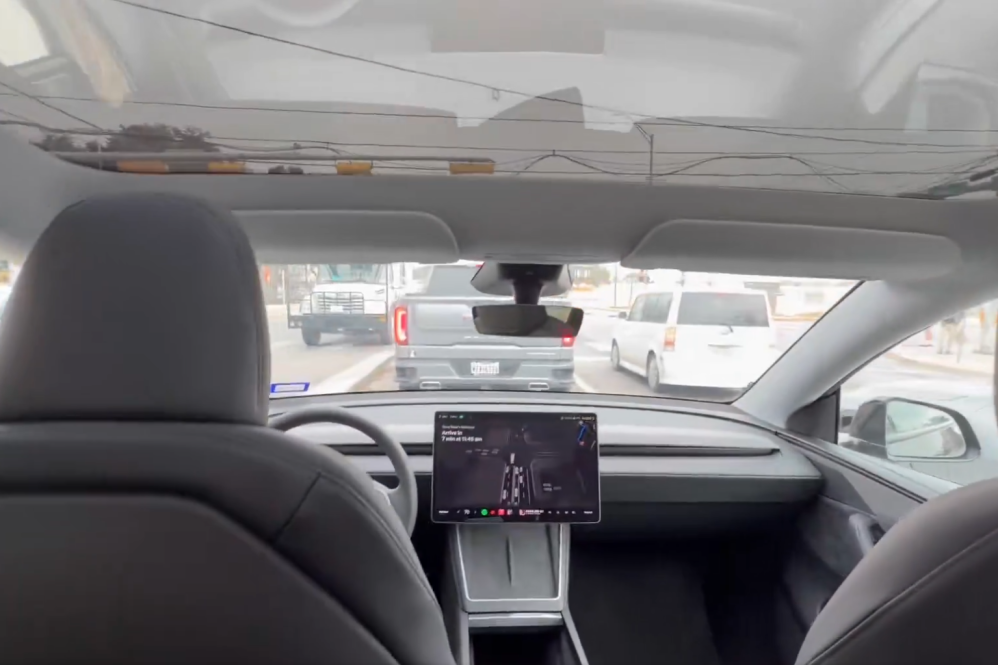
Tesla has officially removed the in-vehicle safety monitor from its robotaxi in Austin, Texas, signifying the start of true unsupervised robotaxi operations, following months of incremental testing.
The milestone wasn’t first announced by the company, but instead by a robotaxi rider who shared on X that the safety monitor was notably absent from his ride. This was quickly confirmed by the company and CEO Elon Musk, who congratulated the Tesla AI team on the milestone.
It is unclear at this time if all of Tesla’s robotaxis in Austin are now unsupervised, or if safety monitors are still present in some of the fleet.
Tesla first launched their Austin robotaxi service in July 2025, but was criticized for calling it robotaxi while still having a human in the car. Initially the safety monitor was in the passenger seat with controls on the main display that allowed the monitor to intervene and have the vehicle come to a stop or pull over if it looked like a collision was imminent.
Over the first few months of operation, Tesla expanded the geofence in which the service was available, eventually expanding the area to include highways. This move shifted the safety monitor from the passenger seat to the driver’s seat, due to the higher speeds and quicker reaction times needed, but again lead to more criticism of the service still requiring human oversight.
That criticism grew after Elon Musk said Tesla would remove the safety monitor before the end of 2025 (several times), which obviously did not happen. However, Tesla did start internal testing of unsupervised robotaxi rides before the end of the year, and that testing was apparently successful enough for the company to now make it available to the public.
With the move to unsupervised robotaxi rides in Austin, the question naturally becomes, when will the same happen in California. In the Bay Area, Tesla is currently operating what it officially calls a ride-hailing service due to regulations in the state that require a human behind the steering wheel. Tesla could get around this by applying for the appropriate certifications but has yet to do this. However, with the shift in Austin, this might change soon.

Always get the latest - make Drive Tesla your preferred source on Google
Are you buying a Tesla? If you enjoy our content and we helped in your decision, use our referral link to get three months of Full Self-Driving (FSD).Drive Tesla uses affiliate links, which means we may earn a commission if you make a purchase through them, at no additional cost to you. Thank you for your support.