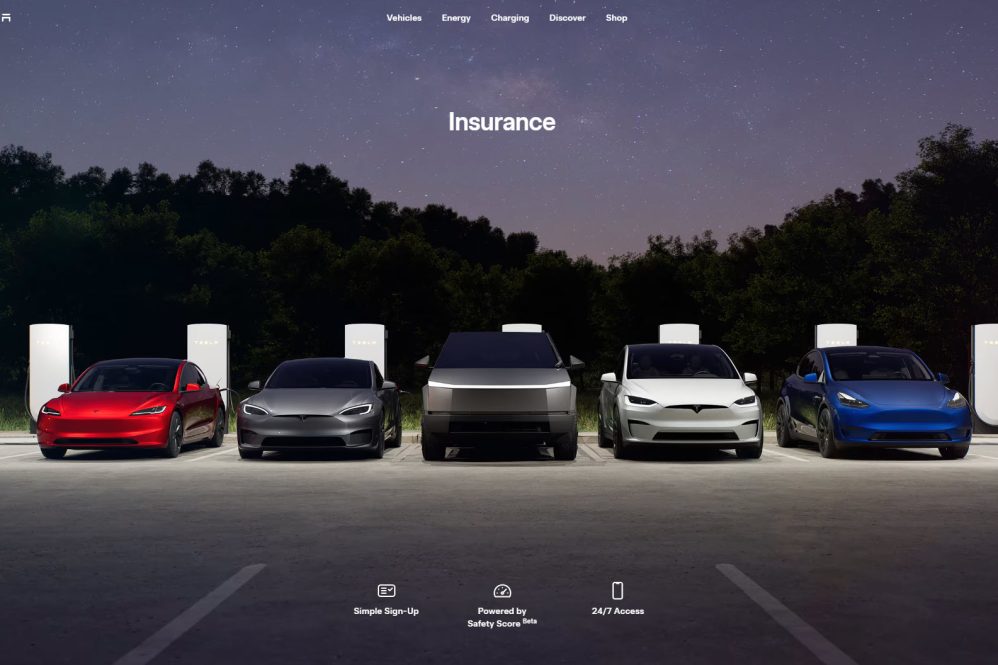
Tesla is preparing to bring its in-house auto insurance program to Tennessee. The expansion, if it arrives on time, would be the second new market for the product in as many months, after the company went over three years without expanding at all.
According to regulatory filings first shared by Coverager, Tesla Property & Casualty has submitted a new private-passenger auto insurance program in the state, with a proposed effective date of March 1, 2026.
If approved, Tennessee would become Tesla Insurance’s 14th U.S. market, after the company spent more than three years without adding a single new state. Florida’s rollout earlier this month broke that freeze, and Tennessee now appears to be next in line.
According to the filing, Tesla plans to introduce its full telematics-driven insurance model in Tennessee, including a Full Self-Driving (Supervised) discount that directly ties premiums to how often customers use Tesla’s advanced driver-assistance system. The program will track the percentage of miles driven on FSD (Supervised) each month and apply a discount that scales with usage — rewarding drivers who allow the system to handle more of their daily driving.
That model mirrors Tesla’s broader strategy of using real-time vehicle data to price insurance more precisely than traditional carriers. In states where Tesla Insurance operates, with the only exception being California, premiums are dynamically adjusted using the company’s Safety Score system, which evaluates driving behaviour such as hard braking, aggressive turning, speeding, following distance, and overall mileage.
Scores update monthly, allowing rates to rise or fall based on how a customer actually drives, rather than relying solely on demographics or historical averages.
The FSD-based discount takes that concept a step further by linking pricing not just to driver behaviour, but to the extent that Tesla’s software is actively controlling the vehicle. In states where it is offered, Tesla tracks total miles driven and miles driven with FSD (Supervised) enabled over a rolling 30-day period. The higher that percentage, the larger the discount applied to eligible portions of the insurance policy.
Tesla Insurance has quietly grown into a significant business. For the first nine months of 2025, Tesla’s insurance carriers generated $747 million in written premiums, highlighting how quickly the program has scaled despite being available in just over a dozen states. That growth gives Tesla more incentive to accelerate regulatory filings and expand into new markets.

Always get the latest - make Drive Tesla your preferred source on Google
Are you buying a Tesla? If you enjoy our content and we helped in your decision, use our referral link to get three months of Full Self-Driving (FSD).Drive Tesla uses affiliate links, which means we may earn a commission if you make a purchase through them, at no additional cost to you. Thank you for your support.