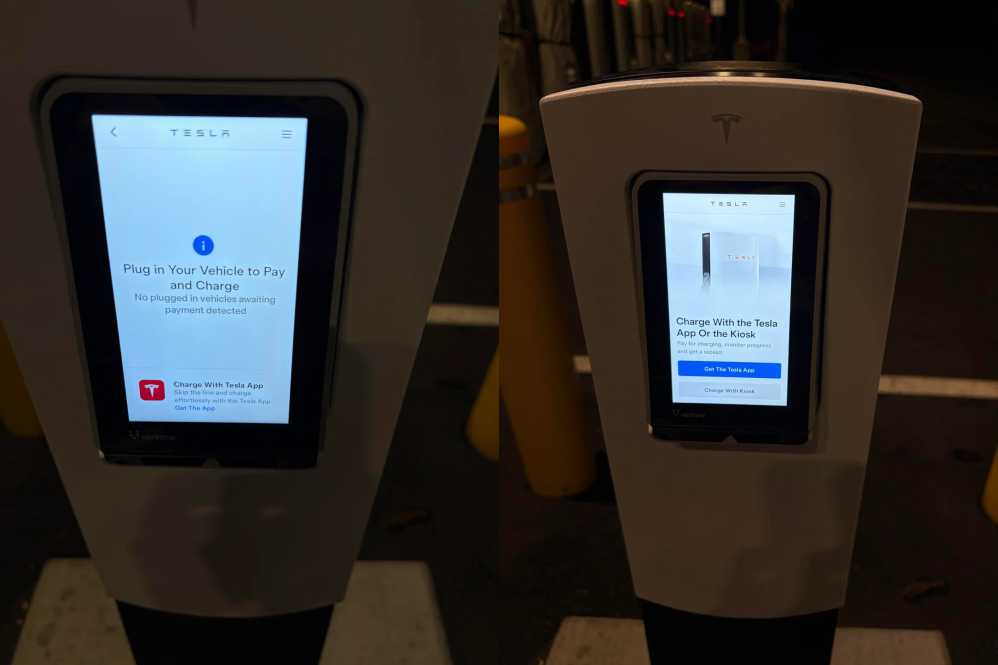
Tesla is quietly rolling out another change to its latest V4 Supercharger sites, and it’s one that could significantly alter how non-Tesla drivers interact with the company’s fast-charging network. Instead of having individual payment terminals built into each V4 charging stall, Tesla has begun installing separate, centralized payment kiosks.
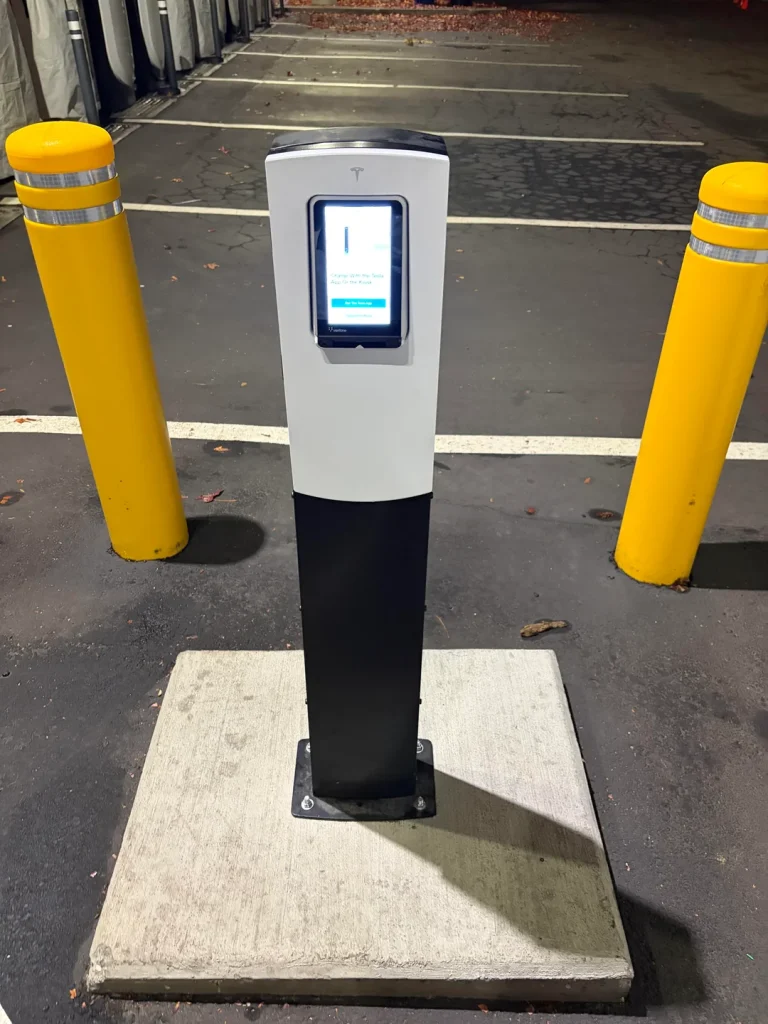
Photos shared by a Tesla owner on Reddit at a newly constructed Supercharger in Redwood City, California, show a standalone Tesla-branded kiosk with a touchscreen interface. The display guides users through the process of paying for charging directly at the kiosk, while also allowing monitoring of vehicles currently charging at the site.
A Shift Away From Per-Stall Payment Hardware
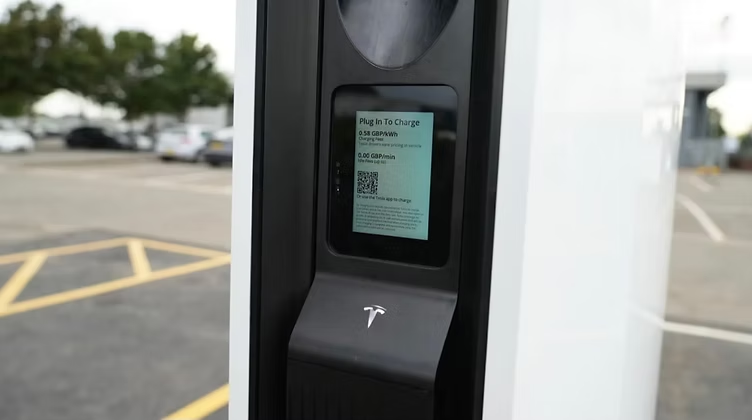
Early V4 Supercharger deployments featured payment terminals integrated directly into each charging post, located where the charge handle is stored, largely to meet regulatory requirements in regions where card payment access is mandated for public chargers.
However, Tesla now appears to be moving away from that approach.
According to the owner who spotted the change, individual payment terminals are being removed in favour of a single shared kiosk per Supercharger cluster. This design change dramatically reduces the amount of hardware installed across a site, which in turn simplifies maintenance, lowers costs, and minimizes potential points of failure.
The centralized kiosk still fulfills compliance requirements, but it also reinforces Tesla’s long-standing preference for app-based charging. The on-screen messaging prominently encourages users to charge using the Tesla app, emphasizing faster access and a smoother experience.
Designed for Compliance, Not Convenience
Just like the payment terminals on the charge post, the centralized screen exists largely to satisfy regulatory obligations rather than to serve as Tesla’s preferred interface. If regulations allowed it, Tesla would likely rely entirely on app-based charging, as it already does for its own vehicles.
From a network-scale perspective, the move makes sense. A single kiosk per site is easier to service than dozens of individual card readers exposed to weather, vandalism, and heavy use — especially as Tesla rapidly expands V4 Superchargers to support non-Tesla EVs.

Always get the latest - make Drive Tesla your preferred source on Google
Are you buying a Tesla? If you enjoy our content and we helped in your decision, use our referral link to get three months of Full Self-Driving (FSD).